




 GenuinePrescription323 people
Product introduction
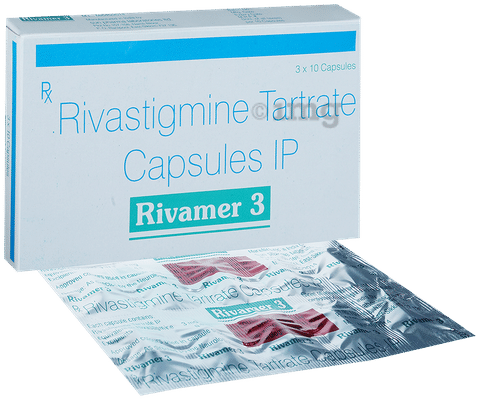
Rivamer 3 Capsule is used to treat mild to moderate dementia in Alzheimer’s disease, a progressive illness that gradually affects memory and thinking. It is also used for dementia-associated Parkinson’s disease. It does not cure these illnesses but may help improve memory, awareness, and other symptoms.
Your doctor will explain how to take Rivamer 3 Capsule. Follow the instructions carefully to get the most benefit. The dose may change from time to time to suit your individual needs. You may take it with food, preferably at night before going to bed. It can take up to a few weeks for symptoms to improve so keep taking your medicine regularly. You should not stop taking this medicine without consulting your doctor.
Some common side effects of this medicine include nausea, vomiting, weight loss, indigestion, and weakness. You may have side effects more often when you start your treatment or when your dose is increased. Usually, the side effects will slowly go away as your body gets used to the Rivamer 3 Capsule. If they are severe or will not go away, you should contact your doctor.
Before using Rivamer 3 Capsule, you should tell your doctor if you’ve ever had heart problems, stomach ulcers, epilepsy, or asthma. It may also affect, or be affected by, some other drugs you are using so let your doctor know what these are to be safe. During pregnancy, this medicine should only be taken if it is advised.
Benefits of Rivamer Capsule
Dementia in Parkinson’s disease refers to problems in memory and thinking that are advanced, interfering with daily activities and quality of life. Rivamer 3 Capsule helps in managing these symptoms in a safe manner that can be used for a long term. This will make it easier for you to carry out your daily activities and improve your quality of life.
Side effects of Rivamer Capsule
- Nausea
- Vomiting
- Indigestion
- Weakness
- Decreased appetite
How to use Rivamer Capsule
How Rivamer Capsule works
Quick tips
- You have been prescribed Rivamer 3 Capsule to slow down the progression of Alzheimer's disease.
- It does not cure Alzheimer's disease but may help improve brain function and ability to do daily activities.
- It may cause diarrhea, nausea, and vomiting. Drink plenty of fluids to keep yourself hydrated while taking Rivamer 3 Capsule.
- Do not drive or do anything that requires mental focus until you know how Rivamer 3 Capsule affects you.
- Be cautious while taking this medicine if you suffer from peptic ulcer as it may cause vomiting, stomach bleeding, stomach pain, or discomfort.
- Inform your doctor if you experience seizures or convulsions while taking this medicine.

Save more with additional offers
