




 GenuinePrescription
Product introduction
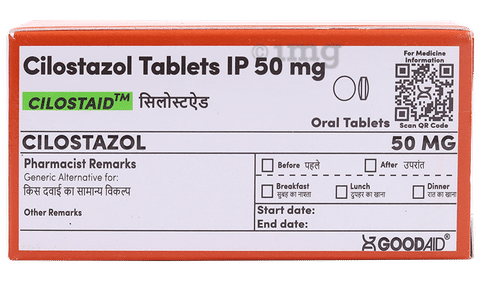
Cilostaid Tablet is used in the treatment of pain in the legs due to insufficient blood flow (intermittent claudication). It also helps in reducing cramping, numbness, or weakness in the legs that occurs on walking in such patients.
Cilostaid Tablet should be taken regularly as advised by the doctor. You should take it on an empty stomach and at a fixed time. This medicine should not be stopped abruptly without consulting the doctor.
It may cause side effects like headache, vomiting, edema, diarrhea, dizziness, palpitation, abdominal pain, abnormal stools, and edema. Use of this medicine may increase your risk of bleeding. Let your doctor know immediately if you see a pinpoint rash or blood in your vomits, urine, or stool.
This medicine may not be suitable for some people. You must inform the doctor if you are suffering from any liver or kidney disease. Also, let your doctor know about all the other medications that you are using regularly. This medicine is not usually recommended during pregnancy or breastfeeding, so always consult your doctor before taking it.
Uses of Cilostaid Tablet
- Peripheral vascular disease
- Treatment of Intermittent claudication
Benefits of Cilostaid Tablet
Intermittent claudication refers to muscle pain on mild exertion (ache, cramp, numbness, or sense of fatigue), classically in the calf muscle, which occurs during exercise or even walking, and it gets better with a short period of rest. Cilostaid Tablet helps relieve this pain in the legs that is caused due to disturbed blood supply in the legs. It helps prevent the formation of blood clots, improves blood flow, and maintains the free-flowing of blood in your body. Keep taking Cilostaid Tablet as prescribed by the doctor to get maximum benefit.
Side effects of Cilostaid Tablet
- Headache
- Palpitations
- Abnormal stool
- Diarrhea
- Inflammation of the nose
- Infection
How to use Cilostaid Tablet
How Cilostaid Tablet works
Quick tips
- Take it at least half an hour before or two hours after breakfast and dinner.
- It may take up to 12 weeks before your symptoms improve. Keep using the medication as directed.
- Consult your doctor, if your symptoms do not improve after 4 weeks of treatment.
- It may cause dizziness. Don't drive or do anything that requires mental focus until you know how it affects you.
- Do not take it if you have heart failure, persistent chest pain at rest, or have had a heart attack or any heart surgery in the last six months.


₹264
Save more with additional offers
