






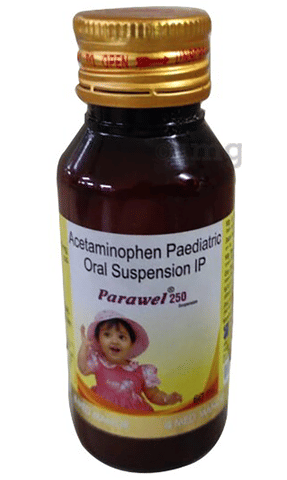

Parawal 250mg Syrup
Paracetamol (250mg/5ml)


Parawal 250mg Syrup is a medicine that helps to ease pain and bring down a high body temperature (fever). In children, it treats conditions like headache, toothache, body aches, fever, and the common cold.
Written By Dr. Sakshi Jain, MS, BDS,
Reviewed By Dr. Rajeev Sharma, MBA, MBBS,
Last updated on 14 Apr 2026 | 04:20 PM (IST)
Written By Dr. Sakshi Jain, MS, BDS,
Reviewed By Dr. Rajeev Sharma, MBA, MBBS,
Last updated on 14 Apr 2026 | 04:20 PM (IST)
Available alternative from Top Brand
Sold out
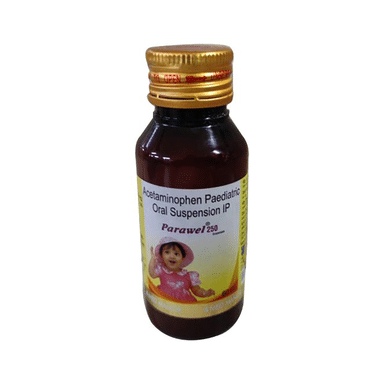
Parawal 250mg Syrup
bottle of 60 ml Syrup
₹27.83

Same composition
Leemol Plus 250mg/5ml Syrup
bottle of 60 ml Syrup
by Leeford Healthcare Ltd
Get by 5pm
₹31.8
₹0.53 per ml
Save more with additional offers
10% cashback up to 200 on Min Transaction of Rs.1000, for first time users of Airtel Payments Bank.
10% cashback up to 200 on Min Transaction of Rs.1000, for first time users of Airtel Payments Bank.


Assured cashback up to ₹300 on minimum payment of ₹300 using Paytm UPI*
Assured cashback up to ₹300 on minimum payment of ₹300 using Paytm UPI*

Pay with Amazon Pay Balance and get cashback up to Rs. 100 with minimum cashback of Rs. 20
Pay with Amazon Pay Balance and get cashback up to Rs. 100 with minimum cashback of Rs. 20
10% cashback up to 200 on Min Transaction of Rs.1000, for first time users of Airtel Payments Bank.
10% cashback up to 200 on Min Transaction of Rs.1000, for first time users of Airtel Payments Bank.
Assured cashback up to ₹300 on minimum payment of ₹300 using Paytm UPI*
Assured cashback up to ₹300 on minimum payment of ₹300 using Paytm UPI*
Pay with Amazon Pay Balance and get cashback up to Rs. 100 with minimum cashback of Rs. 20
Pay with Amazon Pay Balance and get cashback up to Rs. 100 with minimum cashback of Rs. 20
Earn cashback up to Rs. 100 with Amazon Pay Later
Earn cashback up to Rs. 100 with Amazon Pay Later

Get cashback up to ₹500
Get upto Rs.500 Cashback on minimum transaction of Rs.999/- with Mobikwik Wallet.
Get upto Rs.150 Cashback
Get upto Rs.150 Cashback
General Information

The content is shown in English



All substitutes for Parawal 250mg Syrup
For information purposes only. Consult a doctor before taking any medicine.
Leemol Plus 250mg/5ml Syrup
by Leeford Healthcare Ltd
₹37.03/syrup
33% costlier
Babygesic 250mg/5ml Syrup
by Meyer Organics Pvt Ltd
₹42.83/syrup
54% costlier
Biocetamol Syrup
by Biochem Pharmaceutical Industries
₹37.09/syrup
33% costlier
Tyfy 250mg/5ml Syrup
by Vanguard Therapeutics Pvt Ltd
₹35.52/syrup
28% costlier
Febrex DS 250mg/5ml Syrup
by Indoco Remedies Ltd
₹36.66/syrup
32% costlier
Safety advice
Kidney
CAUTION
Parawal 250mg Syrup should be used with caution in patients with severe kidney disease. Dose adjustment may be needed.

Liver
UNSAFE
Parawal 250mg Syrup is unsafe to use in patients with liver disease and should be avoided.
However, the use of Parawal 250mg Syrup is not recommended in children with severe liver disease and active liver disease.
However, the use of Parawal 250mg Syrup is not recommended in children with severe liver disease and active liver disease.
Related lab tests
References
- Paracetamol [EMC Patient Leaflet]. Leeds, UK: Rosemont Pharmaceuticals Limited; 2019. [Accessed 26 Dec. 2020] (online) Available from:

- Aabideen K, Moulton LS, Sills J. Accidental staggered paracetamol overdose: An interesting case report. J Pharmacol Pharmacother. 2011;2(3):189-190. [Accessed 26 Dec. 2020] (online) Available from:
- Grosser T, Smyth E, FitzGerald GA. Anti-Inflammatory, Antipyretic, and Analgesic Agents; Pharmacotherapy of Gout. In: Brunton LL, Chabner BA, Knollmann BC, editors. Goodman & Gilman’s: The Pharmacological Basis of Therapeutics. 12th ed. New York, New York: McGraw-Hill Medical; 2011. pp. 982-84.
- Paracetamol [Product Information]. Worli, Mumbai: GlaxoSmithKline Pharmaceuticals Limited; 2024. [Accessed 25 Jul. 2024] (online) Available from:
- Acetaminophen [Prescribing Information]. Markham, Ontario: McNeil Consumer Healthcare; 2021. [Accessed 09 May 2025] (online) Available from:
Related products
Products related to Parawal 250mg Syrup





100% genuine products

Safe & secure payments

No contact delivery
Fully sanitized facilities

Want to know more
We provide you with authentic, trustworthy and relevant information
Have issue with the content
Why we need a prescription?
