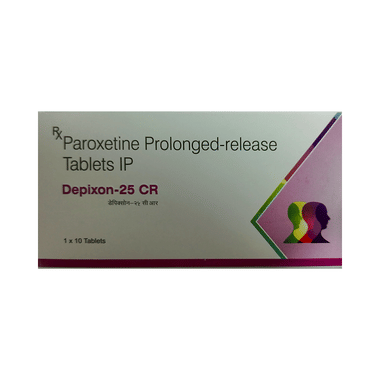

Xetonin CR 25 Tablet
 Prescription Required

Product introduction
Xetonin CR 25 Tablet can be taken with or without food. The dose and how often you need to take the medicine will be decided by your doctor. They may start you on a lower dose and increase it gradually. Do not change the dose or stop taking it without talking to your doctor, even if you feel well. Doing so may make your condition worse, or you may suffer from unpleasant withdrawal symptoms such as anxiety, restlessness, palpitations, dizziness, and sleep disturbances.
To get the most benefit, take this medicine regularly at the same time each day. Your doctor may advise you to take it in the morning if you have trouble sleeping. It may take a few weeks before you start feeling better. Let your doctor know if you do not see any improvement even after 4 weeks.
Some common side effects of Xetonin CR 25 Tablet include nausea, fatigue, dry mouth, loss of appetite, increased sweating, dizziness, nervousness, tremors, insomnia (difficulty in sleeping), and constipation. Sexual side effects like decreased sexual drive, delayed ejaculation, and erectile dysfunction may also be seen. Let your doctor know straight away if you develop any sudden worsening of mood or any thoughts about harming yourself.
Before taking this medicine, you should tell your doctor if you have epilepsy (seizure disorder or fits), diabetes, liver or kidney disease, heart problems, or glaucoma. These may affect your treatment. Pregnant or breastfeeding women should also consult their doctor before taking it. Some other medicines may affect the way it works, especially other antidepressants and medicines called MAO inhibitors. Inform your doctor about all the medicines you are taking to ensure safety.
Uses of Xetonin Tablet CR
- Treatment of Major Depression
- Treatment of Obsessive-compulsive disorder
- Treatment of Panic disorder
Benefits of Xetonin Tablet CR
In Treatment of Major Depression
In Treatment of Obsessive-compulsive disorder
In Treatment of Panic disorder
Side effects of Xetonin Tablet CR
Common side effects of Xetonin
- Fatigue
- Dryness in mouth
- Loss of appetite
- Increased sweating
- Nervousness
- Low sexual desire
- Insomnia (difficulty in sleeping)
- Confusion
- Yawning
- Nausea
- Tremors
- Constipation
- Erectile dysfunction
- Delayed ejaculation
- Decreased libido
- Dizziness
How to use Xetonin Tablet CR
How Xetonin Tablet CR works
Safety advice
What if you forget to take Xetonin Tablet CR?
All substitutes
Quick tips
- It can take 2-3 weeks for Xetonin CR 25 Tablet to start working.
- Do not stop treatment suddenly, as this may cause upset stomach, flu-like withdrawal symptoms, and sleep disturbance.
- If your doctor asks you to stop Xetonin CR 25 Tablet, you should reduce the dose slowly over 4 weeks.
- Avoid consuming alcohol when taking Xetonin CR 25 Tablet, as it may cause excessive drowsiness and calmness.
- The addiction/dependence potential of Xetonin CR 25 Tablet is very less.
Fact Box
Interaction with drugs
Patient concerns
FAQs
After how many days of taking Xetonin CR 25 Tablet will I start feeling better?
I feel that my symptoms have worsened after having started taking Xetonin CR 25 Tablet. Can I stop it on my own or do I need to consult the doctor?
Can Xetonin CR 25 Tablet affect my sex life?
What is the effect of Xetonin CR 25 Tablet on children?
I have been taking tamoxifen for breast cancer. Can I take Xetonin CR 25 Tablet with it?
Do I need to be careful while taking Xetonin CR 25 Tablet if I am a diabetic?
Related ayurvedic ingredients

Want to share the information?


Disclaimer:
Tata 1mg's sole intention is to ensure that its consumers get information that is expert-reviewed, accurate and trustworthy. However, the information contained herein should NOT be used as a substitute for the advice of a qualified physician. The information provided here is for informational purposes only. This may not cover everything about particular health conditions, lab tests, medicines, all possible side effects, drug interactions, warnings, alerts, etc. Please consult your doctor and discuss all your queries related to any disease or medicine. We intend to support, not replace, the doctor-patient relationship.References
- Stahl SM, editor. Paroxetine. In: Stahl's Essential Psychopharmacology: Prescriber's Guide. 5th ed. New York, New York: Cambridge University Press; 2014. pp. 513-19.
- Briggs GG, Freeman RK, editors. A Reference Guide to Fetal and Neonatal Risk: Drugs in Pregnancy and Lactation. 10th ed. Philadelphia, PA: Wolters Kluwer Health; 2015. pp. 1060-69.
- Paroxetine [EMC Label]. South Ruislip, Middlesex: Aurobindo Pharma - Milpharm Ltd.; 2025. [Accessed 25 Mar. 2019] (online) Available from:

- Central Drugs Standard Control Organisation (CDSCO). [Accessed 25 Mar. 2019] (online) Available from:
- Paroxetine [Product Monograph]. Mississauga, Ontario: GlaxoSmithKline Inc.; 2023. [Accessed 12 Dec. 2025] (online) Available from:
- Paroxetine hydrochloride [Product Monograph]. East Windsor, NJ: Aurobindo Pharma Ltd.; 2025. [Accessed 11 Nov. 2025] (online). Available from:
Marketer details
Lab tests offered by us