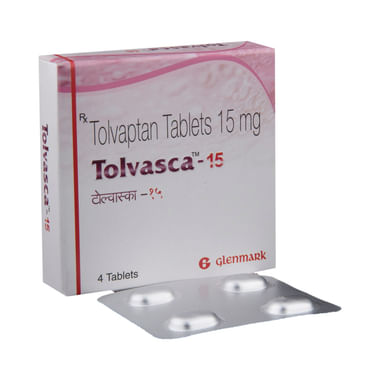
Tolvadap 15mg Tablet is a medicine used in the treatment of low levels of sodium in the blood. It treats low levels of sodium in the blood, which can result from conditions such as heart failure, cirrhosis, and syndrome of inappropriate antidiuretic hormone (SIADH).
Tolvadap 15mg Tablet can be taken with or without food. It should be taken exactly as prescribed by your doctor. Your doctor will decide the dose and how often you should take them. You should take this medicine regularly to get the most benefit from it. Do not stop taking the medicine even if you feel better unless the doctor tells you so.
Using this medicine may cause few common side effects such as frequent urge to urinate, dryness in mouth, increased thirst, nausea, increased blood creatinine, hyperkalemia, and constipation. Let your doctor know if any of these side effects do not go away with time or get worse.
Before using this medicine, inform your doctor if you have any problems with your kidneys or liver. While on this medicine, your doctor will closely monitor the sodium levels in your blood. You should also tell your doctor all the other medications you are taking.
Uses of Tolvadap Tablet
Syndrome of inappropriate antidiuretic hormone secretion (SIADH)
Treatment of Low levels of sodium in the blood
Benefits of Tolvadap Tablet
In Syndrome of inappropriate antidiuretic hormone secretion (SIADH)
Syndrome of inappropriate antidiuretic hormone secretion (SIADH) is a condition where the body retains too much water, leading to low sodium levels in the blood. This can cause symptoms such as headache, nausea, confusion, weakness, and swelling. Tolvadap 15mg Tablet helps remove excess water from the body without significant loss of sodium, which helps raise sodium levels to normal. This improves symptoms, restores fluid balance, and supports overall health and daily functioning.
In Treatment of Low levels of sodium in the blood
Low levels of sodium may be caused due to multiple reasons such as excess of body fluids, heart disease, and kidney problems. There may be many symptoms such as nausea, headache confusion and the person may even need to get hospitalized. Tolvadap 15mg Tablet helps to get rid of the excess fluids and retains sodium in the blood. This restores the normal sodium levels in our body and prevents further complications such as memory loss.
Side effects of Tolvadap Tablet
Most side effects do not require any medical attention and disappear as your body adjusts to the medicine. Consult your doctor if they persist or if you’re worried about them
Common side effects of Tolvadap
Frequent urge to urinate
Dryness in mouth
Increased thirst
Constipation
Nausea
Increased creatinine level in blood
Increased potassium level in blood
Pollakiuria
High blood pressure
How to use Tolvadap Tablet
Take this medicine in the dose and duration as advised by your doctor. Swallow it as a whole. Do not chew, crush or break it. Tolvadap 15mg Tablet may be taken with or without food.
How Tolvadap Tablet works
Tolvadap 15mg Tablet is a vasopressin antagonist. It works by blocking the effect of the hormone vasopressin in the body. This increases urine production, reduces the amount of water in the blood and raises the blood sodium level.
Safety advice
Alcohol
CAUTION
Alcohol should be used with caution while taking Tolvadap 15mg Tablet.
Pregnancy
CONSULT YOUR DOCTOR
Tolvadap 15mg Tablet is not recommended during pregnancy as there is positive evidence of fetal risk based on animal studies. However, it may still be prescribed by a doctor in situations where the benefits outweigh the risks.
Breast feeding
UNSAFE
Tolvadap 15mg Tablet is unsafe to use during breastfeeding. Data suggests that the drug may cause toxicity to the baby.
Driving
UNSAFE
Tolvadap 15mg Tablet may decrease alertness, affect your vision, or make you feel sleepy and dizzy. Do not drive if these symptoms occur.
Kidney
CAUTION
Tolvadap 15mg Tablet should be used with caution in patients with kidney disease. Dose adjustment may be needed. However, the use of Tolvadap 15mg Tablet is not recommended in patients with severe kidney disease.
Liver
CAUTION
Tolvadap 15mg Tablet should be used with caution in patients with severe liver disease. Dose adjustment may be needed. Use of Tolvadap 15mg Tablet is not recommended in patients with severe liver disease.
What if you forget to take Tolvadap Tablet?
If you miss a dose of Tolvadap 15mg Tablet, take it as soon as possible. However, if it is almost time for your next dose, skip the missed dose and go back to your regular schedule. Do not double the dose.
All substitutes
For informational purposes only. Consult a doctor before taking any medicines.
Tolvadap 15mg Tablet treats low sodium levels in the blood.
It also improves urine flow without causing the body to lose too much sodium as you urinate.
Take it at the same time everyday. Take it according to the dose and duration prescribed by your doctor.
To avoid dehydration, it is best to drink something as soon as you feel thirsty, but avoid alcoholic drinks.
Do not take Tolvadap 15mg Tablet if you are unable to urinate, if you are unable to tell when you are thirsty, or if you are severely dehydrated.
You will need to be in a hospital under observation any time you start or restart treatment with Tolvadap 15mg Tablet.
Inform your doctor if you notice problems with speech or muscle control, trouble swallowing, trouble moving your arms and legs, or mood changes.
Your doctor may check your liver function before starting treatment and regularly thereafter. Inform your doctor if you notice yellowing of eyes or skin, dark urine, or stomach pain.
Fact Box
Chemical Class
Benzamide derivative
Habit Forming
No
Therapeutic Class
UROLOGY
Action Class
Vasopressin Antagonists
Interaction with drugs
Taking Tolvadap with any of the following medicines can modify the effect of either of them and cause some undesirable side effects
Do not consume Mifepristone with Tolvaptan. If concurrent use is essential, watch out for symptoms such as weight gain, dizziness, headache, increased heart rate or flushing and co... More
Watch out for symptoms of Digoxin side effects such as impaired vision, skin rash, nausea, vomiting, diarrhea or dizziness and consult your doctor if you experience them. They may ... More
I am very tensed . My parathyroid hormone is very high . PTH - 110.4 . Please help me and suggest me proper medicines . Please advice me as soon as possible . I am also facing respiratory problems , for that i am consulting a doctor but for PTH please help me .
Dr. Sanjay Bhatt
Physician
In primary hyperparathyroidism, an enlargement of one or more of the parathyroid glands causes overproduction of the hormone, resulting in high levels of calcium in the blood (hypercalcemia), which can cause a variety of health problems. Surgery is the most common treatment for primary hyperparathyroidism
We are doing treatment on nephrotic-syndrome for my daughter. I need a list of food items which she can have in this period also fruit names pls.
Dr. Gopal Bansilal Samdani
Paediatrics
A healthy diet for Nephrotic Syndrome patients consists of low salt, low fat and low cholesterol, with emphasis on fruits and vegetables.Foods that can be taken: Cow's milk, skimmed milk Yogurt Wheat, cereals, sprouts, pulses and legumes such as tur dal, moong dal, rajmah, chana, lentils (masoor), etc. Eggs, fish, dry fish, chicken, lean meat, etc. Vegetables and fruits Soups, sauces, chocolate drinks, juices, etc (but with low sodium content) Wafers, popcorns, chutneys which are prepared in less salt. Moderate to low intake of vegetable oils, butter and mayonnaise. Noodles, spaghetti, pancakes, etc (low in salt)
What is the most important information I need to be aware of while taking Tolvadap 15mg Tablet?
Tolvadap 15mg Tablet may cause the level of sodium in your blood to increase too quickly. This quick increase in sodium levels [osmotic demyelination syndrome (ODS)] may cause serious nerve damage, which can further cause coma and even death. The symptoms of ODS could be trouble in speaking, trouble in swallowing or a feeling of food or liquid getting stuck while swallowing, drowsiness, confusion, mood changes, fits, trouble controlling body movement (involuntary movement) and weakness in muscles of the arms and legs.
For how long do I need to take Tolvadap 15mg Tablet?
Tolvadap 15mg Tablet is used for correction of sodium levels in blood. Though the dose and duration are prescribed by the doctor, Tolvadap 15mg Tablet should not be taken for more than 30 days. Once the sodium levels return to normal, it can be stopped after talking to the doctor.
Does Tolvadap 15mg Tablet affect the sugar levels in blood?
Yes, Tolvadap 15mg Tablet may increase the blood sugar levels. Therefore, patients with diabetes mellitus need to be extra careful while taking Tolvadap 15mg Tablet and should keep a check on blood sugar levels regularly.
Who should not take Tolvadap 15mg Tablet?
You should not take Tolvadap 15mg Tablet if you have low sodium levels, cannot replace fluids by drinking or if you cannot tell when you are thirsty, dizzy or feeling faint or if your kidneys are not working properly because of excessive loss of fluids. You should also avoid Tolvadap 15mg Tablet if your body is not able to make urine, you are allergic to Tolvadap 15mg Tablet or if you are on certain medicines which interfere with the working of Tolvadap 15mg Tablet.
Can I have grapefruit juice while taking Tolvadap 15mg Tablet?
No, you should not take grapefruit or grapefruit juice while on Tolvadap 15mg Tablet. The reason being, grapefruit or grapefruit juice may increase the levels of Tolvadap 15mg Tablet in your blood and your sodium levels may rise too quickly.
What will happen if I take excess of Tolvadap 15mg Tablet?
You may need urgent medical attention. Call your doctor or seek emergency service at a nearby hospital. Symptoms of taking too much Tolvaptan may include thirst, dry and flaky skin, sunken eyes, rapid heartbeat, rapid and shallow breathing, very low blood pressure, passing more urine than normal and fainting.
Tata 1mg's sole intention is to ensure that its consumers get information that is expert-reviewed, accurate and trustworthy. However, the information contained herein should NOT be used as a substitute for the advice of a qualified physician. The information provided here is for informational purposes only. This may not cover everything about particular health conditions, lab tests, medicines, all possible side effects, drug interactions, warnings, alerts, etc. Please consult your doctor and discuss all your queries related to any disease or medicine. We intend to support, not replace, the doctor-patient relationship.
References
Reilly RF, Jackson EK. Regulation of Renal Function and Vascular Volume. In: Brunton LL, Chabner BA, Knollmann BC,12th ed. editors. Goodman & Gilman’s: The Pharmacological Basis of Therapeutics. 12th ed. New York, New York: McGraw-Hill Medical; 2011. p. 714.
Masters SB. Hypothalamic & Pituitary Hormones. In: Katzung BG, Masters SB, Trevor AJ, editors. Basic and Clinical Pharmacology. 11th ed. New Delhi, India: Tata McGraw Hill Education Private Limited; 2009. p. 659.
Briggs GG, Freeman RK, editors. A Reference Guide to Fetal and Neonatal Risk: Drugs in Pregnancy and Lactation. 10th ed. Philadelphia, PA: Wolters Kluwer Health; 2015. pp. 1379-80.


 Prescription Required