







Pilogro Solution
Minoxidil (2% w/v)
 Genuine
Authenticity Assured
 Prescription
required
Pilogro Solution belongs to a class of drugs known as vasodilators. It is used to promote hair growth in men with male pattern baldness by improving blood flow to hair follicles, helping slow hair loss, and encouraging new hair growth when used regularly.
Written By Dr. Lipika Khurana, PGDHHM, BDS,
Reviewed By Dr. Rajeev Sharma, MBA, MBBS,
Last updated on 05 Oct 2026 | 01:02 AM (IST)
Written By Dr. Lipika Khurana, PGDHHM, BDS,
Reviewed By Dr. Rajeev Sharma, MBA, MBBS,
Last updated on 05 Oct 2026 | 01:02 AM (IST)
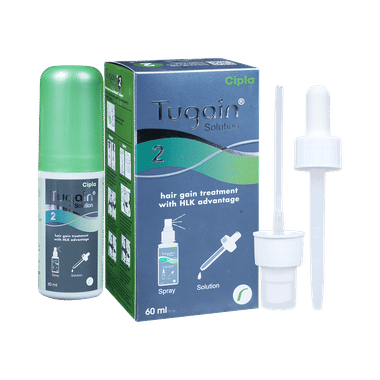
Available alternative from Cipla
Sold out

Pilogro Solution
bottle of 60 ml Solution
₹195

Same composition
Tugain 2% Solution
bottle of 60 ml Solution
by Cipla Ltd
Get in 60 mins

₹465
₹6.58 per ml
₹395
order for
₹1200
Save more with additional offers

Get upto Rs.150 Cashback on minimum transaction of Rs.599/- with Mobikwik UPI (@ikwik).
Get upto Rs.150 Cashback on minimum transaction of Rs.599/- with Mobikwik UPI (@ikwik).


Get up to ₹75 cashback on a minimum order value (MOV) of ₹499 and above, valid once per customer.
Get up to ₹75 cashback on a minimum order value (MOV) of ₹499 and above, valid once per customer.
Get up to ₹75 cashback on a minimum order value (MOV) of ₹499 and above, valid once per customer.
Get up to ₹75 cashback on a minimum order value (MOV) of ₹499 and above, valid once per customer.
Get upto Rs.150 Cashback on minimum transaction of Rs.599/- with Mobikwik UPI (@ikwik).
Get upto Rs.150 Cashback on minimum transaction of Rs.599/- with Mobikwik UPI (@ikwik).
Get up to ₹75 cashback on a minimum order value (MOV) of ₹499 and above, valid once per customer.
Get up to ₹75 cashback on a minimum order value (MOV) of ₹499 and above, valid once per customer.
Get up to ₹75 cashback on a minimum order value (MOV) of ₹499 and above, valid once per customer.
Get up to ₹75 cashback on a minimum order value (MOV) of ₹499 and above, valid once per customer.
Flat Rs.150 on a Min Transaction of Rs.1000.
Flat Rs.150 on a Min Transaction of Rs.1000.

Assured cashback up to ₹300*. T&C Apply*
Assured cashback up to ₹300*. T&C Apply*
General Information

The content is shown in English




All substitutes for Pilogro Solution
For information purposes only. Consult a doctor before taking any medicine.
MX 2 Solution
by Hegde and Hegde Pharmaceutica LLP
₹407.81/solution
109% costlier
Tugain 2% Solution
by Cipla Ltd
₹482.19/solution
147% costlier
Regaine 2% Solution
by Janssen Pharmaceuticals
₹478.1/solution
145% costlier
Mintop Alcohol Free 2% Solution
by Dr. Reddy's Laboratories Ltd.
₹413.34/solution
112% costlier
New Hair 4U 2% Solution
by Glenmark Pharmaceuticals Ltd
₹404/solution
107% costlier
Safety advice

Alcohol
No interaction found/established

Pregnancy
CONSULT YOUR DOCTOR
Pilogro Solution is not recommended during pregnancy as there is positive evidence of fetal risk based on animal studies. However, it may still be prescribed by a doctor in situations where the benefits outweigh the risks.
Pilogro Solution is not recommended for use in women.
Pilogro Solution is not recommended for use in women.

Breast feeding
CONSULT YOUR DOCTOR
Pilogro Solution may be unsafe to use during breastfeeding. Limited human data suggests that the drug may pass into the breastmilk and harm the baby. It should be used only if the expected benefit outweighs the potential risk. Please consult your doctor.
Pilogro Solution is not recommended for use in women.
Pilogro Solution is not recommended for use in women.

Driving
No interaction found/established

Kidney
No interaction found/established

Liver
No interaction found/established

Related lab tests
References
- Burkhart C, Morrell D, Goldsmith L. Dermatological Pharmacology. In: Brunton LL, Chabner BA, Knollmann BC, editors. Goodman & Gilman’s: The Pharmacological Basis of Therapeutics. 12th ed. New York, New York: McGraw-Hill Medical; 2011. p. 1829.
- Benowitz NL. Antihypertensive Agents. In: Katzung BG, Masters SB, Trevor AJ, editors. Basic and Clinical Pharmacology. 11th ed. New Delhi, India: Tata McGraw Hill Education Private Limited; 2009. p. 179.
- Briggs GG, Freeman RK, editors. A Reference Guide to Fetal and Neonatal Risk: Drugs in Pregnancy and Lactation. 10th ed. Philadelphia, PA: Wolters Kluwer Health; 2015. pp. 922-24.
- [EMC SmPC]. Val-de-Reuil, France: Janssen-Cilag; 2018. [Accessed 17 Jun. 2019] (online) Available from:

- 5% Minoxidil Topical Solution [Product Information]. New York, NY: Avacor Products LLC; 2019. [Accessed 31 Jan. 2023] (online) Available from:
- Minoxidil Topical Solution [Product Label]. Skillman, NJ: Johnson & Johnson Healthcare Products; 2014. [Accessed 31 Jan. 2023] (online) Available from:
- Minoxidil (5% w/v cutaneous solution) [Package Information Leaflet]. Athens, Greece: Target Pharma Ltd.; 2012. [Accessed 31 Jan. 2023] (online) Available from:
- Minoxidil 5% cutaneous solution [Package leaflet: Information for the user]. London, UK: Careforsons Limited; 2020. [Accessed 31 Jan. 2023] (online) Available from:
- Minoxidil (For Men) [FDA Label]. Hawthorne, NY: Taro Pharmaceuticals U.S.A., Inc.; 2021. [Accessed 11 Jul. 2023]. (online) Available form:
- Minoxidil (For Women) [FDA Label]. Jersey City, NJ: International Hair Institute, LLC; 2022. [Accessed 11 Jul. 2023]. (online) Available form:
Related products
Products related to Pilogro Solution





100% genuine products

Safe & secure payments

No contact delivery

Fully sanitized facilities

Want to know more
We provide you with authentic, trustworthy and relevant information
Have issue with the content
Why we need a prescription?

