










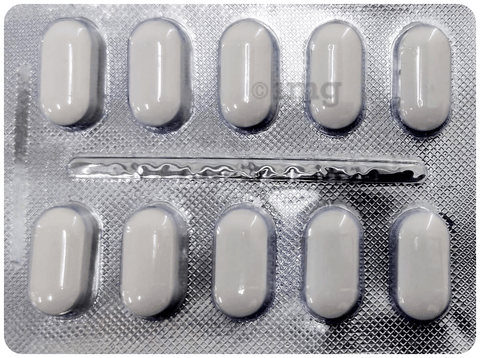
Caticap-DT Tablet
Capecitabine (500mg)
 Genuine
Authenticity Assured
 Prescription
required
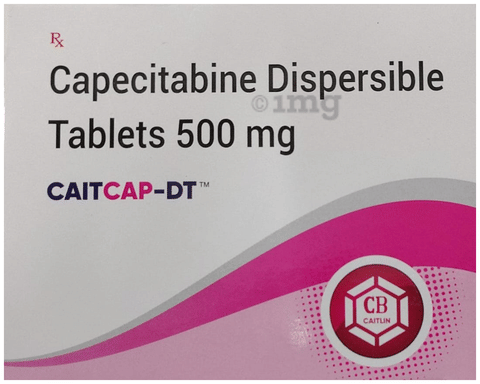
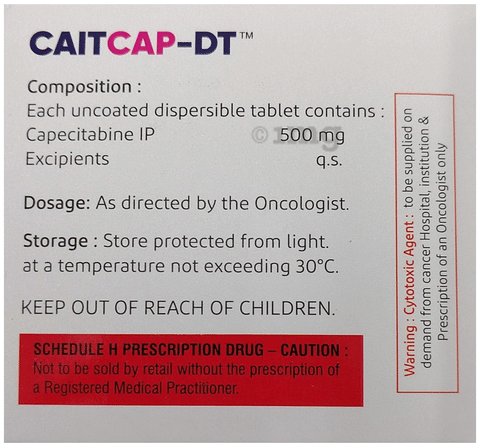
Caticap-DT Tablet is used in the treatment of cancer of breast, colon, and rectum. It may be also used to treat other conditions, as determined by the doctor. It is used alone or in combination with some other medicine as a part of chemotherapy.
Written By Dr. Subita Alagh, BDS,
Reviewed By Dr. Sachin Gupta, MD Pharmacology, MBBS,
Last updated on 06 Sep 2026 | 01:02 AM (IST)
Written By Dr. Subita Alagh, BDS,
Reviewed By Dr. Sachin Gupta, MD Pharmacology, MBBS,
Last updated on 06 Sep 2026 | 01:02 AM (IST)
Save more with additional offers

Get up to ₹75 cashback on a minimum order value (MOV) of ₹499 and above, valid once per customer.
Get up to ₹75 cashback on a minimum order value (MOV) of ₹499 and above, valid once per customer.

Get up to ₹75 cashback on a minimum order value (MOV) of ₹499 and above, valid once per customer.
Get up to ₹75 cashback on a minimum order value (MOV) of ₹499 and above, valid once per customer.

Flat Rs.150 on a Min Transaction of Rs.1000.
Flat Rs.150 on a Min Transaction of Rs.1000.
Get up to ₹75 cashback on a minimum order value (MOV) of ₹499 and above, valid once per customer.
Get up to ₹75 cashback on a minimum order value (MOV) of ₹499 and above, valid once per customer.
Get up to ₹75 cashback on a minimum order value (MOV) of ₹499 and above, valid once per customer.
Get up to ₹75 cashback on a minimum order value (MOV) of ₹499 and above, valid once per customer.
Flat Rs.150 on a Min Transaction of Rs.1000.
Flat Rs.150 on a Min Transaction of Rs.1000.

Assured cashback up to ₹300*. T&C Apply*
Assured cashback up to ₹300*. T&C Apply*
General Information

The content is shown in English



Safety advice

Alcohol
CONSULT YOUR DOCTOR
It is not known whether it is safe to consume alcohol with Caticap-DT Tablet. Please consult your doctor.

Pregnancy
UNSAFE
Caticap-DT Tablet is highly unsafe during pregnancy. It can cause serious harm to the unborn baby, including birth defects and pregnancy loss. Do not use this medicine if you are pregnant or planning to become pregnant.

Breast feeding
UNSAFE
Caticap-DT Tablet is unsafe to use during breastfeeding. Data suggests that the drug may cause toxicity to the baby.

Driving
UNSAFE
Caticap-DT Tablet may decrease alertness, affect your vision, or make you feel sleepy and dizzy. Do not drive if these symptoms occur.

Kidney
CAUTION
Caticap-DT Tablet should be used with caution in patients with kidney disease. Dose adjustment may be needed.
Use of Caticap-DT Tablet is not recommended in patients with severe kidney disease.
Use of Caticap-DT Tablet is not recommended in patients with severe kidney disease.

Liver
CAUTION
Caticap-DT Tablet should be used with caution in patients with liver disease. Dose adjustment may be needed.
Use of Caticap-DT Tablet is not recommended in patients with severe kidney disease.
Use of Caticap-DT Tablet is not recommended in patients with severe kidney disease.

Related lab tests
References
- Chabner BA, Bertino J, Cleary J, et al. Cytotoxic Agents. In: Brunton LL, Chabner BA, Knollmann BC, editors. Goodman & Gilman’s: The Pharmacological Basis of Therapeutics. 12th ed. New York, New York: McGraw-Hill Medical; 2011. p. 1698.
- Chu E, Sartorelli AC. Cancer Chemotherapy. In: Katzung BG, Masters SB, Trevor AJ, editors. Basic and Clinical Pharmacology. 11th ed. New Delhi, India: Tata McGraw Hill Education Private Limited; 2009. p. 947.
- Briggs GG, Freeman RK, editors. A Reference Guide to Fetal and Neonatal Risk: Drugs in Pregnancy and Lactation. 10th ed. Philadelphia, PA: Wolters Kluwer Health; 2015. p. 191.
- Drugs and Lactation Database (LactMed) [Internet]. Bethesda (MD): National Library of Medicine (US); 2006. Capecitabine. [Updated 2018 Dec 3]. [Accessed 18 Feb. 2020] (online) Available from:

- Central Drugs Standard Control Organisation (CDSCO). [Accessed 27 Mar. 2019] (online) Available from:
- Fresenius Kabi. Capecitabine [producr Information]. [Accessed 12 Jun, 2023] (online) Available from:
Related products
Products related to Caticap-DT Tablet





Related ayurvedic ingredients


100% genuine products

Safe & secure payments

No contact delivery

Fully sanitized facilities

Want to know more
We provide you with authentic, trustworthy and relevant information
Have issue with the content
Why we need a prescription?

