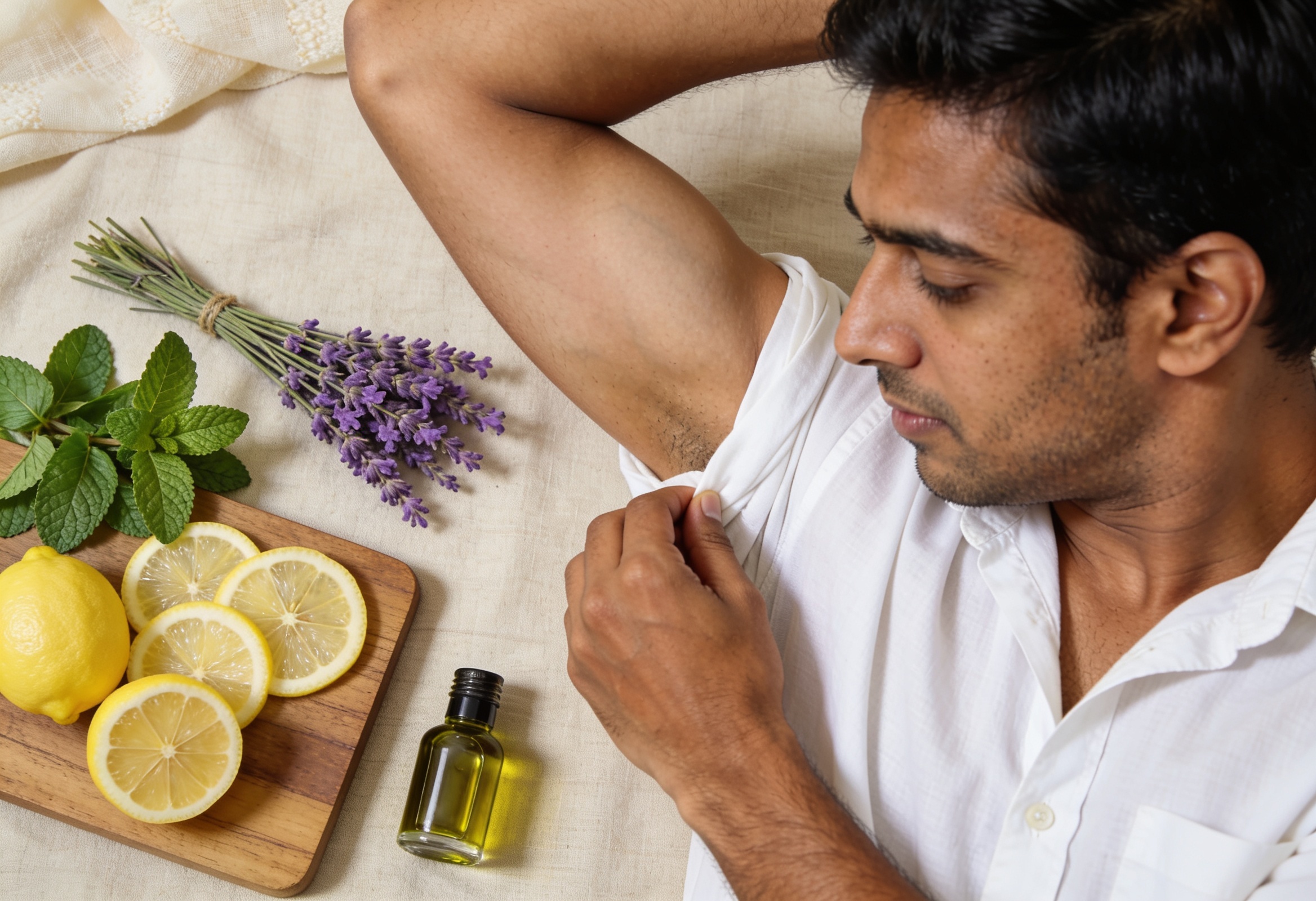
Tried deodorant after deodorant, but that stubborn body odor keeps creeping back by afternoon? Essential oils for body odor have become a popular natural alternative, and there’s actually solid science behind why some of them work. This guide breaks down which essential oils have real antibacterial backing, how to use them safely, and what to watch out for before you apply anything to your skin.
What Causes Body Odor?

Here’s something you probably didn’t know: sweat itself doesn’t actually smell. Body odor happens when bacteria living on your skin, mainly Corynebacterium and Staphylococcus species, break down compounds in your sweat into smaller, odor-producing molecules. The type and amount of these bacteria vary from person to person, which is why everyone’s body odor is different. [1].
Additionally, these bacteria mostly live in warm, damp spots like your underarms, which is exactly why odor tends to show up there first. That’s the whole idea behind essential oils for body odor: the right ones fight the bacteria causing the smell, not just cover it up with a stronger scent [1].
Best Essential Oils for Body Odor
1. Tea Tree Oil

Tea tree oil is probably the most well-tested option on this list, and for good reason. It contains a natural compound that’s strong at killing bacteria, including some tough, hard-to-treat strains [2]. That makes it a solid pick if you’re dealing with a stubborn odor that regular deodorant doesn’t seem to fix. Additionally, lab studies have shown it works well against several types of bacteria commonly found on skin [3]. It does have a sharp, medicine-like smell, though, so some people prefer mixing it with a milder oil. Even so, if you want an essential oil with the most research behind it, tea tree oil is a particularly good place to start.
2. Lavender Oil
Lavender isn’t just known for its calming, relaxing scent, it also has real bacteria-fighting properties. Research shows lavender oil works against several common types of skin bacteria, and it does this by breaking down the outer layer of the bacteria so they can’t survive [4]. What makes lavender especially nice is how gentle it feels on skin compared to sharper oils like tea tree. That said, if you have sensitive skin or just don’t love strong medicinal smells, lavender is usually a comfortable middle ground. Plus, its soothing scent is a lovely bonus if you’re using it in the evening or before bed, since it can help you feel more relaxed too [4].
3. Lemon Oil

Lemon oil has that bright, clean citrus scent that just feels instantly refreshing, and it comes with some natural bacteria-fighting power too. A lot of people gravitate toward it simply because it smells like fresh citrus instead of something medicinal. That said, there’s one thing you really need to know before using it: lemon oil can make your skin more sensitive to sunlight. So if you put it on and then step out into the strong sun, you might end up with irritation or a rash in that spot. Because of this, it’s smarter to save lemon oil for evening use, or make sure the area stays covered if you’re heading out during the day. It also pairs beautifully with gentler oils like lavender [6].
4. Eucalyptus Oil

Eucalyptus oil has a strong, refreshing, almost medicinal smell, similar to what you’d find in cold and cough remedies. Lab studies also show that eucalyptus oil has good bacteria-fighting effects, which is part of why manufacturers often include it in natural deodorant products. Many people like combining eucalyptus with tea tree oil, since together they create an even stronger blend against odor-causing bacteria. That said, because the scent is quite intense, you only need a small amount. If you enjoy a fresh, almost spa-like smell rather than something floral or citrusy, eucalyptus is worth trying as part of your mix [5].
5. Peppermint Oil
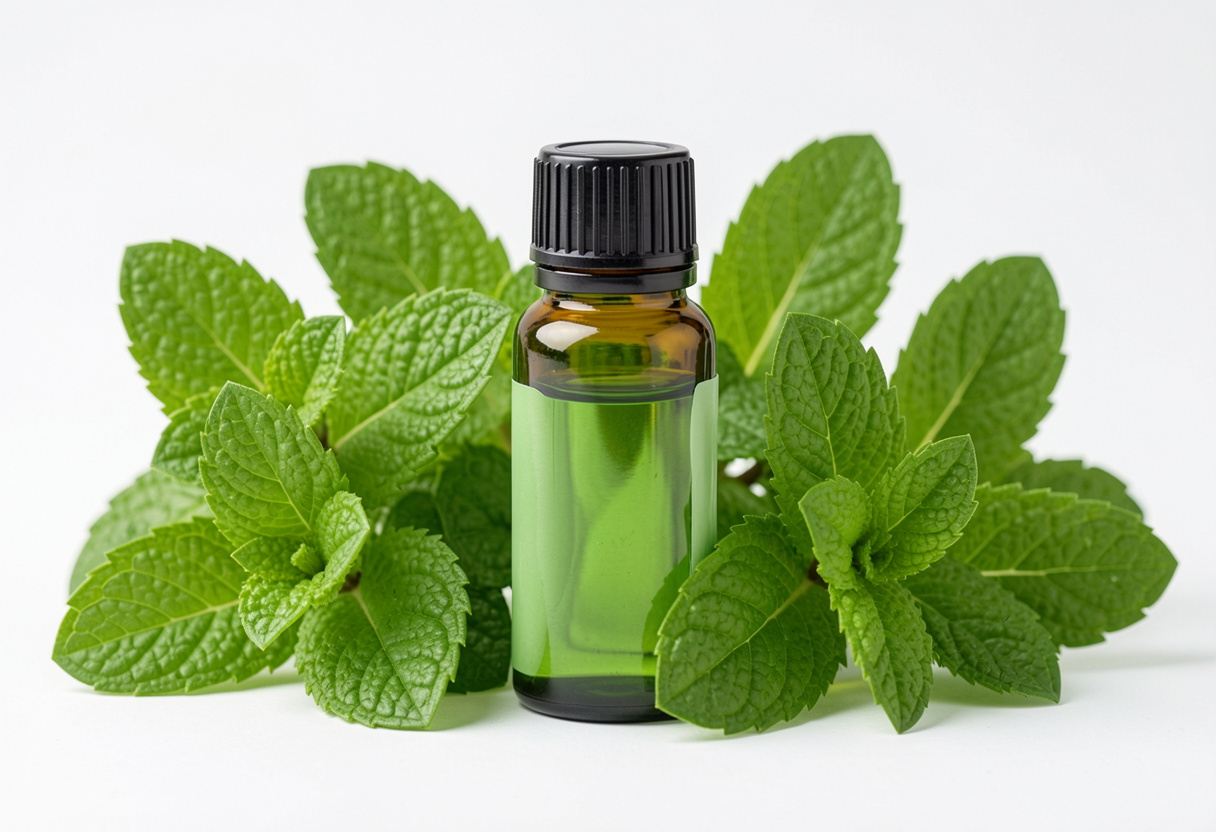
If you love that cool, tingly feeling on your skin, peppermint oil is worth trying. It’s especially refreshing on a hot day or right after you’ve worked out, thanks to the natural menthol that gives your skin that little zing. That said, peppermint packs a punch, so always dilute it well before it touches your skin. Skip that step, and it can feel far too intense, sometimes even a bit irritating. A lot of people like mixing a small amount of peppermint with something gentler, like lavender, so the coolness comes through without overwhelming your skin. If you’re tired of the usual floral or citrus options, peppermint is a fun, energizing change of pace [5].
How to Use Essential Oils for Body Odor Safely?

Here’s the thing about essential oils: they’re way too concentrated to put straight on your skin. You’ll always want to mix them with something first. Here’s how to do it right:
- Mix 2-3 drops of essential oil with a tablespoon of a carrier oil, like coconut or jojoba oil
- Dab a little on your inner arm and wait a day to see how your skin reacts
- Once it checks out, apply the diluted mix to clean, dry underarms
- Reapply once or twice a day, whenever you need it
One thing worth remembering: essential oils won’t stop you from sweating. What they actually do is keep the odor-causing bacteria in check while leaving behind a nice, natural scent.
Important Safety Precautions
Just because it’s natural doesn’t mean it’s totally risk-free. Keep a few simple things in mind:
- Always dilute essential oils before putting them on your skin, undiluted oils can burn or irritate
- Stay away from applying them on cuts or already-irritated skin
- Talk to your doctor first if you’re pregnant or breastfeeding
- Keep them out of reach of kids, since some can be harmful if swallowed
- If you notice redness, itching, or a rash, stop using it right away
When to See a Doctor
Every now and then, a sudden or unusually strong change in body odor is your body’s way of flagging something bigger, like a hormone shift or an infection. So if your odor suddenly changes and doesn’t get better even with good hygiene, or you notice extra sweating, tiredness, or unexplained weight changes alongside it, it’s worth getting checked out.
The Bottom Line
Essential oils for body odor aren’t just some passing trend. Oils like tea tree and lavender really do have science backing their ability to fight odor-causing bacteria. That said, think of them as a helpful addition to good hygiene, not a replacement for it, and always dilute them properly before use.
If your body odor changes out of nowhere or just won’t budge no matter what you try, don’t brush it off. Book a consultation through Tata 1mg to check if something else might be going on.
FAQs
Can I apply essential oils directly to my armpits?
No, undiluted essential oils can irritate or burn your skin. Always mix them with a carrier oil like coconut or jojoba oil first.
Which essential oil smells the strongest for body odor?
Tea tree oil has a sharp, medicinal scent that’s noticeable on its own, while lavender and lemon offer a milder, more pleasant fragrance alongside their antibacterial effects.
Do essential oils replace deodorant completely?
They can be effective for some people, but results vary. Many people use essential oil blends alongside a regular deodorant rather than as a full replacement.
Can essential oils cause allergic reactions?
Yes, some people develop skin irritation or allergic reactions to essential oils. Always patch test on a small area before regular use.
How long do essential oils last on skin before reapplying?
Effects typically last a few hours, so most people reapply once or twice a day, especially after sweating heavily.
Is coconut oil a good carrier oil for essential oils?
Yes, coconut oil is a popular carrier oil since it’s gentle on skin and has some antibacterial properties of its own, making it a good pairing for body odor blends.
Can alum (phitkari) help reduce body odor?
Alum (phitkari) may help reduce body odor by limiting the growth of odor-causing bacteria on the skin. It also has mild astringent properties that may slightly reduce moisture, but it does not reduce sweating as effectively as commercial antiperspirants, which use specific aluminium salts to temporarily block sweat ducts [6].
Disclaimer: This article is for informational purposes only and is not a substitute for professional medical advice. Patch test any new topical product and consult your doctor before use, especially if pregnant, breastfeeding, or if you have sensitive skin.
References:
1. Callewaert C, Kerckhof FM, Granitsiotis MS, Van Gele M, Van de Wiele T, Boon N. Characterization of Staphylococcus and Corynebacterium clusters in the human axillary region. PLoS ONE. 2013;8(8):e70538. Available from: https://www.ncbi.nlm.nih.gov/pmc/articles/PMC3741381/
2. Kwiatkowski P, et al. High Potency of Melaleuca alternifolia Essential Oil against Multi-Drug Resistant Gram-Negative Bacteria and Methicillin-Resistant Staphylococcus aureus. Braz J Microbiol. 2018. Available from: https://www.ncbi.nlm.nih.gov/pmc/articles/PMC6222846/
3. Antimicrobial Activity of Selected Essential Oils against Selected Pathogenic Bacteria: In Vitro Study. PMC. Available from: https://pmc.ncbi.nlm.nih.gov/articles/PMC8151751/
4. Son HT, Choi HS, Cho SS, Park DH. Human Body Malodor and Deodorants: The Present and the Future. Int J Mol Sci. 2025 Oct 27;26(21):10415. doi: Available from: https://pmc.ncbi.nlm.nih.gov/articles/PMC12609316/#sec2-ijms-26-10415
5. Zhang J, Han P, Yang F, Jiang B. Advances in the treatment of axillary bromhidrosis. Skin Res Technol. 2024 Aug;30(8):e13895. doi: 10.1111/srt.13895. PMID: 39096181; PMCID: PMC11297419. Available from: https://pmc.ncbi.nlm.nih.gov/articles/PMC11297419/
6. Nur Adani R, et al. Potassium Aluminium Sulphate (Alum) Inhibits Growth of Human Axillary Malodor-Producing Skin Flora in Vitro.Available from: https://www.researchgate.net/publication/305116293_Potassium_Aluminium_Sulphate_Alum_Inhibits_Growth_of_Human_Axillary_Malodor-Producing_Skin_Flora_in_Vitro
(The article is written by Nancy Dixit, Associate Manager, Clinical Health & Content, Medical Affairs, and reviewed by Monalisa Deka, Deputy Manager, Clinical Health & Content, Medical Affairs.)
Recommended Reads:
Troubled By Body Odour? Here Are Practical Ways To Get Rid Of It!