Neuronal Paraneoplastic Profile Serum
Also referred as
Neuronal Antibody Profile

For men & women
Earliest reports in

96 hours

Contains

14 tests
Test price:
₹9399
12% off
Get it at ₹7989 with coupon
Apply coupon 1MGNEWG during checkout


More offers available

Know more about this test

The Neuronal Paraneoplastic Profile Serum measures specific antibodies in the cerebrospinal fluid (CSF) that target proteins of the nervous system. These antibodies, known as paraneoplastic or neuronal autoantibodies, are directly associated with inflammation or immune activity within the central nervous system (CNS). This panel includes multiple antibodies (such as Hu, Yo, Ri, Ma, CV2, Amphiphysin, and others) and is especially useful in evaluating neurological symptoms like seizures, memory loss, confusion, or coordination issues, particularly when a central nervous system cause is suspected.


Samples required
Blood

Find out
Why is this test booked?

Preparation for this test

Sample Collection
Who will collect your samples?
Conducted by

Tata 1mg Labs


Accredited
labs
Highly skilled
Phlebos
Verified
reports
Who will collect your samples?
Tata 1mg certified phlebotomists
Know more about lab
Test Information is reviewed by: Dr. Swati Gupta (Anand), MD Lab Medicine, MBBS and written by Dr. Lipika Khurana, PGDHHM, BDS . The test details are for information purpose only. Consult a doctor before taking any test. Last updated on: 19th Aug 2026
Did you find information useful ?
 YES
YES  NO
NO 
Book a Neuronal Paraneoplastic Profile Serum test at home near me
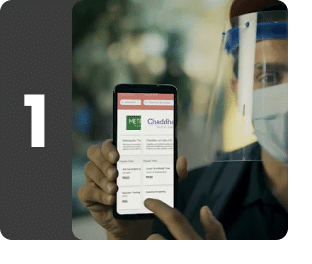
Easy online booking
Search for tests and packages, book your preferred time slot and enter your address for seamless at-home lab tests.
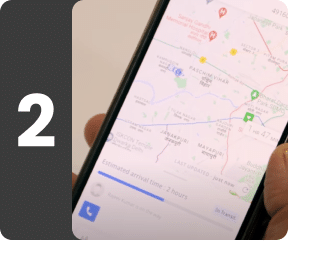
Live tracking of phlebotomist
Track our trained phlebotomist's real time location for seamless sample collection.
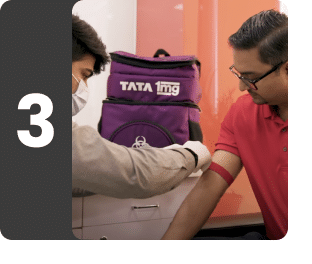
Safe Sample Collection
Our phlebotomists follow strict safety protocols to collect samples safely at home and on time.
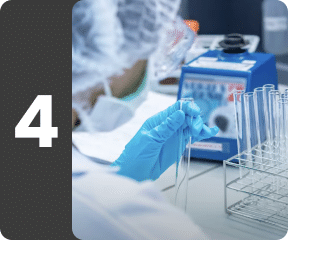
Sample received at lab
Samples are transported securely to our accredited labs with world-class machines for testing by qualified experts.
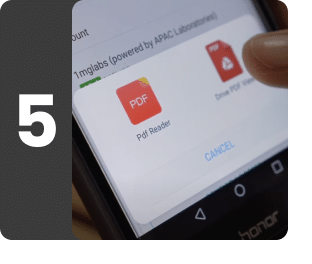
Quick, Doctor-Verified Reports
Get doctor-approved reports via email and WhatsApp, with options for doctor follow-ups and AI insights.



References
- Li L, Guo Y, Wang J. Detection of paraneoplastic antibodies and their significance in paraneoplastic neurologic syndromes: a narrative review. Ann Transl Med. 2023 Apr 15;11(7):283. [Accessed 26 Aug. 2025]. Available From:

- Thapa B, Mahendraker N, Ramphul K. Paraneoplastic Syndromes. [Updated 2023 Mar 31]. In: StatPearls [Internet]. Treasure Island (FL): StatPearls Publishing; 2025 Jan-. Available from:
- Kannoth S. Paraneoplastic neurologic syndrome: A practical approach. Ann Indian Acad Neurol. 2012 Jan;15(1):6-12. [Accessed 26 Aug. 2025]. Available From:

Recommended for everyone
This package is designed with everyone’s overall health considerations in mind, offering assessments to address a wide range of wellness needs.
Contains 14 tests
Report delivery
Standard time
96 hrs
For slots after 11 AM, report will be delivered in 120 hours.
Samples required

Blood
1 vial required
Our phlebotomist will draw a blood sample, typically from a vein in your inner elbow.
Preparations
1
Clinical history is preferred.
Why is this test booked?
1
To help diagnose paraneoplastic disorders due to certain types of tumors. Tumors that commonly cause paraneoplastic disorders are small-cell lung carcinoma, seminoma, breast carcinoma, and ovarian carcinoma.
2
For the diagnosis of autoimmune encephalitis.
3
For differential diagnosis in patients with encephalitis of unknown origin.
4
In detecting antibodies against different neuronal antigens.
5
To detect antibodies against neuronal antigens such as amphiphysin, Ri, Yo, HuD, CV2 (CRMP5), Ma1, Ma2, and SOX1.
Coupon details
Get it at ₹7989 with coupon
Get upto 15% off on your lab tests
Maximum discount: ₹1500
1MGNEWG

10% off
₹999

13% off
₹3000
15% off
₹5000
Available Offers
Get additional 15% off
Get 15% off on your first order of lab tests
Maximum discount: ₹300
1MGNEW
Get additional upto 15% off
Get upto 15% off on your lab tests
Maximum discount: ₹1500
1MGNEWG
Upto ₹650 off on all lab tests
Get upto ₹650 off on all lab tests
Maximum discount: ₹650
1MGSUPER
Upto Rs 1500 off on all lab tests
Get upto ₹1500 off on all lab tests
Maximum discount: ₹1500
1MGSUPERMAX
Flat 20% off on all lab tests
Get flat 20% off on all lab tests
Maximum discount: ₹2500
1MGMAX20
Who's behind your sample collection?




MEET YOUR PHLEBO

Certified & experienced professionals
Tata 1mg phlebotomists are DMLT / B.Sc MLT certified and have 1+ years of experience
Best in-class collections
Tata 1mg phlebotomists are trained for painless, single-prick hygienic sample collection

Comprehensive expertise
Other than sample collection, our phlebos are also skilled in first aid, ECG & BP monitoring
WHAT OUR CUSTOMERS ARE SAYING
Lokesh was very professional and one of the best … I didn’t even feel a prick. Thank you Lokes!!!!
~ Amelia

Professional services
~ V GANESH KUMAR
Very nice person and very good suggestions also
~ Reva Rahul Dalvi
Reports are pending
~ Ketan Porwal
I didn't receive report by mail from your side till now
~ PAZUL RAHUMAN K
very good
~ NEELIMA PRASAD BENDRE 7000118483
Good
~ AMIT KUMAR SHAW
Good
~ SANAPALA VEDA KUMARI 7000133282
Na
~ Aarti Agarwal