Lambda Light Chains - Free, Serum
Also referred as
Free Lambda Light Chain Test

For men & women
Earliest reports in

48 hours

Contains

1 test

More offers available

Know more about this test

The Lambda Light Chains - Free, Serum test measures the level of free lambda light chains in the blood. Light chains are small protein components of antibodies produced by plasma cells in the bone marrow. Elevated levels may indicate abnormal plasma cell activity, making this test useful for diagnosing and monitoring conditions such as multiple myeloma, monoclonal gammopathy, amyloidosis, and other plasma cell disorders.


Samples required
Blood

Find out
Why is this test booked?

Preparations
No special preparation is required.

Sample Collection
Who will collect your samples?
Conducted by

Tata 1mg Labs


Accredited
labs
Highly skilled
Phlebos
Verified
reports
Who will collect your samples?
Tata 1mg certified phlebotomists
Know more about lab
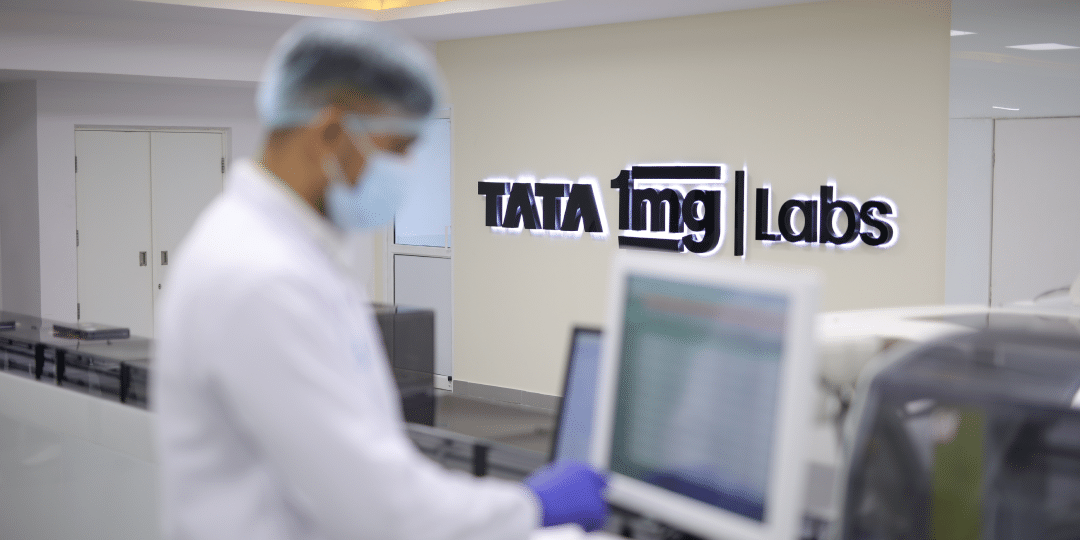
Test Information is reviewed by: Dr. Swati Gupta (Anand), MD Lab Medicine, MBBS and written by Shweta Prakash, MSc, BSc . The test details are for information purpose only. Consult a doctor before taking any test. Last updated on: 17th Aug 2026
Did you find information useful ?
 YES
YES  NO
NO 
Book a Lambda Light Chains - Free, Serum test at home near me
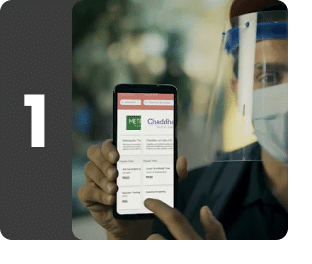
Easy online booking
Search for tests and packages, book your preferred time slot and enter your address for seamless at-home lab tests.
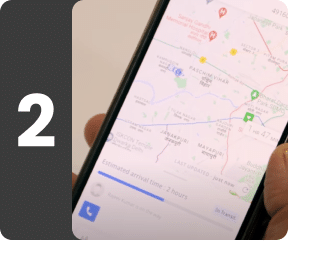
Live tracking of phlebotomist
Track our trained phlebotomist's real time location for seamless sample collection.
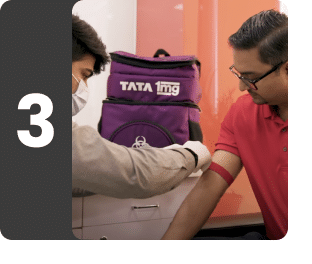
Safe Sample Collection
Our phlebotomists follow strict safety protocols to collect samples safely at home and on time.
Sample received at lab
Samples are transported securely to our accredited labs with world-class machines for testing by qualified experts.
Quick, Doctor-Verified Reports
Get doctor-approved reports via email and WhatsApp, with options for doctor follow-ups and AI insights.



References
- Free light chains (Blood) [Internet].Rochester, NY: University of Rochester Medical Center; [Accessed 28 May 2026]. Available from:

- Tosi P, Tomassetti S, Merli A, Polli V. Serum free light-chain assay for the detection and monitoring of multiple myeloma and related conditions. Ther Adv Hematol. 2013 Feb;4(1):37-41. [Accessed 28 May 2026]. Available from:
- Arneth B, Kraus J. The Use of Kappa Free Light Chains to Diagnose Multiple Sclerosis. Medicina (Kaunas). 2022 Oct 24;58(11):1512. [Accessed 28 May 2026]. Available from:
- Gudowska-Sawczuk M, Mroczko B. Free Light Chains κ and λ as New Biomarkers of Selected Diseases. Int J Mol Sci. 2023 May 31;24(11):9531. [Accessed 28 May 2026]. Available from:
- Silva C, Costa A, Paiva D, Freitas S, Alves G, Cotter J. Light-Chain Multiple Myeloma: A Diagnostic Challenge. Cureus. 2021 Oct 29;13(10):e19131. [Accessed 28 May 2026]. Available from:
- Plasma Cell Dyscrasia [Internet]. ScienceDirect; [Accessed 28 May 2026]. Available from:

Recommended for everyone
This package is designed with everyone’s overall health considerations in mind, offering assessments to address a wide range of wellness needs.
Contains 1 test
Report delivery
Standard time
48 hrs
For slots after 11 AM, report will be delivered in 72 hours.
Samples required

Blood
1 vial required
Our phlebotomist will draw a blood sample, typically from a vein in your inner elbow.
Preparations
1
No special preparation is required.
Why is this test booked?
1
To help diagnose plasma cell disorders such as multiple myeloma and amyloidosis
2
To evaluate abnormal antibody protein production
3
To measure excess free lambda light chain levels in the blood
4
To assist in the assessment of monoclonal gammopathies
5
To monitor treatment response and disease progression in plasma cell disorders
6
To evaluate unexplained kidney dysfunction or abnormal protein findings
Available Offers
Get additional 15% off
Get 15% off on your first order of lab tests
Maximum discount: ₹300
1MGNEW

Get additional upto 15% off
Get upto 15% off on your lab tests
Maximum discount: ₹1500
1MGNEWG
Upto ₹650 off on all lab tests
Get upto ₹650 off on all lab tests
Maximum discount: ₹650
1MGSUPER
Upto Rs 1500 off on all lab tests
Get upto ₹1500 off on all lab tests
Maximum discount: ₹1500
1MGSUPERMAX
Flat 20% off on all lab tests
Get flat 20% off on all lab tests
Maximum discount: ₹2500
1MGMAX20
Who's behind your sample collection?




MEET YOUR PHLEBO

Certified & experienced professionals
Tata 1mg phlebotomists are DMLT / B.Sc MLT certified and have 1+ years of experience

Best in-class collections
Tata 1mg phlebotomists are trained for painless, single-prick hygienic sample collection

Comprehensive expertise
Other than sample collection, our phlebos are also skilled in first aid, ECG & BP monitoring
WHAT OUR CUSTOMERS ARE SAYING
Lokesh was very professional and one of the best … I didn’t even feel a prick. Thank you Lokes!!!!
~ Amelia

Very proactive and smooth experiance
~ Dhaval Moliya
Professional services
~ V GANESH KUMAR
Very nice person and very good suggestions also
~ Reva Rahul Dalvi
I didn't receive report by mail from your side till now
~ PAZUL RAHUMAN K
Reports are pending
~ Ketan Porwal
Till date 17.07.2026 reports not received from your side or bank side .. what for it was conducted reply suitabily ... [email protected].. reply me
~ Narayan naik
After 24 hrs also have not got my basic reports like LFT, KFT SERUM THYRO OR LIPID RESULTS
~ Sankalpa Sen
very good
~ NEELIMA PRASAD BENDRE 7000118483