







AFB DNA Detection by RT-PCR-blood




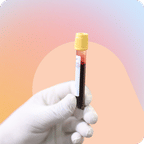
The AFB DNA Detection by RT-PCR-blood test is used to detect the presence of genetic material (DNA) of acid-fast bacilli in the blood. This test identifies Mycobacterium tuberculosis complex (MTBC) and Non-tuberculous Mycobacteria (NTM/ MOTT). This test uses RT-PCR technology that aids in the early detection of tuberculosis (TB), a highly infectious disease.








Tuberculosis (TB) is an infectious disease caused by bacteria belonging to the Mycobacterium tuberculosis complex (MTBC). It most commonly affects the lungs but can also involve other organs. TB spreads through the air when a person with active pulmonary TB coughs, sneezes, or speaks. A related group of organisms, known as non-tuberculous mycobacteria (NTM) or Mycobacteria Other Than Tuberculosis (MOTT), are environmental bacteria that can cause lung and other infections, particularly in individuals with underlying lung disease or weakened immunity. Both MTBC and NTM are classified as acid-fast bacilli (AFB) due to their unique cell wall structure, which requires specialized staining methods for microscopic detection.
Your doctor may recommend the AFB DNA Detection by RT-PCR-blood test if you exhibit symptoms such as persistent cough, blood in sputum, fever, unexplained weight loss, chest pain, chills, night sweats, or fatigue. Individuals with recent exposure to TB, travelers to affected regions, those with weak immune systems, healthcare workers, and participants in TB screening programmes can benefit from the AFB DNA Detection by RT-PCR-blood test. This test also helps identify if the symptoms are caused by TB-causing bacteria and non-tuberculous mycobacteria. Additionally, this test helps evaluate treatment efficacy and assess drug resistance. Due to its airborne transmission of these bacteria, early detection is crucial to prevent their spread and potential complications.
The AFB DNA Detection by RT-PCR-blood test utilizes the real-time polymerase chain reaction (RT-PCR) technique to amplify and detect specific DNA sequences of M. tuberculosis or Non-tuberculous Mycobacteria (NTM/ MOTT) in your blood sample. This qualitative test provides a highly sensitive and specific identification of TB infection, even in cases with low bacterial loads.
No special preparation is required before undertaking the AFB DNA Detection by RT-PCR-blood test. However, it is suggested to inform your doctor about any medications or supplements you are currently taking, as some of them may potentially influence the test results.
Test results for the AFB DNA Detection by RT-PCR-blood test are interpreted as either positive or negative. The interpretation of these results may vary slightly between laboratories due to differences in methodology and laboratory guidelines. It is important to discuss your test results with your doctor, who will consider other factors such as your medical history, symptoms, underlying medical conditions, and additional test results to establish a diagnosis of TB disease accurately.
Please note: This is an outsourced test. The sample is collected by TATA 1MG and processed at a NABL accredited partnered lab.
The AFB DNA Detection by RT-PCR-blood test measures the presence of genetic material (DNA) from Mycobacterium tuberculosis complex (MTBC), the group of bacteria that causes tuberculosis (TB). This test also helps identify MOTT (Mycobacteria Other Than Tuberculosis), which may cause opportunistic infections, especially in people with low immunity. By using RT-PCR technology, this test detects specific DNA sequences of these bacteria in the blood sample. It helps distinguish MTBC and MOTT to find the bacteria causing the infection. The test helps clinicians rapidly identify the type of infection and initiate suitable treatment. However, results should always be interpreted along with clinical findings, imaging studies, and other laboratory tests.
The AFB DNA Detection by RT-PCR-blood test is done:
- For the early detection of tuberculosis (TB) infection caused by Mycobacterium tuberculosis.
- To help diagnose infections caused by non-tuberculous Mycobacteria (NTM)
- To identify TB in individuals with symptoms such as persistent cough, fever, weight loss, and night sweats
- Diagnosing infections caused by Mycobacterium tuberculosis or non-tuberculous Mycobacteria.
- To identify other conditions that may mimic tuberculosis symptoms.
- To screen individuals with recent TB exposure, such as healthcare workers or travelers to affected regions
- To differentiate TB infections from non-tuberculous mycobacterial infections.
- To assist in the diagnosis of TB in immunocompromised individuals, including HIV-positive patients.
- To guide appropriate antimicrobial or anti-tubercular treatment decisions.
- To monitor suspected mycobacterial infections when conventional tests are inconclusive.
- No special preparation is required.


 YES (3)
 NO (1)









- Bayot ML, Mirza TM, Sharma S. Acid Fast Bacteria. [Updated 2023 Aug 7]. In: StatPearls [Internet]. Treasure Island (FL): StatPearls Publishing; 2024 Jan-. Available from:

- Adigun R, Singh R. Tuberculosis. [Updated 2023 Jul 11]. In: StatPearls [Internet]. Treasure Island (FL): StatPearls Publishing; 2023 Jan-. Available from:
- Tuberculosis [Internet]. WHO; 21 Apr. 2023 [Accessed 19 Mar. 2024]. Available from:
- Basic TB Facts [Internet]. CDC; 20 Mar. 2016 [Accessed 19 Mar. 2024]. Available from:
- Narasimhan P, Wood J, Macintyre CR, Mathai D. Risk factors for tuberculosis. Pulm Med. 2013;2013:828939. [Accessed 19 Mar. 2024]. Available from:
- TB Screening (Whole Blood) [Internet]. Rochester, NY: University of Rochester Medical Center; [Accessed 19 Mar. 2024]. Available from:
- Chen G, Qin CJ, Wu MZ, Wu BB, Luo WR, Zhuang H, He XY, Liu SS. Clinical application of RT-PCR in tuberculosis DNA detection combined with TB-IGRA in the diagnosis of sputum smear-negative pulmonary tuberculosis. Acta Clin Croat. 2022 Aug;61(2):193-197. [Accessed 19 Mar. 2024]. Available from:
- Adigun R, Singh R. Tuberculosis. [Updated 2023 Jul 11]. In: StatPearls [Internet]. Treasure Island (FL): StatPearls Publishing; 2024 Jan-. Available from:
- Jilani TN, Avula A, Zafar Gondal A, et al. Active Tuberculosis. [Updated 2023 Jan 26]. In: StatPearls [Internet]. Treasure Island (FL): StatPearls Publishing; 2024 Jan-. Available from:
- Holland SM. Chapter 333 - The Nontuberculous Mycobacteria. Goldman's Cecil Medicine (Twenty Fourth Edition). 2012. [Accessed 27 May 2026]. Available from:
- Alsharani F, Zafar M, Omar EO, Muzaheed. Lifestyle Risk Factors Associated with Tuberculosis Patients in Asir Region of Saudi Arabia. Int J Prev Med. 2021 Jul 9;12:89. Accessed 27 May 2026]. Available from: