Endomysial Antibody, IgA
Also referred as
Endomysial Antibody IgA Test
+3
EMA IgA Test
IgA-EMA Test
Celiac Disease Test

For men & women
Earliest reports in

192 hours

Contains

1 test
Test price:
₹1969
Additional 15% off with coupon
Min. order value: ₹5000 | Coupon: 1MGSUPERMAX


More offers available

Know more about this test

The Endomysial Antibody, IgA test is a blood test that detects IgA antibodies against endomysium, a connective tissue in the intestine. This test supports the diagnosis of celiac disease, an autoimmune condition triggered by gluten consumption.


Samples required
Blood

Find out
Why is this test booked?

Preparations
No special preparation is required.

Sample Collection
Who will collect your samples?
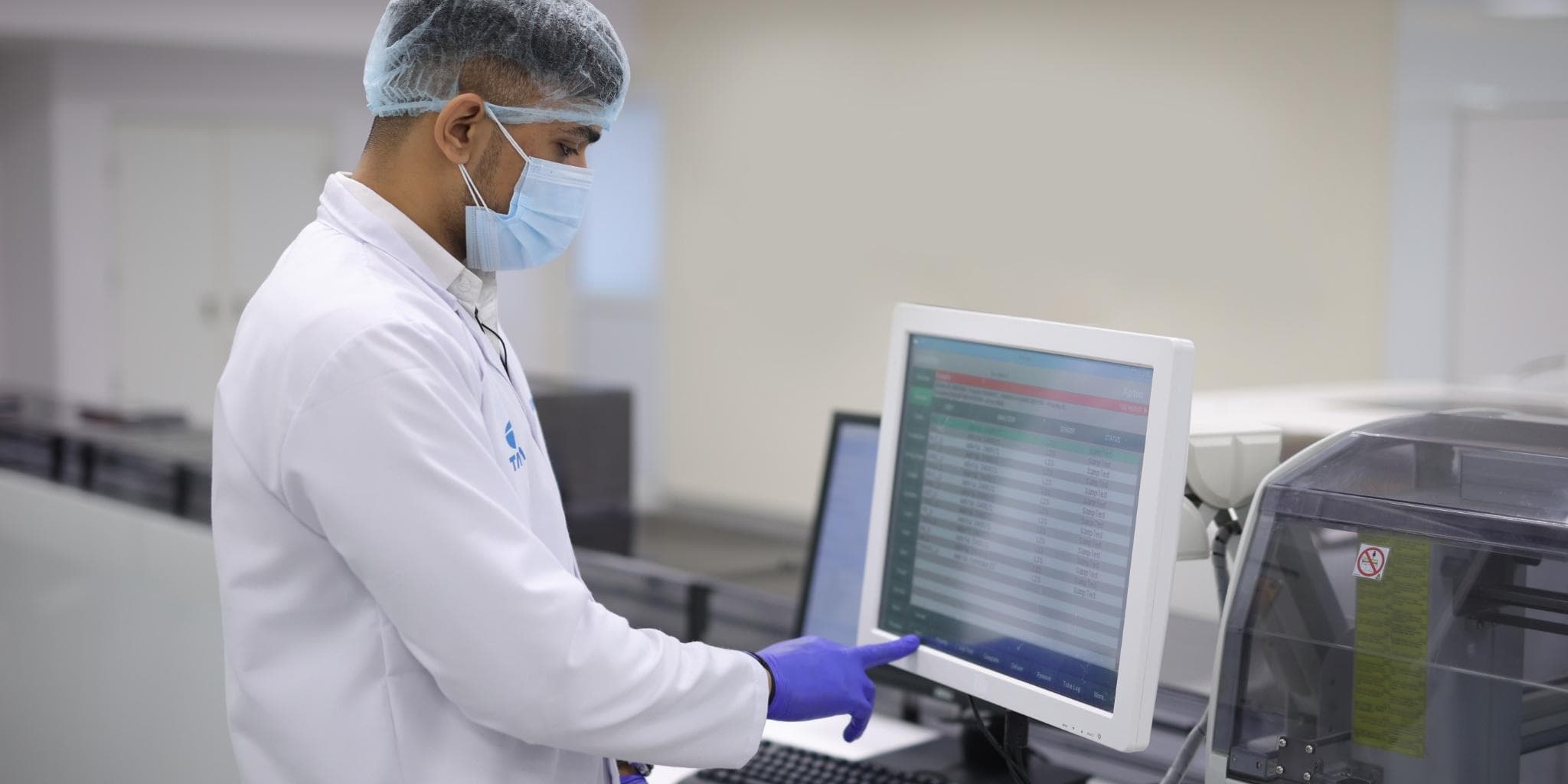
Conducted by

NABL accredited partner lab


Accredited
labs
Highly skilled
Phlebos
Verified
reports
Who will collect your samples?
Tata 1mg certified phlebotomists
Know more about lab
Frequently booked together





Test Information is reviewed by: Dr. Swati Gupta (Anand), MD Lab Medicine, MBBS and written by Dr. Lipika Khurana, PGDHHM, BDS . The test details are for information purpose only. Consult a doctor before taking any test. Last updated on: 12th Apr 2026
Did you find information useful ?
 YES
YES  NO
NO 
Book a Endomysial Antibody, IgA test at home near me

Easy online booking
Search for tests and packages, book your preferred time slot and enter your address for seamless at-home lab tests.

Live tracking of phlebotomist
Track our trained phlebotomist's real time location for seamless sample collection.

Safe Sample Collection
Our phlebotomists follow strict safety protocols to collect samples safely at home and on time.

Sample received at lab
Samples are transported securely to our accredited labs with world-class machines for testing by qualified experts.

Quick, Doctor-Verified Reports
Get doctor-approved reports via email and WhatsApp, with options for doctor follow-ups and AI insights.



References
- Endomysial Antibody [Internet]. Rochester, NY: University of Rochester Medical Center; [Accessed 05 Sep. 2025]. Available from:

- Poland DC, Ceelie H, Dinkelaar RB, Beijer C. Determination of anti-endomysium IgA antibodies in the diagnosis of celiac disease: comparison of a novel ELISA-based assay with conventional immunofluorescence. World J Gastroenterol. 2006 May 7;12(17):2779-80. [Accessed 05 Sep. 2025]. Available from:
- James MW, Scott BB. Endomysial antibody in the diagnosis and management of coeliac disease. Postgrad Med J. 2000 Aug;76(898):466-8. [Accessed 05 Sep. 2025]. Available from:
- Reunala T, Chorzelski TP, Viander M, Sulej J, Vainio E, Kumar V, Beutner EH. IgA anti-endomysial antibodies in dermatitis herpetiformis: correlation with jejunal morphology, gluten-free diet and anti-gliadin antibodies. Br J Dermatol. 1987 Aug;117(2):185-91. [Accessed 05 Sep. 2025]. Available from:
- Salmi TT, Collin P, Korponay-Szabó IR, Laurila K, Partanen J, Huhtala H, Király R, Lorand L, Reunala T, Mäki M, Kaukinen K. Endomysial antibody-negative coeliac disease: clinical characteristics and intestinal autoantibody deposits. Gut. 2006 Dec;55(12):1746-53. [Accessed 05 Sep. 2025]. Available from:

Recommended for everyone
This package is designed with everyone’s overall health considerations in mind, offering assessments to address a wide range of wellness needs.
Contains 1 test
Report delivery
Standard time
192 hrs
For slots after 11 AM, report will be delivered in 216 hours.
Samples required

Blood
Our phlebotomist will draw a blood sample, typically from a vein in your inner elbow.
Preparations
1
No special preparation is required.
Why is this test booked?
1
To support diagnosis of dermatitis herpetiformis and celiac disease.
2
To confirm suspicion of celiac disease, especially in patients who are already positive for tTG IgA.
3
To monitor adherence to a gluten-free diet, since antibody levels usually decrease once gluten is eliminated.
4
If there are symptoms of celiac disease, such as chronic diarrhea, bloating, stomach pain, gas, constipation, unexplained weight loss, anemia, fatigue, or growth problems in children.
5
In cases of malabsorption or malnutrition, which may cause weakness, tiredness, or poor nutrient absorption.
6
For the diagnosis of dermatitis herpetiformis, a skin rash linked to gluten sensitivity.
7
To guide further testing in suspected gluten-related autoimmune conditions.
Coupon details
Additional 15% off with coupon
Get Upto Rs 1500 off on all lab tests
Maximum discount: ₹1500
1MGSUPERMAX

- Get 15% off upto ₹1500 on all your lab tests
- The minimum order value is ₹5000.
- The offer is valid till 30th June 2026
Available Offers
Get additional 15% off
Get 15% off on your first order of lab tests
Maximum discount: ₹300
1MGNEW
Get additional upto 15% off
Get upto 15% off on your lab tests
Maximum discount: ₹1500
1MGNEWG
Upto Rs 650 off on all lab tests
Get Upto Rs 650 off on all lab tests
Maximum discount: ₹650
1MGSUPER
Upto Rs 1500 off on all lab tests
Get Upto Rs 1500 off on all lab tests
Maximum discount: ₹1500
1MGSUPERMAX
Who's behind your sample collection?




MEET YOUR PHLEBO

Certified & experienced professionals
Tata 1mg phlebotomists are DMLT / B.Sc MLT certified and have 1+ years of experience

Best in-class collections
Tata 1mg phlebotomists are trained for painless, single-prick hygienic sample collection

Comprehensive expertise
Other than sample collection, our phlebos are also skilled in first aid, ECG & BP monitoring
WHAT OUR CUSTOMERS ARE SAYING
Pain free blood collection
~ Vaghela Sagar Shashikantbhai

Pain free collection
~ Sandugade Subhash Tukaram
Pain free collection
Conduct & Behaviour good
On time collection
~ Kajal Ramakant Pal 0239889984
Excellent service
~ JITENDER KUMAR
Technician was great..
~ Saurav Choudhury
Good Job 👍 and fastest process..
~ Patel Rajnikant
Good skill for sample collection
~ Pawan Kumar Sah
Very gentle
~ Divya Chawla
This was for Physical Verification.
Ayyapayya Hiremath was very professional & courteous in carrying out the verification process.
~ Susheela Rani
Very polite
~ Sadhana Kumari