







Furobid 250mg Tablet
Cefuroxime (250mg)
 Genuine
Authenticity Assured
 Prescription
required
Furobid 250mg Tablet is an antibiotic medicine used to treat bacterial infections in your body. It is effective in infections of the lungs (e.g., pneumonia), ear, throat, nasal sinus, urinary tract, skin, soft tissues, bones, and joints. It is also used to prevent infections during surgery.
Written By Dr. Subita Alagh, BDS,
Reviewed By Dr. Sachin Gupta, MD Pharmacology, MBBS,
Last updated on 16 Jul 2026 | 01:04 AM (IST)
Written By Dr. Subita Alagh, BDS,
Reviewed By Dr. Sachin Gupta, MD Pharmacology, MBBS,
Last updated on 16 Jul 2026 | 01:04 AM (IST)
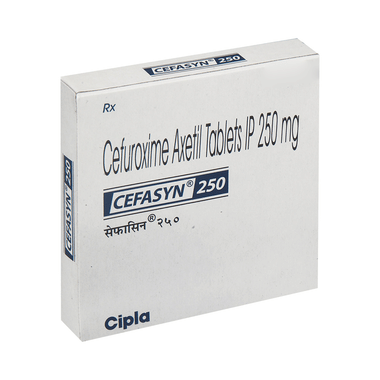
Available alternative from Cipla
Sold out

Furobid 250mg Tablet
strip of 10 tablets
₹113

Same composition
Cefasyn 250 Tablet
strip of 4 tablets
by Cipla Ltd
Get by 8am
₹75.8
₹16.1 per tablet
₹64.4
order for
₹1200
Save more with additional offers

Earn cashback up to Rs.75 with Amazon Pay Later
Earn cashback up to Rs.75 with Amazon Pay Later

Get up to ₹75 cashback on a minimum order value (MOV) of ₹499 and above, valid once per customer.
Get up to ₹75 cashback on a minimum order value (MOV) of ₹499 and above, valid once per customer.

Get upto Rs.500 Cashback on minimum transaction of Rs.999/- with Mobikwik Wallet.
Get upto Rs.500 Cashback on minimum transaction of Rs.999/- with Mobikwik Wallet.
Earn cashback up to Rs.75 with Amazon Pay Later
Earn cashback up to Rs.75 with Amazon Pay Later
Get up to ₹75 cashback on a minimum order value (MOV) of ₹499 and above, valid once per customer.
Get up to ₹75 cashback on a minimum order value (MOV) of ₹499 and above, valid once per customer.
Get upto Rs.500 Cashback on minimum transaction of Rs.999/- with Mobikwik Wallet.
Get upto Rs.500 Cashback on minimum transaction of Rs.999/- with Mobikwik Wallet.
Get upto Rs.150 Cashback on minimum transaction of Rs.599/- with Mobikwik UPI.
Get upto Rs.150 Cashback on minimum transaction of Rs.599/- with Mobikwik UPI.

Assured cashback up to ₹300*. T&C Apply*
Assured cashback up to ₹300*. T&C Apply*

10% cashback up to 200 on Min Transaction of Rs.1000, for first time users of Airtel Payments Bank.
10% cashback up to 200 on Min Transaction of Rs.1000, for first time users of Airtel Payments Bank.
General Information

The content is shown in English




All substitutes for Furobid 250mg Tablet
For information purposes only. Consult a doctor before taking any medicine.
Cefasyn 250 Tablet
by Cipla Ltd
₹18.95/tablet
68% costlier
Ceftum 250mg Tablet
by Glaxo SmithKline Pharmaceuticals Ltd
₹48/tablet
325% costlier
Cefakind 250 Tablet
by Mankind Pharma Ltd
₹24.4/tablet
116% costlier
Zocef 250 Tablet
by Alkem Laboratories Ltd
₹44.5/tablet
294% costlier
Cetil 250 Tablet
by Lupin Ltd
₹54.3/tablet
381% costlier
Safety advice

Alcohol
CONSULT YOUR DOCTOR
It is not known whether it is safe to consume alcohol with Furobid 250mg Tablet. Please consult your doctor.

Pregnancy
SAFE IF PRESCRIBED
Furobid 250mg Tablet is generally considered safe to use during pregnancy. Animal studies do not indicate harmful effects. However, there are limited human studies.

Breast feeding
CAUTION
Furobid 250mg Tablet should be used with caution during breastfeeding. Breastfeeding should be held until the treatment of the mother is completed and the drug is eliminated from the body.
Avoid prolonged use of Furobid 250mg Tablet, since it may have possible effects such as rash and diarrhea.
Avoid prolonged use of Furobid 250mg Tablet, since it may have possible effects such as rash and diarrhea.

Driving
CONSULT YOUR DOCTOR
It is not known whether Furobid 250mg Tablet alters the ability to drive. Do not drive if you experience any symptoms that affect your ability to concentrate and react. Please consult your doctor.
It may cause dizziness in some patients. Patients should be cautious when driving or operating machinery.
It may cause dizziness in some patients. Patients should be cautious when driving or operating machinery.
Kidney
CAUTION
Furobid 250mg Tablet should be used with caution in patients with severe kidney disease. Dose adjustment may be needed.

Liver
SAFE IF PRESCRIBED
Furobid 250mg Tablet is probably safe to use in patients with liver disease. Limited data suggest dose adjustment may not be needed.
Related lab tests
References
- Briggs GG, Freeman RK, editors. A Reference Guide to Fetal and Neonatal Risk: Drugs in Pregnancy and Lactation. 10th ed. Philadelphia, PA: Wolters Kluwer Health; 2015. p. 232.
- Cefuroxime [EMC SmpC]. Camberley Surrey: Sandoz Limited; 2025. [Accessed 29 Oct. 2025] (online) Available from:

- Central Drugs Standard Control Organisation (CDSCO). [Accessed 28 Mar. 2019] (online) Available from:
- Cefuroxime Axetil [Prescribing Information]. Roorkee, Uttarakhand: Twenty First Century Pharmaceutical Pvt. Ltd.; 2023. [Accessed 29 Oct. 2025] (online) Available from:
- Cefuroxime. Indiana, PA: Remedyrepack INC.; 2025. [Accessed Feb 2 2026] (online) Available from:
Related products
Products related to Furobid 250mg Tablet







100% genuine products

Safe & secure payments

No contact delivery

Fully sanitized facilities

Want to know more
We provide you with authentic, trustworthy and relevant information
Have issue with the content
Why we need a prescription?

