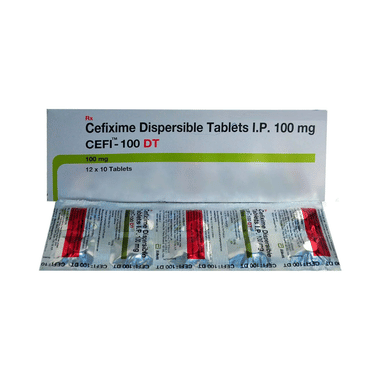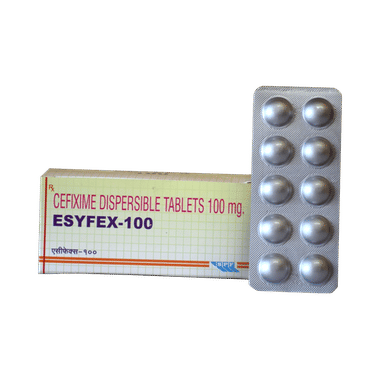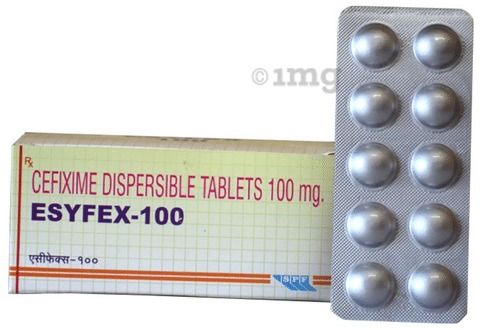

Esyfex 100 Tablet DT is an antibiotic belonging that is used to treat a variety of bacterial infections. It is effective in infections of the respiratory tract (eg. pneumonia), urinary tract, ear, nasal sinus, throat, and some sexually transmitted diseases.
Esyfex 100 Tablet DT should be given under the supervision of a doctor or health professional. Use it regularly at evenly spaced intervals as per the schedule prescribed by your doctor. Using it at the same time every day will help you remember to take it. The dose will depend on what you are being treated for, but you should always complete the full course of this antibiotic as prescribed by your doctor. Do not stop taking it until you have finished, even when you feel better. If you stop taking it early, some bacteria may survive and the infection may come back or worsen. It will not work for viral infections such as flu or common cold. Using any antibiotic when you do not need it can make it less effective for future infections.
The most common side effects of this medicine include nausea, stomach pain, indigestion, and diarrhea. These are usually mild but let your doctor know if they bother you or do not go away.
Before taking it, you should let your doctor know if you are allergic to any antibiotics or have any kidney or liver problems. You should also let your healthcare team know all other medicines you are taking as they may affect, or be affected by this medicine. This medicine is generally regarded as safe to use during pregnancy and breastfeeding if prescribed by a doctor.
Bacterial infections can affect different parts of the body, such as the lungs, throat, and urinary tract. Esyfex 100 Tablet DT is an antibiotic that works by killing the bacteria causing the infection. This helps relieve symptoms, clear the infection, and prevent it from spreading or worsening. Continue taking it for the full prescribed duration to ensure complete recovery and reduce the risk of recurrence.
Side effects of Esyfex Tablet DT
Most side effects do not require any medical attention and disappear as your body adjusts to the medicine. Consult your doctor if they persist or if you’re worried about them
Common side effects of Esyfex
Nausea
Stomach pain
Indigestion
Diarrhea
How to use Esyfex Tablet DT
Take this medicine in the dose and duration as advised by your doctor. Dissolve it in a glass of water before taking it. Esyfex 100 Tablet DT may be taken with or without food.
How Esyfex Tablet DT works
Esyfex 100 Tablet DT is an antibiotic. It kills the bacteria by preventing them from forming the bacterial protective covering (cell wall) which is needed for them to survive.
Safety advice
Alcohol
CONSULT YOUR DOCTOR
It is not known whether it is safe to consume alcohol with Esyfex 100 Tablet DT. Please consult your doctor.

Pregnancy
CONSULT YOUR DOCTOR
The safety of Esyfex 100 Tablet DT during pregnancy has not been established. There are no adequate and well-controlled studies in pregnant women, and animal data on reproductive toxicity are insufficient. Your doctor will weigh the benefits and any potential risks before prescribing.
Breast feeding
SAFE IF PRESCRIBED
Available human data suggest that the drug does not pass into breast milk in clinically significant amounts and is unlikely to harm the infant.
Driving
UNSAFE
Esyfex 100 Tablet DT may decrease alertness, affect your vision, or make you feel sleepy and dizzy. Do not drive if these symptoms occur.
Kidney
CAUTION
Esyfex 100 Tablet DT should be used with caution in patients with severe kidney disease. Dose adjustment may be needed.
Liver
SAFE IF PRESCRIBED
Esyfex 100 Tablet DT is probably safe to use in patients with liver disease. Limited data suggest dose adjustment may not be needed.
What if you forget to take Esyfex Tablet DT?
If you miss a dose of Esyfex 100 Tablet DT, take it as soon as possible. However, if it is almost time for your next dose, skip the missed dose and go back to your regular schedule. Do not double the dose.
All substitutes
For informational purposes only. Consult a doctor before taking any medicines.
Take Esyfex 100 Tablet DT exactly as prescribed and complete the full course, even if you start feeling better.
Stopping Esyfex 100 Tablet DT too early may allow the infection to return and become harder to treat.
Drink plenty of fluids while taking Esyfex 100 Tablet DT, especially if fever or infection-related dehydration is present.
Diarrhea may occur while taking Esyfex 100 Tablet DT, but it usually resolves after completing the treatment course.
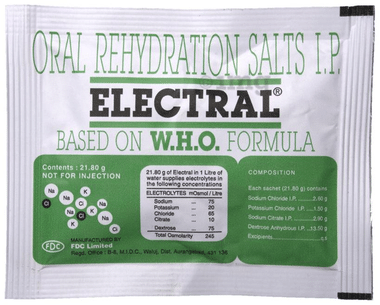
Use oral rehydration fluids if diarrhea occurs, and contact your doctor if it becomes severe or bloody.
Inform your doctor if you have a history of allergy to penicillin or cephalosporin antibiotics before taking Esyfex 100 Tablet DT.
Stop taking Esyfex 100 Tablet DT and seek immediate medical help if you develop a rash, itching, swelling of the face or mouth, or difficulty breathing.
Inform your doctor if you are taking blood thinners or other medicines that may interact with antibiotics.
Consult your doctor if symptoms do not improve within a few days of starting Esyfex 100 Tablet DT.
Do not use leftover antibiotics or share Esyfex 100 Tablet DT with others.
Report symptoms such as vaginal itching or discharge that may occur due to secondary yeast infection after antibiotic use.
Fact Box
Chemical Class
Cephalosporins
Habit Forming
No
Therapeutic Class
ANTI INFECTIVES
Action Class
Third-Generation Cephalosporins
Interaction with drugs
Taking Esyfex with any of the following medicines can modify the effect of either of them and cause some undesirable side effects
Do not consume Cholera Vaccine (Inactivated) two weeks before and at least 10 days after consuming Cefixime. Please consult your doctor. Cefixime may reduce the efficacy of Cholera... More
Cefixime may reduce the efficacy of Purified Vi Polysaccharide Typhoid Vaccine. Cefixime may reduce the efficacy of Purified Vi Polysaccharide Typhoid Vaccine.
Do not consume Purif... More
What is Esyfex 100 Tablet DT used for, and how does it work?
Esyfex 100 Tablet DT is an antibiotic used to treat bacterial infections such as infections of the throat, lungs, urinary tract, ears, skin, and certain sexually transmitted infections. It contains cefixime, which works by stopping the growth of bacteria that cause infection. This allows the body to clear the infection and improves symptoms over time.
How long should I take Esyfex 100 Tablet DT, and how should it be taken?
Esyfex 100 Tablet DT should be taken in the dose and duration advised by your doctor, usually for about 7–14 days, depending on the infection. Swallow it with water at the time recommended by your doctor. If it causes stomach upset, it may be taken after food. Complete the full course even if you start feeling better earlier, and avoid stopping it on your own.
What should I do if I do not get better after using Esyfex 100 Tablet DT?
Inform your doctor if you do not feel better even after completing the full course of Esyfex 100 Tablet DT. You should also seek medical advice if your symptoms get worse while taking it. Do not stop, restart, or change the dose on your own without consulting your doctor.
Can Esyfex 100 Tablet DT cause diarrhea?
Yes, Esyfex 100 Tablet DT may sometimes cause diarrhea. As an antibiotic, it kills harmful bacteria but may also affect the beneficial bacteria in the intestines, which can lead to loose stools. If diarrhea becomes severe or persistent, contact your doctor.
What should I do if I forget a dose of Esyfex 100 Tablet DT?
If you miss a dose of Esyfex 100 Tablet DT, take it as soon as you remember. If it is almost time for your next scheduled dose, skip the missed one and continue with your regular schedule. Do not take a double dose to make up for the missed one because this may increase the risk of side effects.
Is Esyfex 100 Tablet DT safe for everyone?
Esyfex 100 Tablet DT is generally safe when used as prescribed by a doctor. However, people with kidney problems or liver disease should use it cautiously. Medical advice is also important during pregnancy or breastfeeding. If you notice unusual symptoms or worsening of your condition, consult your doctor.
Can Esyfex 100 Tablet DT interact with other medicines?
Yes, Esyfex 100 Tablet DT may interact with other medicines. Always inform your doctor about all medicines you are taking, including over-the-counter products and supplements. Certain medicines may increase side effects or reduce effectiveness, so medical advice is important before combining treatments.
When should Esyfex 100 Tablet DT be taken or used?
Esyfex 100 Tablet DT should be used only for the condition and duration prescribed by your doctor. Take it at the time recommended by your doctor. If it causes stomach discomfort, your doctor may advise taking it after meals and maintaining good hydration.
Can Esyfex 100 Tablet DT be taken with food or after meals?
Esyfex 100 Tablet DT may be taken with or without food, depending on your doctor’s advice. Some people prefer taking it after meals to reduce stomach irritation. Follow your doctor’s instructions regarding the timing of doses with meals.
What side effects can occur with Esyfex 100 Tablet DT?
Esyfex 100 Tablet DT may cause side effects such as stomach upset, nausea, diarrhea, dizziness, headache, or mild skin rash in some people. These effects are usually mild and temporary. Stop using the medicine and seek medical help if you develop a severe rash, breathing difficulty, swelling of the face, fainting, or severe diarrhea.
How long does Esyfex 100 Tablet DT take to work?
Esyfex 100 Tablet DT usually begins working soon after starting treatment, but noticeable improvement in symptoms may take a few days. Continue taking the medicine for the full course prescribed by your doctor, even if you start feeling better earlier. If symptoms do not improve or worsen, consult your doctor.
Tata 1mg's sole intention is to ensure that its consumers get information that is expert-reviewed, accurate and trustworthy. However, the information contained herein should NOT be used as a substitute for the advice of a qualified physician. The information provided here is for informational purposes only. This may not cover everything about particular health conditions, lab tests, medicines, all possible side effects, drug interactions, warnings, alerts, etc. Please consult your doctor and discuss all your queries related to any disease or medicine. We intend to support, not replace, the doctor-patient relationship.
References
Briggs GG, Freeman RK, editors. A Reference Guide to Fetal and Neonatal Risk: Drugs in Pregnancy and Lactation. 10th ed. Philadelphia, PA: Wolters Kluwer Health; 2015. pp. 222-23.
Cefixime. Baltimore, Maryland: Lupin Pharmaceuticals Inc.; 1986 [revised May 2012]. [Accessed 29 Mar. 2019] (online) Available from:
Central Drugs Standard Control Organisation (CDSCO). [Accessed 28 Mar. 2019] (online) Available from: