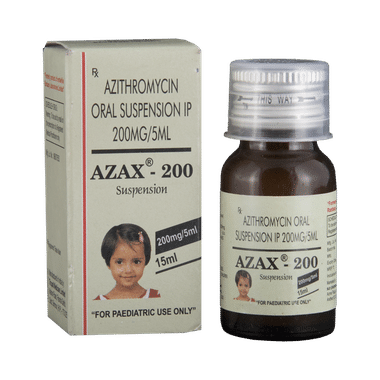

Athiro 200 Oral Suspension


Your child’s medicine at a glance
Athiro 200 Oral Suspension works by inhibiting the growth of the infection-causing bacteria and stopping it from multiplying. As a result of this, the spread of the infection is disabled. Athiro 200 Oral Suspension is usually given once a day, preferably in the morning. However, in the case of typhoid, it is to be given twice. Give it with or without food at about the same time each day. However, it is best given with food since children often have a sensitive stomach and could easily get a stomach upset.
Medicine dose depends on the type of infection your child has, its severity, and your child’s age and body weight. So stick to the dose, time, and way prescribed by the doctor. In case your child vomits within 30 minutes of taking this medicine, give the same dose again.
Your child may start to feel better within 2 days of regular dosing. However, you must still complete the full prescribed course of the medicine and never stop it abruptly as that may worsen your child’s condition or increase the risk of reinfection. Some of the minor and temporary side effects of this medicine include vomiting, diarrhea, nausea, and stomach pain. Usually, these episodes subside once your child’s body adapts to the medicine. However, in case these effects persist or become bothersome for your child, consult your child’s doctor without any delay.
Inform your child’s doctor about any previous episode of any allergy, heart problem, liver impairment, and kidney malfunction. Knowing the child’s medical history is critical for dose alterations and for planning your child’s overall treatment.
Uses of Athiro 200 Oral Suspension in children
Benefits of Athiro 200 Oral Suspension for your child
In Treatment of Bacterial infections
Side effects of Athiro 200 Oral Suspension in children
Common side effects of Athiro
- Abdominal pain
- Diarrhea
- Nausea
- Indigestion
- Vomiting
- Flatulence
- Dizziness
- Headache
- Vertigo
How can I give Athiro 200 Oral Suspension to my child?
How Athiro Oral Suspension works
Safety advice
However, Athiro 200 Oral Suspension is usually considered safe to use in children with mild to moderate kidney impairment. Dose modifications are generally not required in children with kidney problems.
However, discontinue immediately if signs or symptoms of hepatitis like vomiting, paleness, and weakness are observed.
What if I forget to give Athiro 200 Oral Suspension to my child?
All substitutes
Quick tips
- Your child must complete the entire course of this medicine. Stopping too soon may cause the bacteria to multiply again, become resistant, or cause another infection.
- Give Athiro 200 Oral Suspension with food to avoid an upset stomach.
- Encourage your child to drink plenty of water in case diarrhea develops as a side effect.
- Athiro 200 Oral Suspension will not be effective for viral infections. However, the doctor may prescribe this medicine in case of a secondary bacterial infection. So make sure to speak to your child’s doctor first.
- Only give Athiro 200 Oral Suspension to your child for their current infection. Never save medicine for future illnesses.
- Stop the medicine and contact the doctor immediately if your child develops an itchy rash, facial swelling, and breathing difficulties soon after the intake.
Fact Box
Interaction with drugs
Patient concerns
FAQs
What if I give too much of Athiro 200 Oral Suspension by mistake?
Are there any possible serious side effects of Athiro 200 Oral Suspension?
Can other medicines be given at the same time as Athiro 200 Oral Suspension?
Can I get my child vaccinated while on treatment with Athiro 200 Oral Suspension?
Which all lab tests should my child undergo while taking Athiro 200 Oral Suspension on a long term basis?
Can Athiro 200 Oral Suspension impact my child’s digestion?
Why is Athiro 200 Oral Suspension given for 3 days?
What should I avoid while taking Athiro 200 Oral Suspension?
Is Athiro 200 Oral Suspension a strong antibiotic?
Can you get a yeast infection from taking Athiro 200 Oral Suspension?
Want to share the information?


Disclaimer:
Tata 1mg's sole intention is to ensure that its consumers get information that is expert-reviewed, accurate and trustworthy. However, the information contained herein should NOT be used as a substitute for the advice of a qualified physician. The information provided here is for informational purposes only. This may not cover everything about particular health conditions, lab tests, medicines, all possible side effects, drug interactions, warnings, alerts, etc. Please consult your doctor and discuss all your queries related to any disease or medicine. We intend to support, not replace, the doctor-patient relationship.References
- Chambers HF, Deck DH. Tetracyclines, Macrolides, Clindamycin, Chloramphenicol, Streptogramins, & Oxazolidiones. In: Katzung BG, Masters SB, Trevor AJ, editors. Basic and Clinical Pharmacology. 11th ed. New Delhi, India: Tata McGraw Hill Education Private Limited; 2009. p. 801.
- Azithromycin monohydrate [EMC Label]. Surrey, UK: Sandoz Limited; 2007 [revised 08 Aug. 2020]. [Accessed 04 Jan. 2021] (online) Available from:

- Healio. The role of azithromycin in pediatrics. [Updated 01 Jul. 2014]. [Accessed 04 Jan. 2021] (online) Available from:
- Höffler D, Koeppe P, Paeske B. Pharmacokinetics of azithromycin in normal and impaired renal function. Infection. 1995;23(6):356-361. [Accessed 04 Jan. 2021] (online) Available from:
- Ma TK, Chow KM, Choy AS, et al. Clinical manifestation of macrolide antibiotic toxicity in CKD and dialysis patients. Clin Kidney J. 2014;7(6):507-512. [Accessed 31 Dec. 2020] (online) Available from:
- Azithromycin [Prescribing Information]. North Wales, PA: Teva Pharmaceuticals USA, Inc.; 2022. [Accessed 09 Jun, 2023] (online) Available from:
- Azithromycin [Prescribing Information]. Vapi, Gujarat: S Kant healthcare Ltd.; [Accessed 07 Jul 2025] (online) Available from:
- Azithromycin [Prescribing Information]. Hyderabad, Telangana: MSN Laboratories Pvt Ltd.; [Accessed 07 Jul 2025] (online) Available from:
Marketer details
Lab tests offered by us