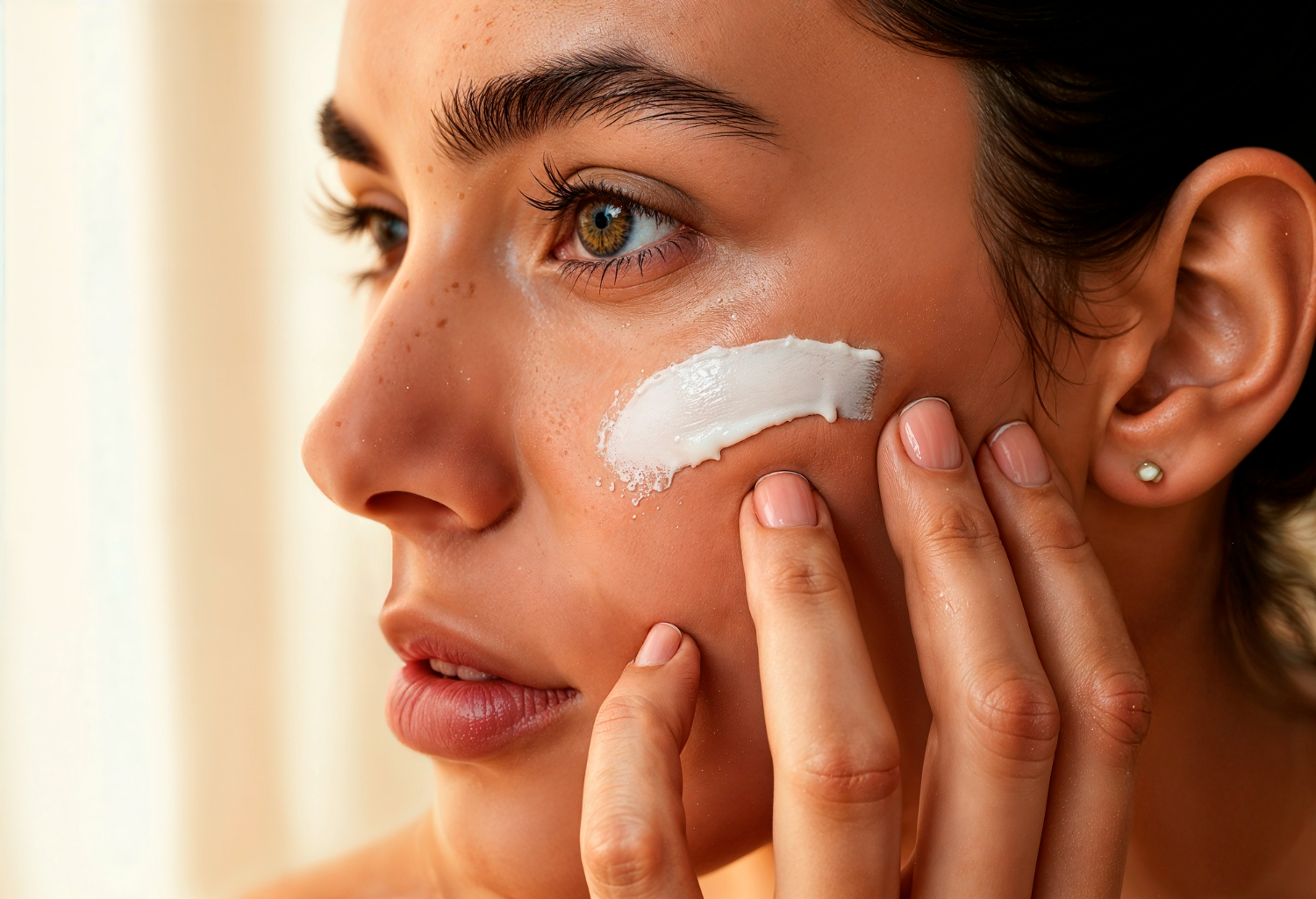
You’ve seen the reels. Someone holds up a tiny tube and says, “This changed my skin,” and the comments fill up with “retinol!!” Meanwhile, a friend tells you she used it every night and her face burned for a week; your cousin’s dermatologist said “go slow,” and you’re standing at the pharmacy counter wondering if you’re about to make an expensive mistake.
Here’s the good news. Retinol has real science behind it. The catch is that it works a bit like a new gym routine. Start too hard and you’ll be sore and quit. Start gently and you’ll actually see results. Let’s break it down.
What Exactly Is Retinol?

Retinol is a form of vitamin A and a member of the retinoid family. But “retinoid” covers a wide range. Prescription retinoids, like tretinoin, are medicines. Retinol is a milder ingredient that is sold over the counter in cosmetics [1, 2].
Your skin has to convert retinol into retinoic acid, the active form. In lab tests, retinol was about 20 times less potent than retinoic acid itself. Tretinoin is retinoic acid, so it needs no conversion [3].
This matters because much of what you read online comes from research on prescription retinoids. A prescription retinoid was approved in the US for acne back in 1971, and dermatologists soon noticed it also helped with signs of aging by speeding up skin cell turnover and boosting collagen [1]. Those results can’t simply be copied over to a retinol serum from the pharmacy [3].
What Can Retinol Do For Your Skin?

Let’s be honest about the evidence. A review of nine trials of over-the-counter retinol products found that four showed no significant difference from the plain base cream. The other five gave only weak evidence of a mild effect on fine wrinkles, and they had major methodological flaws [3]. Here’s what retinol can reasonably do:
Soften fine lines, a little. In one 24-week trial, volunteers put 0.4% retinol lotion on one arm, up to three times a week, and plain lotion on the other. The retinol arm showed clearly better fine wrinkles [4]. Two caveats: the volunteers were all aged 80 or older (mean age 87), and the lotion went on their arms, not their faces. Your results may look different.
Even out the tone and texture. Retinol may help improve uneven skin tone, pigmentation, and rough texture [1].
Help with mild acne. Dermatologists consider retinoids a good option for mild acne, mild pigmentation problems, and mild fine lines [1]. For moderate or painful acne, see a doctor.
May support collagen-related processes in the skin. A small, 7-day study on the sun-protected skin of 12 older adults found that retinol switched on pathways that help skin build its supporting framework [5]. That’s early lab evidence, not proof of visible results.
Just don’t expect overnight magic. That arm trial ran for 24 weeks, so think in months, not days.
Side Effects: What’s Normal?
Most beginners notice a few of these:
- Dryness, redness, and flaking. Redness, peeling, and dry skin are well-known side effects of topical retinoids [2].
- Delicate areas. Avoid the eye area, the lips, and the inside of the nose. That guidance is written for prescription tretinoin, so also follow your product’s label.
- More sun sensitivity. Retinoids can make skin more sensitive to the sun [1, 2].
- Dark marks. In darker skin tones, irritation can trigger hyperpigmentation, so watch for any signs of it [1].
Dermatologists warn that using a retinoid every single day from the start can leave skin excessively irritated, red, and dry. That’s the “retinol burn” your friend described. Mild flaking that settles down is common. Stinging, swelling, or a rash that won’t calm down is a sign to stop and see a doctor.
Who Should Be Careful?

Talk to a dermatologist first if any of these apply to you:
- You’re pregnant. Avoid retinol and other topical retinoids during pregnancy [1, 2]. If you are planning pregnancy or breastfeeding, consult your healthcare professional before use.
- You have allergies, very dry skin, or a lot of redness and inflammation, such as rosacea [1].
- You have moderate or severe acne scarring, or acne linked to your periods or other hormonal changes [1].
Beginner Tips
- Start with the gentlest product. Dermatologists advise using the least intense retinoid you can find [1]. Some products don’t print the retinol percentage at all [1], so choose a brand that does, or ask your pharmacist.
- Go slow. Begin once or twice a week at night and build up over several weeks.
- Use a small amount. A pea-sized amount is the standard advice for covering the whole face with prescription tretinoin. For a retinol product, follow the directions on the label.
- Apply on dry skin. Wet skin can cause irritation, especially near the corners of the mouth.
- Moisturise. A gentle, non-clogging moisturizer right before or after helps limit dryness [4].
- Protect your skin by day. Use retinol only at night. In the daytime, seek shade, wear a wide-brimmed hat, and apply sunscreen [1].
- Keep other strong products away. It’s sensible to skip exfoliating acids or benzoyl peroxide on the same night, at least in the beginning.
- Be patient. Give it a few months before deciding whether it works for you.
The bottom line
Retinol isn’t a quick fix, but it’s one of the better-studied ingredients for fine lines, uneven tone, and mild acne. The people who do well with it tend to start slowly, moisturize, wear sunscreen, and stick with it. If your skin is sensitive, your acne is stubborn, or you’re pregnant, see a dermatologist before buying anything.
FAQs
How long until I see results?
Think months. The trial mentioned above lasted 24 weeks [4].
Can I use retinol in the morning?
It’s better at night, followed by sunscreen the next day [1].
Is retinol the same as tretinoin?
No. Retinol is a cosmetic ingredient that skin must convert into retinoic acid. Tretinoin is retinoic acid itself and is a prescription medicine [1,3].
Do I have to use retinol every night?
No. Dermatologists advise introducing retinoids slowly, starting every other night [1]. Using it a few nights a week consistently is better than going daily and having to stop because of a burn.
Is retinol safe for darker skin tones?
People of all skin colors can benefit from retinoids. But with darker skin, irritation can trigger dark marks, so it’s especially important to start slowly, moisturize, and stop if your skin gets irritated [1].
References
1. American Academy of Dermatology Association. Retinoid or retinol? [Internet]. Last updated 2021 May 25 [cited 2026 Oct 8]. Available from: https://www.aad.org/public/everyday-care/skin-care-secrets/anti-aging/retinoid-retinol
2. DermNet NZ. Topical retinoids [Internet]. [cited 2026 Oct 8]. Available from: https://dermnetnz.org/topics/topical-retinoids
3. Spierings NMK. Evidence for the efficacy of over-the-counter vitamin A cosmetic products in the improvement of facial skin aging: a systematic review. J Clin Aesthet Dermatol. 2021;14(9):33-40. Available from: https://pmc.ncbi.nlm.nih.gov/articles/PMC8675340/
4. Kafi R, Kwak HS, Schumacher WE, Cho S, Hanft VN, Hamilton TA, et al. Improvement of naturally aged skin with vitamin A (retinol). Arch Dermatol. 2007;143(5):606-12. doi:10.1001/archderm.143.5.606. Available from: https://pubmed.ncbi.nlm.nih.gov/17515510/
5. Shao Y, He T, Fisher GJ, Voorhees JJ, Quan T. Molecular basis of retinol anti-ageing properties in naturally aged human skin in vivo. Int J Cosmet Sci. 2017;39(1):56-65. Available from: https://pubmed.ncbi.nlm.nih.gov/27261203/
This article is for general information and is not a substitute for medical advice.
The article is written by Mantasha, Sr. Executive, Clinical Health & Content, and reviewed by Monalisa Deka, Deputy Manager, Clinical Health & Content, Medical Affairs.)
Recommended Reads:
Eat to Ease Pain: 5 Anti–Inflammatory Foods to Reduce Joint Pain
Joint Pain In Winter: Essential Steps To Follow Before The Cold Sets In