
You walk into a café and the menu says green tea, matcha latte, and black tea. You’re trying to lose weight. You stand there, confused, because everyone online seems to swear by a different one. Your colleague drinks green tea every morning. Your gym friend only has matcha. And your parents have been drinking black tea their whole lives and seem just fine.
So which one actually works for weight loss? The green tea vs matcha weight loss debate is one of the most searched questions in the wellness space right now – and for good reason. The truth is, all three come from the same plant. But the way they’re grown, processed, and prepared makes them very different inside your body. Green tea vs matcha vs black tea for weight loss is a real question worth answering clearly. No hype, no complicated science. Just what you need to know.
Looking to complement your weight loss journey? Explore Tata 1mg’s range of green tea, matcha, and herbal wellness products – curated for everyday health goals. Shop Weight Management Products on Tata 1mg
Green Tea vs Matcha vs Black Tea for Weight Loss: How Each One Works
Before picking a winner, let’s understand what’s actually inside each tea – and what it does in your body.
Green Tea – The Classic Starting Point

Green tea is made from fresh tea leaves that are quickly heated after picking. This process stops oxidation and keeps most of the natural compounds intact. The key weight-loss compound in green tea is called Epigallocatechin Gallate (EGCG). It belongs to a family of antioxidants called catechins, which are natural plant compounds found in tea leaves. It is a type of antioxidant that may help support metabolism and burn more body fat, particularly when combined with caffeine.
Additionally, a typical brewed green tea beverage (250 mL) contains 50–100 mg of catechins and 30–40 mg of caffeine [1]. Caffeine on its own provides a small metabolic lift. But when caffeine and EGCG work together, the effect on fat burning is noticeably stronger. Green tea also contains an amino acid called L-theanine, which may promote calmness and focus without making you jittery often associated with caffeine.
In simple terms: green tea may help your body use more fat efficiently for energy – especially when you’re exercising.
Matcha – The More Concentrated Version
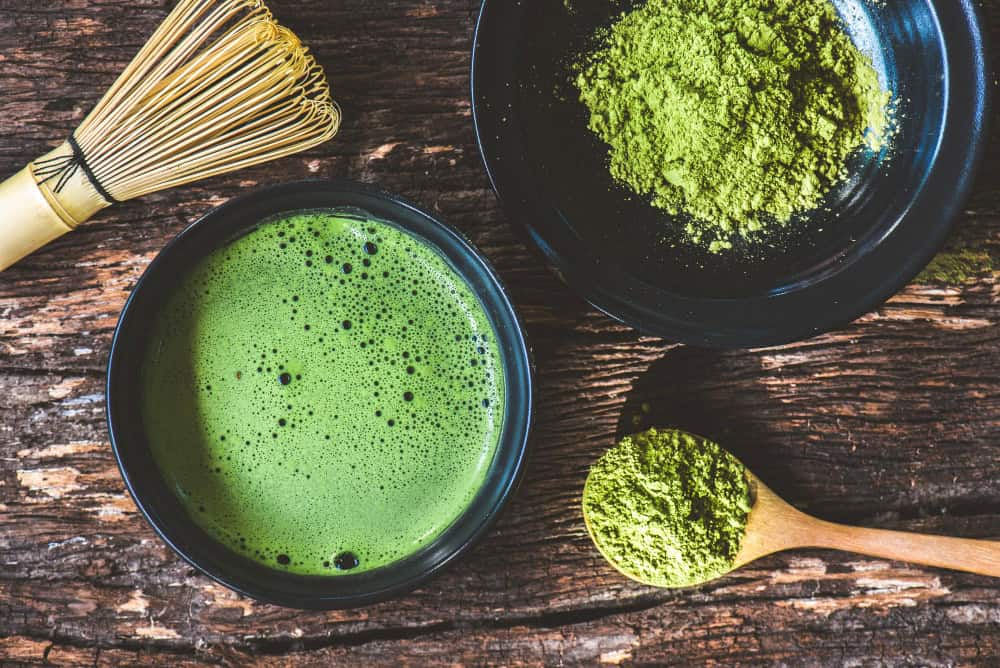
Matcha is also green tea. But it’s made differently. The tea plants are shaded from sunlight for several weeks before harvesting, which increases the concentration of nutrients. The leaves are then ground into a fine powder – and you drink the whole leaf, not just the brewed water. When it comes to green tea vs matcha for weight loss, this is the key difference.
Because you consume the entire leaf, matcha gives you significantly more EGCG, more caffeine, and more L-theanine per cup than regular green tea.
One cup of matcha prepared with about 2 g of powder provides approximately 338–546 mg of polyphenols (including catechins) and about 38–89 mg of caffeine, although the exact amount varies depending on the grade of matcha and how it is prepared [2].
Furthermore, the higher caffeine content in matcha, combined with the calming effect of L-theanine may provide steady energy without the crash or anxiety that some people experience with strong coffee. For weight loss, this may help support physical activity levels and exercise performance.
Black Tea – The Underrated Option

Here’s the one most people overlook. Black tea goes through a process called full oxidation, which transforms its natural compounds into something different – called theaflavins and thearubigins. These are unique polyphenols you won’t find in green tea or matcha.
However, don’t underestimate them. These compounds work in a completely different way from EGCG. Instead of being absorbed into your bloodstream, they work in your gut. They help feed beneficial gut bacteria, which influences your metabolism.
Meanwhile, a typical 250 mL cup of brewed black tea provides around 23.5 mg of EGCG and 28–46 mg of caffeine [3],[4]. It may offer metabolism-supporting benefits similar to those of green tea. Plus, it has L-theanine too. Black tea for weight loss isn’t as popular in wellness conversations, but emerging research suggests it may offer meaningful benefits behind in its own right.
Read more: From Amla Juice to Lemon Water: The Best Summer Drinks for Weight Loss
Other Reasons to Drink Tea for Weight Loss and Beyond

Green Tea
In contrast to most beverages, green tea is one of the most studied drinks in the world for health. Beyond weight management, it supports heart health, helps regulate blood sugar, and has strong anti-inflammatory properties. Two to three cups a day is generally considered a reasonable amount for most people.
Matcha
Even better, matcha brings all the benefits of green tea – but in a higher dose. It’s linked to improved focus, calm energy, better skin, and liver support. Because you’re consuming the whole leaf, you also get small amounts of fibre, vitamins, and minerals. That said, because of its higher caffeine content, one to two cups a day is sufficient for most people.
Black Tea
Additionally, black tea has its own set of benefits that often get overlooked. It may support gut and heart health and is the most commonly consumed tea in India, usually in the form of chai. The key is drinking it without too much milk and without added sugar, which cancels out most of the benefits.
How to Choose the Right Tea for Your Weight Loss Goal

This is the honest part. There’s no single winner in the green tea vs matcha vs black tea for weight loss debate. The best tea for weight loss is the one you’ll actually drink every day. Here’s a simple way to decide:
Pick Green Tea If
- You’re new to tea and want a gentle start
- You’re caffeine-sensitive and want to keep intake moderate
- You want an affordable, easy daily habit
- You prefer a light, mild taste
Pick Matcha If
- You want higher levels of antioxidants and potentially greater metabolism-supporting benefits
- You exercise regularly and want a pre-workout energy
- You don’t mind a stronger, earthy taste
- Your budget allows for a slightly pricier option
Pick Black Tea If
- You already love chai and don’t want to give it up
- You want to support your gut health alongside weight loss
- You need a stronger caffeine kick in the morning
- You’re looking for the most familiar, comforting option
A Few Things to Remember
However, no tea – green, matcha, or black – will cause weight loss on its own. These teas support your body’s fat-burning processes. They work best alongside a sensible diet and regular physical activity.
Also, always drink your tea without sugar. Adding sugar to green tea or matcha defeats the purpose entirely. If you drink black tea as chai, try reducing the sugar gradually and using less milk. Even that one change makes a meaningful difference over time.
Plus, don’t drink tea on an empty stomach – especially matcha or strong black tea. It can cause nausea or acidity. Have it after a light snack or meal for best results.
Your Cup, Your Call – The Best Tea for Weight Loss Is Personal
At the end of the day, all three teas have real, meaningful benefits for weight loss – just through different pathways. Green tea is a reliable everyday option. Matcha is the concentrated, high-performance version. Black tea is the gut-friendly, familiar one that most of us grew up with.
Green tea vs matcha vs black tea for weight loss doesn’t have a single correct answer. It has the right answer for you – based on your taste, your routine, and how your body responds.
Start with one. Drink it consistently. Skip the sugar. And let your cup do its quiet work.
FAQs
Which tea is best for weight loss – green tea, matcha, or black tea?
All three may support weight management but they work in different ways. Matcha packs the highest amount of fat-burning antioxidants, green tea is your go-to everyday option, and black tea quietly does its job by supporting gut health and reducing how much fat your body absorbs from food.
How many cups of green tea should I drink for weight loss?
Two to three cups a day work well for most people. Going beyond that can leave you feeling restless or affect your sleep – especially if you’re already getting caffeine from chai or coffee during the day.
Green Tea vs Matcha for Weight Loss: Which One Works Better?
It can be. Matcha is basically a stronger, more concentrated version of green tea – so you get more antioxidants and potentially greater metabolism-supporting benefits per cup. That said, it’s pricier and higher in caffeine, so it doesn’t suit everyone. If you’re caffeine-sensitive, regular green tea is absolutely fine.
Can I drink black tea with milk for weight loss?
You can – but keep the milk minimal and skip the sugar. A strong cup of black tea with a splash of milk is fine. The problem starts when you add two teaspoons of sugar and a big pour of full-fat milk – that turns a healthy cup into something that works against your goals.
When is the best time to drink green tea or matcha for weight loss?
Morning or before a workout is ideal. That’s when the caffeine and antioxidants can actually support your activity levels and fat burning. Try to avoid drinking either one late at night – the caffeine may interfere with sleep quality in some people.
Does black tea have the same antioxidants as green tea?
No – and that’s not a bad thing. Black tea has its own set of antioxidants called theaflavins and thearubigins, which form during the oxidation process. They work differently from green tea’s antioxidants – mainly in your gut rather than your bloodstream. Different mechanism, still genuinely useful.
References:
1. Jówko E. Green Tea Catechins and Sport Performance. In: Lamprecht M, editor. Antioxidants in Sport Nutrition. Boca Raton (FL): CRC Press/Taylor & Francis; 2015. Chapter 8. Available from: https://www.ncbi.nlm.nih.gov/books/NBK299060/
2. Kochman J, Jakubczyk K, Antoniewicz J, Mruk H, Janda K. Health Benefits and Chemical Composition of Matcha Green Tea: A Review. Molecules. 2020 Dec 27;26(1):85. Available from: https://pmc.ncbi.nlm.nih.gov/articles/PMC7796401/
3. University of California, Davis. Proanthocyanidins (pro-catechins) [Internet]. Davis (CA): University of California, Davis; [cited 2026 Jun 15]. Available from: https://nutrition.ucdavis.edu/outreach/nutr-health-info-sheets/pro-catechins
4. Bunker ML, McWilliams M. Caffeine content of common beverages. J Am Diet Assoc. 1979 Jan;74(1):28-32. PMID: 762339. Available from:https://pubmed.ncbi.nlm.nih.gov/762339/
(The article is written by Nancy Dixit, Associate Manager, Clinical Health & Content, Medical Affairs, and reviewed by Monalisa Deka, Deputy Manager, Clinical Health & Content, Medical Affairs)
Recommended Reads:
What Drinking Matcha Every Day Actually Does to Your Body
Japanese Weight Loss Diet: Simple Dinner Ideas That Help You Eat Less