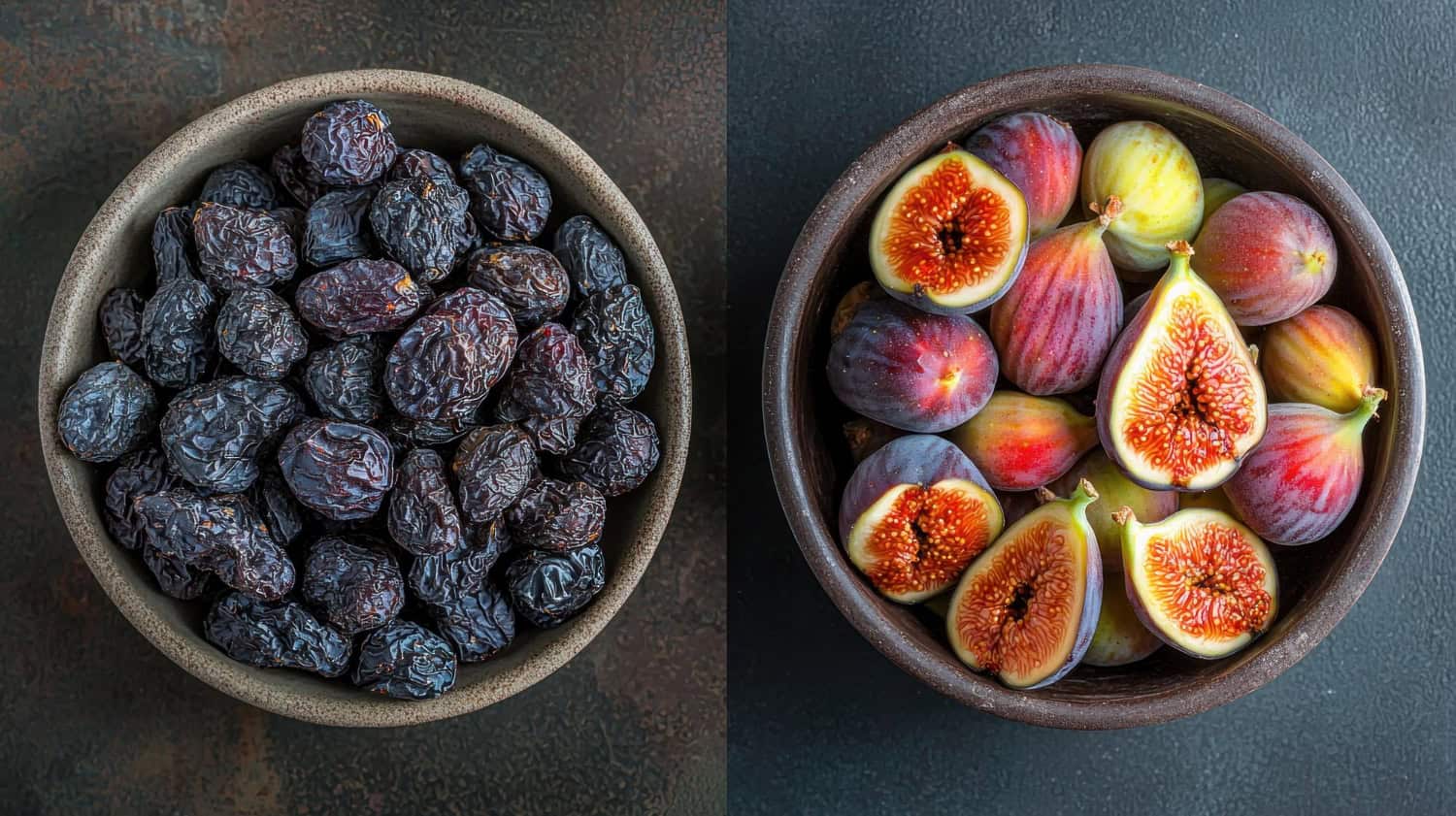
Figs and dates are two of those foods that seem simple until you start comparing them. Both are naturally sweet, chewy, and easy to keep in your kitchen. Both also contain fiber, minerals, and plant compounds that can support your health.
But if you had to pick one, which is better?
The answer depends on what you’re looking for. Figs may have an edge when you want more fiber and support for digestion, while dates are a great choice when you want a quick source of energy and more potassium.
And there’s another thing to remember: dried fruit is concentrated fruit. Once most of the water is removed, it’s much easier to eat several pieces without realizing how much sugar and energy you’ve consumed.
So, let’s put figs and dates head-to-head.
Figs and dates: what’s the difference?

Figs and dates may sit next to each other in the dry-fruit section, but they’re quite different.
Dried figs have a soft, slightly grainy texture because of their tiny seeds. They have a mild honey-like sweetness and are often used in desserts, oatmeal, milkshakes, and traditional dry-fruit mixes.
Dates are softer, stickier, and much sweeter. They have a caramel-like taste and are often eaten on their own or added to smoothies, energy bites, and desserts. Dates can also be blended into a paste and used as a substitute for refined sugar.
Both are nutritious. The interesting part is how their nutrition compares.
Figs may win when it comes to fiber
If better digestion is your main goal, figs deserve your attention.
Figs are a good source of dietary fiber. Fiber helps add bulk to stool and supports regular bowel movements. It can also help you feel full after eating.
Dates contain fiber too. A 100-gram serving provides about 7 grams of fiber, according to data cited by Cleveland Clinic [1].
So, both can fit into a high-fiber diet. Figs, however, are often the better pick when you’re specifically looking for a dried fruit to support your gut.
Just don’t assume that eating a whole bowl of figs will fix constipation overnight. Too much can have the opposite effect and cause stomach discomfort or loose stools.
Dates have an advantage for potassium
Dates stand out for their potassium content.
A 100-gram serving of dates provides about 696 milligrams of potassium. They also provide magnesium, copper, manganese, and vitamin B6.
Potassium is an important mineral for normal muscle and nerve function and plays a role in maintaining healthy blood pressure.
This doesn’t mean you should eat dates by the handful if you’re trying to improve your blood pressure. Your overall diet matters much more than one food.
If you’re curious about what blood pressure numbers actually mean, understanding your readings is a better starting point than simply adding one “healthy” food to your diet. You can read more about blood pressure ranges in this guide on blood pressure by age and normal-to-high ranges.
Which has more sugar?

Here’s where things get interesting.
Both figs and dates are naturally high in sugar because they’re dried fruits. Drying removes much of the water, concentrating the fruit’s natural sugars. That’s why a small handful can contain much more sugar than the same fruit in its fresh form.
Dates are particularly sweet. Their concentrated natural sugars give them their soft, caramel-like taste.
Figs also contain plenty of natural sugar. For example, six dried figs provide around 24 grams of sugar.
Does this make either fruit unhealthy? Not at all.
The bigger issue is portion size. Eating two or three dates is very different from mindlessly eating 10 while watching a movie.
If you have diabetes or are monitoring your blood sugar, don’t treat dates or figs as “free foods” just because they’re natural. Their carbohydrate content still counts.
What about calories and weight loss?

Neither figs nor dates is a magic weight-loss food.
They can both be part of a healthy diet, but dried fruits are easy to overeat. When water is removed, the fruit becomes smaller and more calorie-dense. You may eat several pieces before your stomach even registers that you’ve had a snack.
This is where portion control matters.
If you’re trying to lose weight, a small serving of figs or dates can work well with something more filling, such as unsweetened yogurt or a few nuts.
Think of dried fruit as a concentrated snack, not something you need to keep nibbling on all day.
Figs vs. dates for heart health
Both can support a heart-friendly diet because they provide fiber, minerals, and antioxidant plant compounds.
Figs contain nutrients such as potassium, magnesium, copper, manganese, and vitamin K. Their fiber content is another reason they can fit into a diet focused on heart health.
Dates also contain antioxidants, including carotenoids, flavonoids, phenolic acids, and polyphenols. These plant compounds help protect cells from oxidative damage.
But don’t turn this into a competition where one dried fruit becomes a “heart medicine.” Your overall eating pattern matters far more.
A diet rich in fruits, vegetables, whole grains, pulses, nuts, and seeds will do more for your heart than choosing dates over figs.
If you’re interested in comparing everyday foods for heart health, this guide to avocado vs. ghee for heart health is another useful comparison.
Which is better for constipation?
Figs are probably the better choice.
Their fiber content can support regular bowel movements, and dried figs have been studied for their potential benefits in people with constipation-related digestive symptoms.
But there’s a catch. Fiber works better when you’re also drinking enough fluids. Increasing fiber suddenly without enough fluid can leave you feeling bloated or uncomfortable.
So if constipation is the problem, don’t simply add a huge serving of dried figs to your diet. Increase fiber gradually and keep your water intake adequate.
Dates can also contribute fiber, but figs may be the more useful choice if digestion is your main reason for reaching for dried fruit.
Which is better for energy?
Dates have the edge here.
Their natural sugars and carbohydrates make them a convenient source of quick energy. That’s one reason dates are popular in energy balls, pre-workout snacks, and homemade bars.
They’re also easy to carry. No peeling, chopping, or preparation required. Your snack doesn’t need a tiny suitcase.
A couple of dates with nuts or yogurt can make a more balanced snack than eating dates alone.
Which one should you choose?
There’s no universal winner.
Choose figs if your priority is:
- Supporting regular digestion
- Increasing your fiber intake
- Adding more variety to your diet
- A less intensely sweet dried fruit
Choose dates if your priority is:
- A quick source of energy
- Increasing potassium intake
- A naturally sweet alternative to refined sugar
- Adding sweetness to smoothies or homemade snacks
And if you like both, there’s no reason to pick sides.
You could have figs with breakfast and dates as an occasional afternoon snack. Your diet doesn’t need to look like a courtroom battle between two dried fruits.
How much should you eat?
A small serving is usually enough.
For many people, around two to three dried figs or a couple of dates can be a reasonable snack portion, depending on the rest of the day’s diet and your individual calorie and carbohydrate needs.
If you’re new to eating more fiber, start slowly. Eating a large amount of dried fruit at once can lead to bloating, gas, or loose stools.
Also check the ingredient label when buying packaged dried fruit. Some products contain added sugar, syrups, or other ingredients. Plain dried fruit is the simpler choice.
The final verdict: Figs or dates?
If you want more help with digestion and fiber, figs get the vote.
If you want a naturally sweet, potassium-rich food that can provide quick energy, dates are a great option.
For overall health, though, neither fruit needs to “beat” the other. Both can be part of a balanced diet when you keep portions sensible.
The bigger mistake would be treating either one as unlimited simply because it’s a fruit.
So, next time you’re standing in front of the dry-fruit shelf wondering which one to buy, ask yourself what you actually need. More fiber? Pick figs. A quick energy boost? Dates may suit you better.
And if you simply like the taste of both, buy both. That’s allowed too.
FAQs
Are figs healthier than dates?
Not necessarily. Figs are a good source of fiber and may be especially useful for digestion, while dates provide substantial potassium, fiber, and other minerals. The better choice depends on your dietary needs.
Can I eat figs and dates every day?
Yes, most people can include small portions of dried figs or dates in a balanced diet. Keep portions moderate because drying concentrates their natural sugars and calories.
Are figs or dates better for constipation?
Figs may have an advantage because they’re rich in fiber, and dried figs have been studied for constipation-related digestive symptoms. Drinking enough water alongside fiber is also important.
Are dates higher in sugar than figs?
Both contain concentrated natural sugars. Dates are particularly sweet, while dried figs also contain a significant amount of sugar. The exact amount varies with serving size and variety.
Can people with diabetes eat figs or dates?
People with diabetes may be able to include them in controlled portions, but both contain carbohydrates and natural sugars. Your portion size and total carbohydrate intake matter. If you’re managing diabetes, discuss your individual diet with your healthcare professional.
Are figs good for gut health?
Yes. Their fiber can support regular bowel movements, and figs also provide compounds that may support a healthy gut environment. Eating too many at once, however, can cause digestive discomfort.
Are dates good for heart health?
Dates can be part of a heart-friendly diet because they provide fiber, potassium, and antioxidant plant compounds. But no single food can replace an overall balanced diet and healthy lifestyle.
Should I soak dried figs or dates before eating them?
You don’t have to. Some people soak dried figs or dates because they prefer the softer texture. Soaking doesn’t turn them into a dramatically healthier food. The important thing is the overall quality and amount of your diet.
Can figs and dates help with weight loss?
Neither directly causes weight loss. They can fit into a weight-management diet when eaten in sensible portions, but dried fruit is calorie-dense and easy to overeat.
Which is better: fresh figs and dates or dried ones?
Fresh fruit contains much more water, which makes it more filling for the same volume. Dried figs and dates are more concentrated, so they’re convenient but require more attention to portion size.
References
- Cleveland Clinic. The sweet health benefits of dates [Internet]. Cleveland Clinic; 2023 Jun 19 [cited 2026 Aug 20]. Available from: https://health.clevelandclinic.org/benefits-of-dates
(The article is written by Mantasha, Sr. Executive, Clinical Health & Content, and reviewed by Monalisa Deka, Deputy Manager, Clinical Health & Content, Medical Affairs.)
Recommended Reads:
Eat to Ease Pain: 5 Anti–Inflammatory Foods to Reduce Joint Pain
Joint Pain In Winter: Essential Steps To Follow Before The Cold Sets In