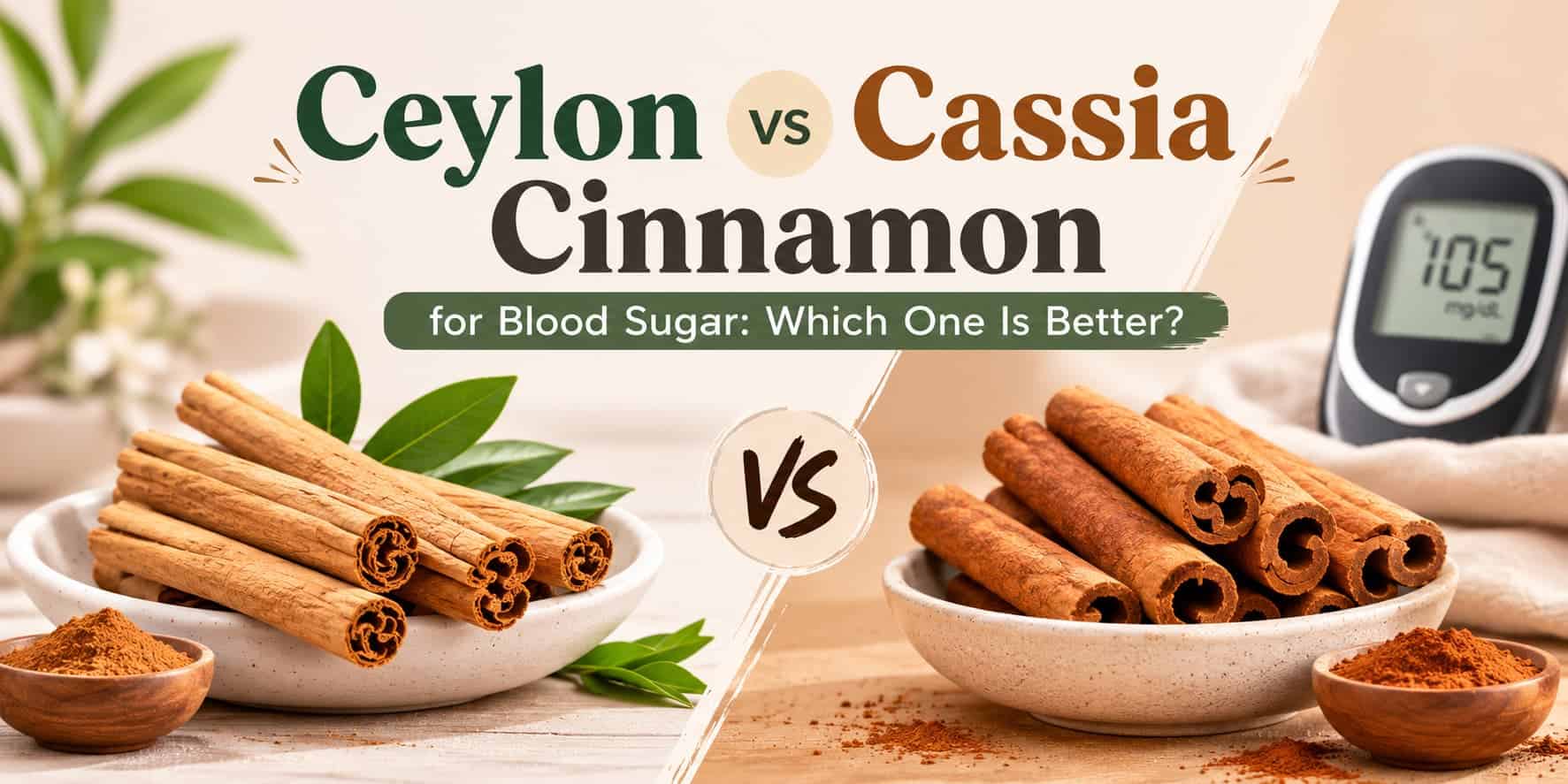
Cinnamon is one of those spices that seems to show up everywhere. You’ll find it in chai, desserts, breakfast bowls, and even home remedies for blood sugar. But there’s a detail many people miss: not all cinnamon is the same.
The two most common types are Ceylon cinnamon and Cassia cinnamon. They look similar when ground into a powder, but they differ in taste, composition, and their coumarin content.
So, if you’re watching your blood sugar, which one should you choose? And does cinnamon actually help control blood sugar in the first place? Let’s break it down.
What Is Ceylon Cinnamon?
Ceylon cinnamon is also known as “true cinnamon” and comes from Cinnamomum verum. It has a lighter color, delicate layers, and a milder flavor than Cassia cinnamon.
Ceylon cinnamon also contains much less coumarin than Cassia cinnamon. Coumarin is a naturally occurring compound that can affect the liver when consumed in high amounts over long periods. The German Federal Institute for Risk Assessment recommends choosing Ceylon cinnamon if you regularly consume larger quantities of cinnamon because it contains low levels of coumarin. [1]
But Does That Make Ceylon Cinnamon Better For Blood Sugar?
Not necessarily.
There’s limited human research specifically on Ceylon cinnamon and blood sugar. In a small crossover study involving 10 people with impaired glucose tolerance, taking 6 g of Ceylon cinnamon did not significantly affect blood glucose, insulin response or glucose tolerance after a glucose test. [2]
So, while Ceylon cinnamon has an advantage when it comes to its low coumarin content, we can’t say that it is a proven blood sugar-lowering spice.
What Is Cassia Cinnamon?
Cassia cinnamon comes from several species of the Cinnamomum family and is commonly used as a household spice. It has a darker color, thicker bark, and a stronger, warmer taste.
Cassia has also been studied more often for its possible effect on blood sugar.
Some clinical studies have found that cinnamon supplementation may lower fasting blood glucose. However, the results haven’t always been consistent. A systematic review and meta-analysis of 10 randomised controlled trials involving 543 people with type 2 diabetes found that cinnamon reduced fasting blood glucose but did not significantly lower HbA1c. The researchers also noted considerable differences between the studies, including the dose and duration of cinnamon use. [3, 5]
More recent research has reported somewhat more promising results. A 2024 systematic review and meta-analysis of 28 randomised controlled trials involving 3,054 people with type 2 diabetes found that cinnamon supplementation was associated with reductions in fasting blood glucose, post-meal glucose, and HbA1c. However, the studies showed substantial variation, so the results shouldn’t be taken to mean that cinnamon works the same way for everyone. [4]
Ceylon vs Cassia: Which Is Better for Blood Sugar?
This is where things get a little tricky.
If you’re asking which cinnamon has stronger evidence for blood sugar control, Cassia has been studied more extensively. Some research suggests it may help reduce fasting blood glucose, although the findings aren’t consistent across all trials. [3,4]
Ceylon cinnamon has much less human evidence behind it. In the controlled study mentioned earlier, 6 g of Ceylon cinnamon didn’t significantly affect post-meal blood glucose or insulin levels in people with impaired glucose tolerance. [2]
So, based on the current evidence, Cassia has more research supporting a possible blood sugar benefit.
But that doesn’t automatically make it the better choice for everyday use.
The reason? Coumarin.
The Coumarin Difference You Should Know About
Coumarin is naturally present in several plants, including some varieties of cinnamon. Cassia cinnamon generally contains much higher amounts of coumarin than Ceylon cinnamon. [1]
Why should you care?
High exposure to coumarin can cause liver damage in some sensitive people. The BfR and European Food Safety Authority have set a tolerable daily intake of 0.1 mg of coumarin per kg of body weight per day. [1]
The amount of coumarin in Cassia cinnamon can vary widely. According to the BfR, Cassia cinnamon contains an average of around 3,000 mg of coumarin per kg of cinnamon, although much higher concentrations have also been detected. [1]
This doesn’t mean you need to panic if you’ve been putting cinnamon in your chai.
Normal culinary use isn’t the same as taking large amounts of cinnamon every day. The concern is more relevant when someone consumes large quantities of Cassia cinnamon regularly, especially through concentrated supplements. [1]
If you use cinnamon often, choosing Ceylon cinnamon can be a simple way to reduce your coumarin exposure.
Does Cinnamon Actually Lower Blood Sugar?
Cinnamon may help with blood sugar control, but the evidence is still developing.
An earlier meta-analysis of randomized controlled trials found that cinnamon reduced fasting blood glucose but didn’t significantly reduce HbA1c. The researchers also pointed out that the studies differed greatly in dose and duration, making it difficult to determine the ideal amount of cinnamon. [3]
More recent research is encouraging. The 2025 systematic review mentioned earlier found that cinnamon supplementation was associated with lower fasting blood glucose, post-meal glucose and HbA1c in people with type 2 diabetes. [4]
However, this finding doesn’t mean cinnamon should be considered a diabetes treatment.
Think of it as a possible addition to your diet, not a replacement for your treatment plan.
Your overall diet, physical activity, sleep, body weight, and prescribed medicines have a much larger role in managing blood sugar.
How Much Cinnamon Should You Have?
There isn’t a universally accepted dose of cinnamon for blood sugar control.
Clinical studies have used very different amounts. The older meta-analysis included trials using between 120 mg and 6 g of cinnamon per day, while the newer research also found effects at different doses. [3,4]
That makes it difficult to recommend one exact amount for everyone.
If you simply enjoy cinnamon, using a small amount in your regular meals is a reasonable approach. You can add it to oats, plain yogurt, fruit, tea, or coffee without needing to consume large quantities.
Be more careful with cinnamon capsules and concentrated supplements. These can provide much larger amounts than you’d normally get from food, and Cassia-based products may contain significant amounts of coumarin. [1]
If you have diabetes and are considering a cinnamon supplement, it’s a good idea to discuss it with your doctor or pharmacist.
Which Cinnamon Is Safer for Regular Use?
For regular, long-term use, Ceylon cinnamon has an advantage because it contains much less coumarin. [1]
That doesn’t mean Cassia cinnamon is unsafe as a food. The concern is mainly about consuming large amounts frequently over a long period.
The BfR specifically recommends that people who regularly consume large quantities of cinnamon choose Ceylon cinnamon because of its low coumarin content. [1]
One problem is that powdered cinnamon can be difficult to identify by appearance. If you want Ceylon cinnamon, look for the type to be clearly stated on the package.
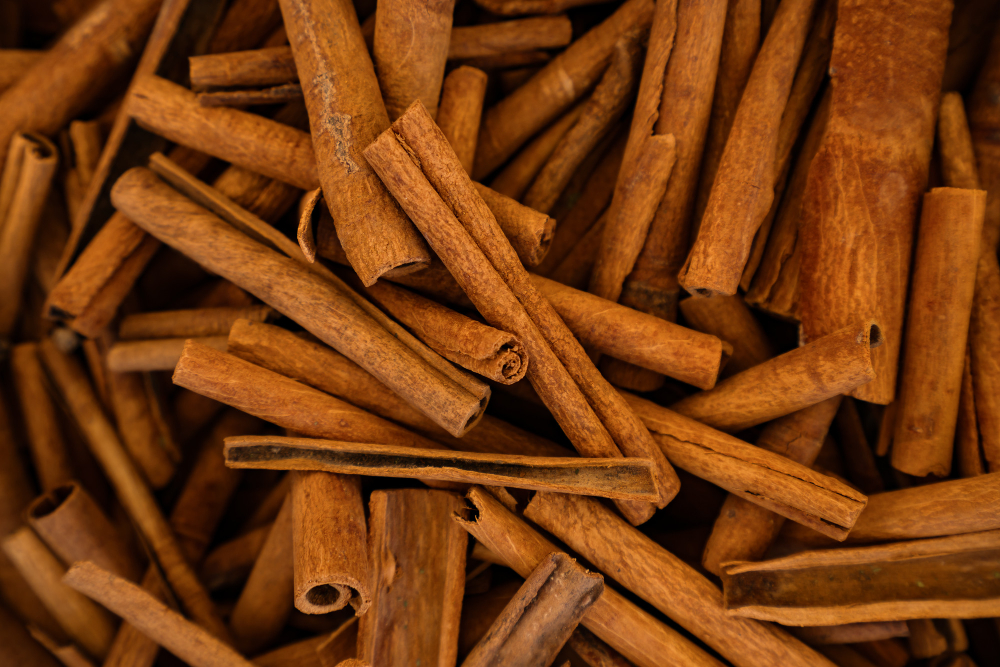
Cinnamon sticks are easier to tell apart. Ceylon sticks usually have several thin layers rolled together, while Cassia generally has a thicker, harder outer layer. [1]
Can People With Diabetes Have Cinnamon?
Yes. Cinnamon can be part of a balanced diet for people with diabetes.
But how you eat it matters.
Adding cinnamon to unsweetened oatmeal is very different from adding it to a sugary dessert. Cinnamon doesn’t cancel out the sugar in the food it’s added to.
And if you’re taking diabetes medication, don’t stop or reduce it because you’ve started using cinnamon. Research hasn’t established cinnamon as a replacement for standard diabetes treatment. [3,4]
If you’re pregnant or breastfeeding, it’s best to stick to the amounts of cinnamon normally used in food rather than taking cinnamon supplements or concentrated extracts unless your doctor recommends them.
Ceylon or Cassia: What Should You Pick?
If you’re choosing cinnamon purely for its possible blood sugar effects, Cassia has more clinical research behind it. Some studies suggest it may help lower blood glucose, although the evidence isn’t consistent. [3,4]
If you’re planning to use cinnamon regularly, Ceylon may be the better everyday choice because of its much lower coumarin content. [1]
So, there isn’t a simple “winner.”
Cassia has more evidence for a possible blood sugar effect. Ceylon has the advantage when it comes to coumarin exposure.
Either way, cinnamon should stay in its proper place. It’s a spice, not a diabetes medicine.
A Simple Way to Use Cinnamon
You don’t need to turn every meal into a cinnamon challenge.
Try adding a small amount of cinnamon to foods you already enjoy, such as oats, plain yogurt or unsweetened tea. This can add flavour without adding sugar.
If you have diabetes, focus on the bigger picture too. Choose high-fibre foods, include protein in your meals, stay physically active and follow the treatment plan recommended by your healthcare professional.
And remember, adding cinnamon to a sugary dessert doesn’t magically make the dessert healthy. Your cinnamon roll is still a cinnamon roll.
FAQs
Is Ceylon cinnamon better than Cassia for diabetes?
Not necessarily. Cassia has been studied more for blood sugar control, and some studies suggest that it may lower blood glucose. However, results vary. Ceylon has much less coumarin, which gives it an advantage for regular, long-term use. [1,3,4]
Which cinnamon has less coumarin?
Ceylon cinnamon contains much less coumarin than Cassia cinnamon. This is one of the main differences between the two types. [1]
Can cinnamon lower fasting blood sugar?
It may. Several studies have reported reductions in fasting blood glucose after cinnamon supplementation. However, the results have varied between studies, and there isn’t enough evidence to treat cinnamon as a replacement for diabetes medication. [3,4]
Can cinnamon lower HbA1c?
Some newer research suggests that cinnamon supplementation may modestly reduce HbA1c, but earlier studies found no significant effect. Differences in study design, cinnamon preparation, dose and duration make the evidence difficult to interpret. [3,4]
Can cinnamon replace diabetes medicine?
No. Cinnamon shouldn’t replace insulin, metformin or any other diabetes medicine prescribed by your doctor. It should be viewed as a dietary spice rather than a treatment for diabetes. [3,4]
Can I take cinnamon every day?
Small amounts used as a cooking spice are generally different from taking concentrated supplements. If you consume large amounts of cinnamon regularly, Ceylon cinnamon may be preferable because it contains much less coumarin. [1]
How can I tell Ceylon cinnamon from Cassia?
Powdered cinnamon can be difficult to distinguish. Check the package for the words “Ceylon cinnamon.” Cinnamon sticks are easier to identify. Ceylon sticks usually contain several thin layers, while Cassia sticks have a thicker bark. [1]
Can cinnamon cause low blood sugar?
Cinnamon may have a blood sugar-lowering effect, but the evidence doesn’t show that normal culinary use commonly causes dangerous low blood sugar. If you’re taking diabetes medication and considering high-dose cinnamon supplements, speak with your healthcare professional first.
References
- German Federal Institute for Risk Assessment. FAQ on coumarin in cinnamon and other foods. BfR. Available from: https://www.bfr.bund.de/en/service/frequently-asked-questions/topic/faq-on-coumarin-in-cinnamon-and-other-foods/. Accessed August 20, 2026.
- Wickenberg J, Lindstedt S, Berntorp K, Nilsson J, Hlebowicz J. Ceylon cinnamon does not affect postprandial plasma glucose or insulin in subjects with impaired glucose tolerance. Br J Nutr. 2012;107(12):1845-1849. doi:10.1017/S0007114511005113.
- Davis PA, Yokoyama W. Cinnamon intake lowers fasting blood glucose: meta-analysis. J Med Food. 2011;14(9):884-889.
- Effects of cinnamon supplementation on metabolic biomarkers in individuals with type 2 diabetes: a systematic review and meta-analysis. Nutrition. 2024. doi:10.1093/nutrit/nuae058.
- Allen RW, Schwartzman E, Baker WL, Coleman CI, Phung OJ. Cinnamon use in type 2 diabetes: an updated systematic review and meta-analysis. Ann Fam Med. 2013;11(5):452-459. doi:10.1370/afm.1517.
The article is written by Mantasha, Sr. Executive, Clinical Health & Content, and reviewed by Monalisa Deka, Deputy Manager, Clinical Health & Content, Medical Affairs.)
Recommended Reads:
Eat to Ease Pain: 5 Anti–Inflammatory Foods to Reduce Joint Pain
Joint Pain In Winter: Essential Steps To Follow Before The Cold Sets In