
Spending the entire workday sitting sounds familiar to many office workers. The majority of office personnel sit in front of computers for the better part of their working hours and hardly move as a result. By the afternoon, tightness in the hips, tension in the shoulder area, back pain, and low energy levels become something one gets used to.
However, there is good news. One doesn’t have to go to the gym or spend an hour working out to improve one’s physical state. A set of simple desk exercises done during the workday will contribute to easing the stiffness in one’s body and promoting circulation.
These exercises take no longer than a couple of minutes. Hence, they can be easily done during breaks between one’s emails, meetings, and coffee breaks.
Why Sitting for 9 Hours Can Affect Your Body

The long hours of sitting make the muscles inactive, primarily those of the glutes and the torso. In addition, it can lead to:
- Tight hip flexors
- Rounded shoulders
- Neck stiffness
- Lower back pain
- Poor circulation
- Fatigue and problems with concentration
Breaking up long sitting periods with brief movement throughout the day can help reduce stiffness, improve circulation, and make your body feel more comfortable.
1. Seated Neck Stretch
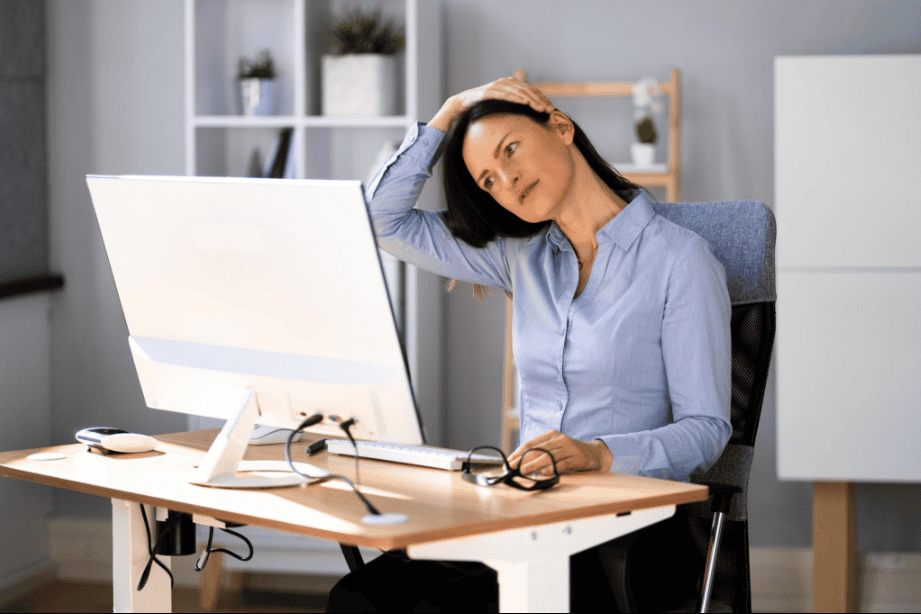
Looking at a screen for a long time may cause your neck muscles to tighten.
How the exercise should be performed
- You should sit straight with your feet placed flat on the floor.
- You should tilt your head to the right side.
- You should ensure your shoulders are free from tension.
- You should hold the posture for about 15-20 seconds.
- You should then repeat the exercise from the left side.
Why does it help?
By performing this stretch, you will target the muscles located on the neck, which will release the tension acquired owing to constant screen use.
Repeat: Exercise twice while following the methods on either side.
2. Shoulder Rolls

Hunched shoulders often occur after spending prolonged periods in front of the computer.
How to perform this technique
- The user has to sit or stand.
- Then, he/she raises his/her shoulders to the ears.
- Next, he/she makes circular movements with them in a backward direction.
- Finally, he/she needs to roll the shoulders forward.
Why does it help?
Shoulder rolls help increase the flexibility of the body and stimulate good posture because they make one relax the upper back muscles too.
Repeat: 10 rolls in each direction.
3. Seated Spinal Twist
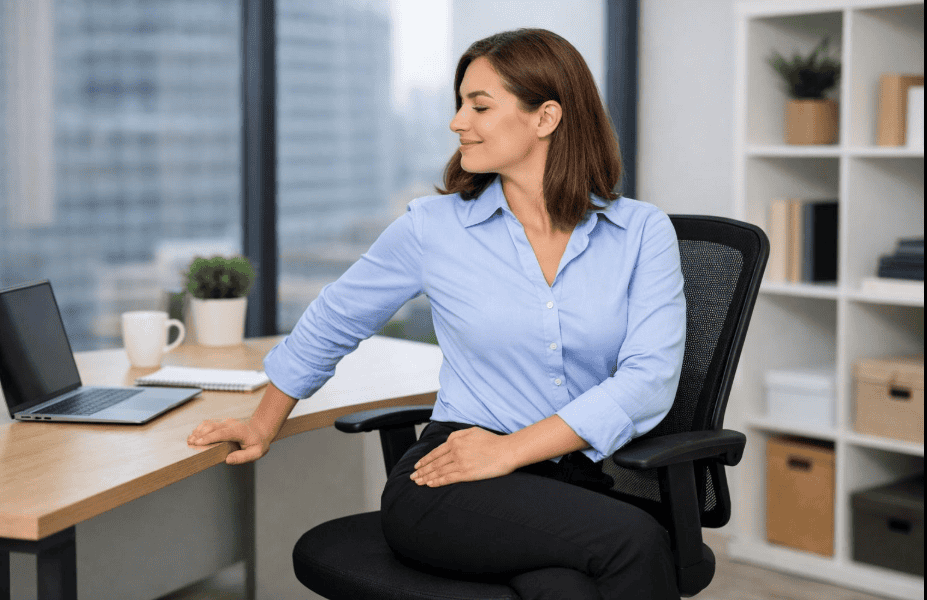
Regular rotations for your spine after remaining in one position for a long time are helpful.
How the exercise should be performed
- Sit up straight.
- Make use of your right hand as a support element.
- Put your left hand on your right leg.
- Start turning your body to the right.
- Do this for 15 seconds.
- Do the same on the left side.
Why does it help?
This action increases flexibility in your spine and helps decrease stiffness in your lower back.
Repeat: 10 repetitions.
4. Seated Leg Extensions
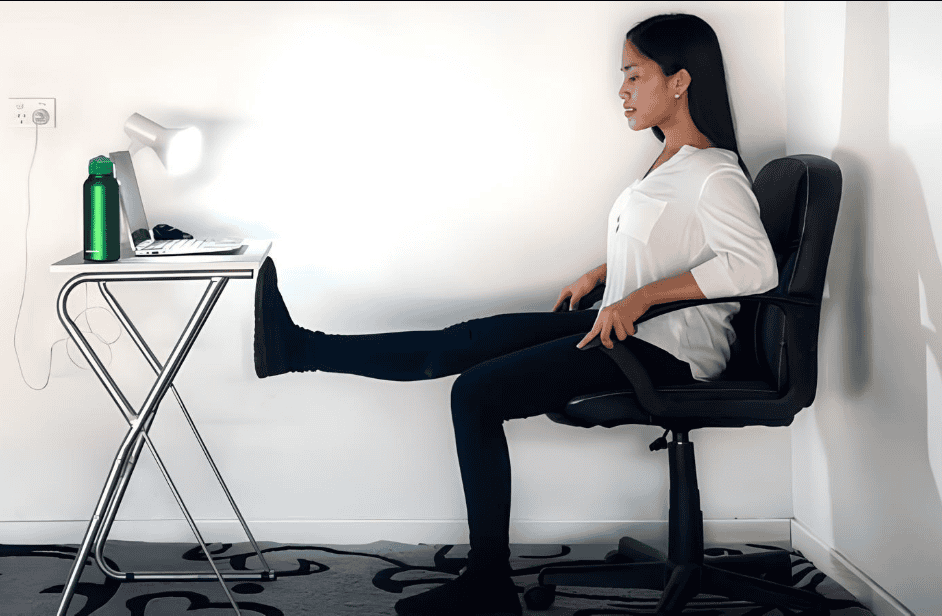
Leg muscles become inactive while sitting for long periods of time.
How the exercise should be performed
- Sit properly.
- Lift one leg in a straight position until it is parallel to the ground.
- Hold for 3–5 seconds.
- Lower it down.
- Repeat it for the other leg.
Why does it help?
Leg extensions activate the thigh muscles and improve blood circulation in the lower part of your body.
Repeat: 10 repetitions per leg.
5. Chair Hip Stretch
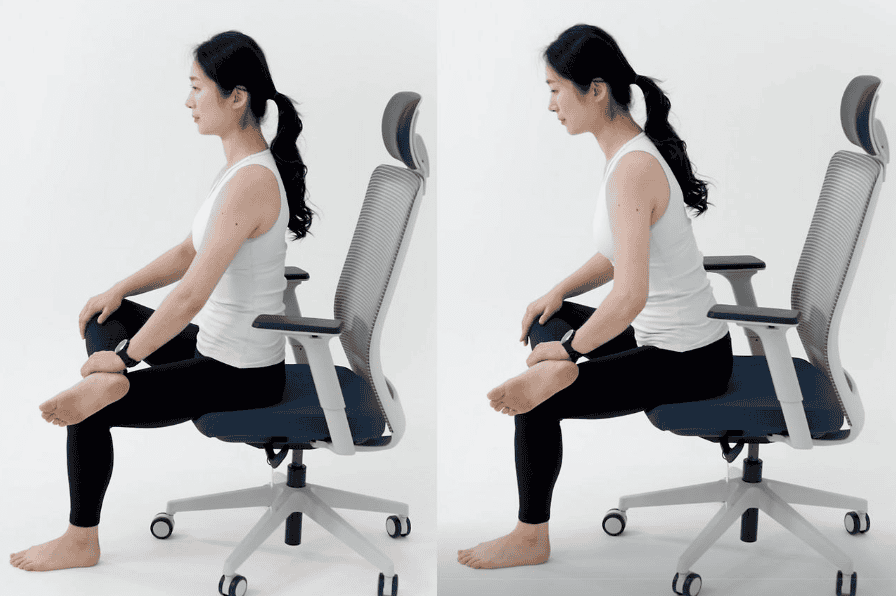
Being seated throughout the day can cause stiffness in your hips.
How to perform it
- Sit at the edge of the chair.
- Cross your right ankle over your left knee.
- Maintain a straight back.
- Gently lean forward until you begin to feel a stretch.
- Stay in this position for about 20 seconds.
- Then switch sides.
Why does it help?
This stretch targets the hips and buttocks, which often become rigid after being inactive.
Repeat: 5–8 repetitions.
6. Desk Calf Raises
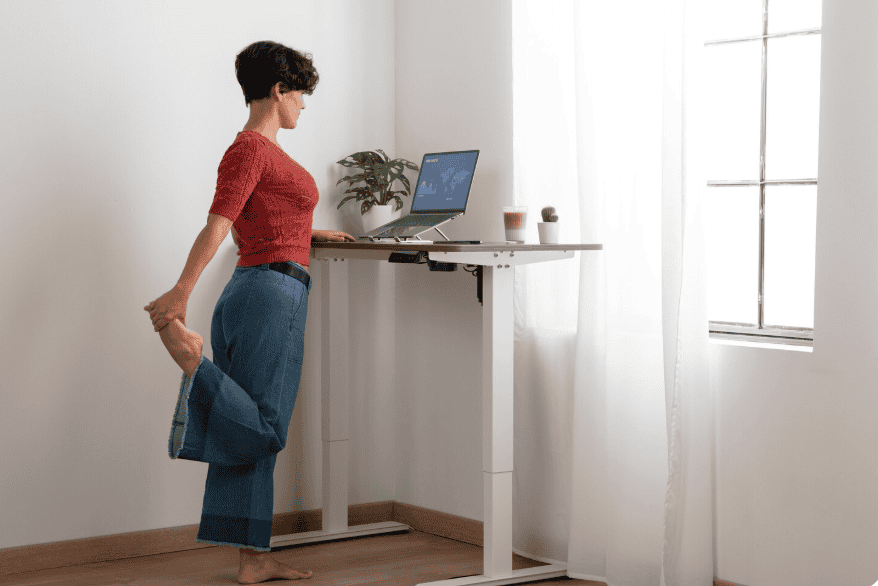
Standing for just a minute while working your calves boosts blood circulation.
How to perform it
- Stand behind your chair.
- Lightly hold onto the chair.
- Lift your heels off the ground.
- Take a moment’s pause.
- Lower yourself down.
Why does it help?
This is a great exercise to work out all the muscles of the lower legs and help the blood return to the heart.
Repeat: 15 repetitions.
7. Wall or Desk Push-Up
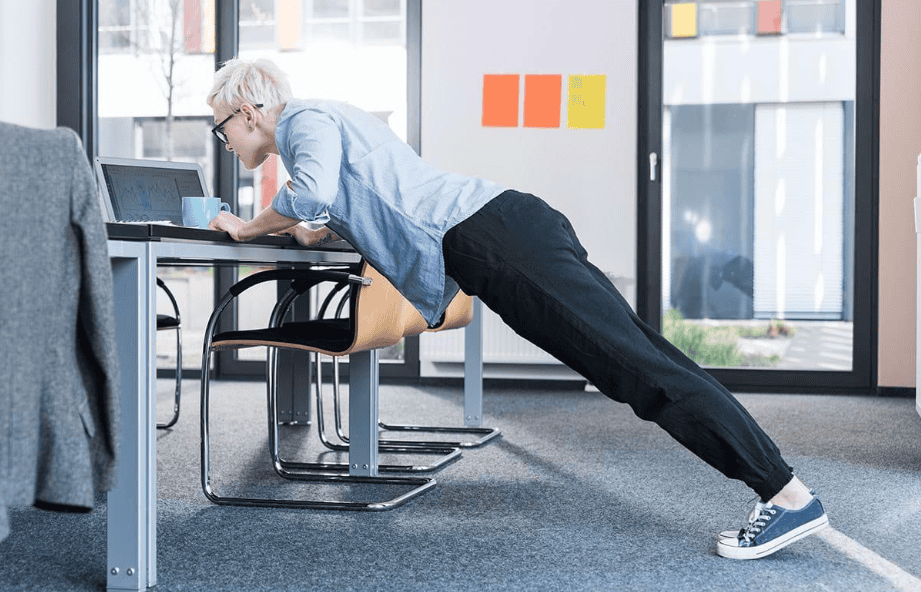
This is a fast way to get your upper body warmed up.
How it’s done
- Place both hands on a reliable table or wall.
- Back away with both feet.
- Move your chest towards your hands.
- Push back to start.
Why does it help?
Desk push-ups stimulate your chest, shoulders, arms, and core without requiring floor space.
Repeat: 8–12 repetitions.
A Simple 5-Minute Desk Exercise Routine
If you’re unsure how to fit these exercises into your workday, try this quick routine.
| Exercise | Time |
| Neck Stretch | 40 sec |
| Shoulder Rolls | 30 sec |
| Seated Twist | 40 sec |
| Leg Extensions | 1 min |
| Hip Stretch | 40 sec |
| Calf Raises | 40 sec |
| Desk Push-Ups | 50 sec |
Total time: About 5 minutes. Doing this once or twice during your workday can help interrupt long periods of sitting.
Tips to Move More During Your Workday
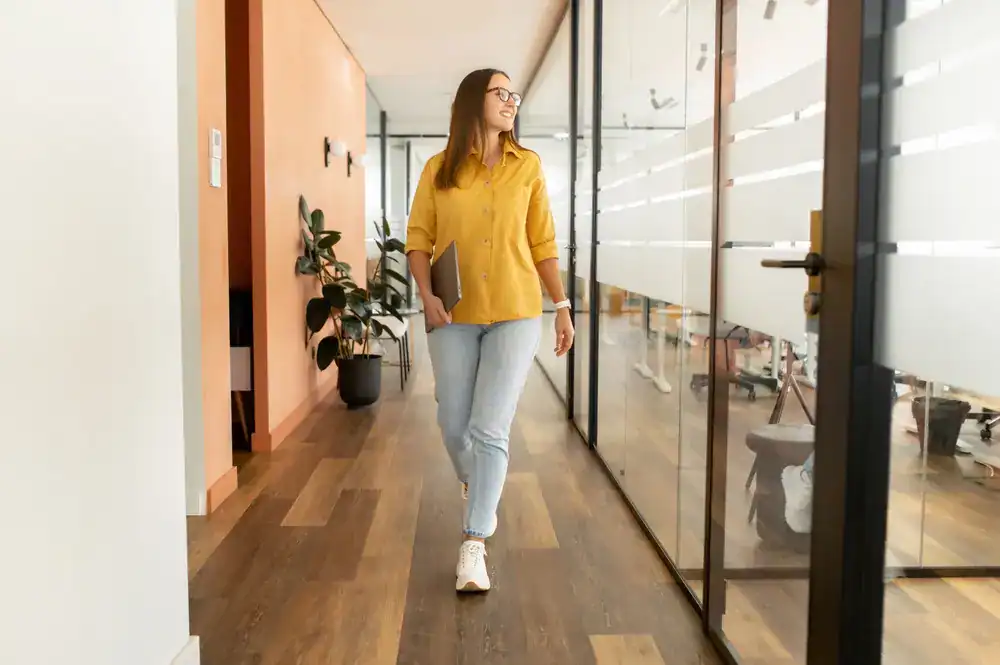
Desk exercises do best when combined with regular movement.
Try these practices:
- Stand up every 30–60 minutes.
- Walk around while on the phone.
- Fill up your water bottle more often.
- Use the stairs when applicable.
- Do stretches after long meetings.
If you use a standing desk, alternate between standing and sitting throughout the day.
When Should These Exercises Be Avoided?

Most healthy adults can safely perform these gentle movements.
But you should stop doing them when:
- You feel sharp pain
- You feel dizzy
- You feel numb
- You feel sudden weakness
If you have had an injury recently or a history of back problems, or any other condition that is limiting you in your movements, you should talk to your doctor before starting any new exercise program.
Conclusion
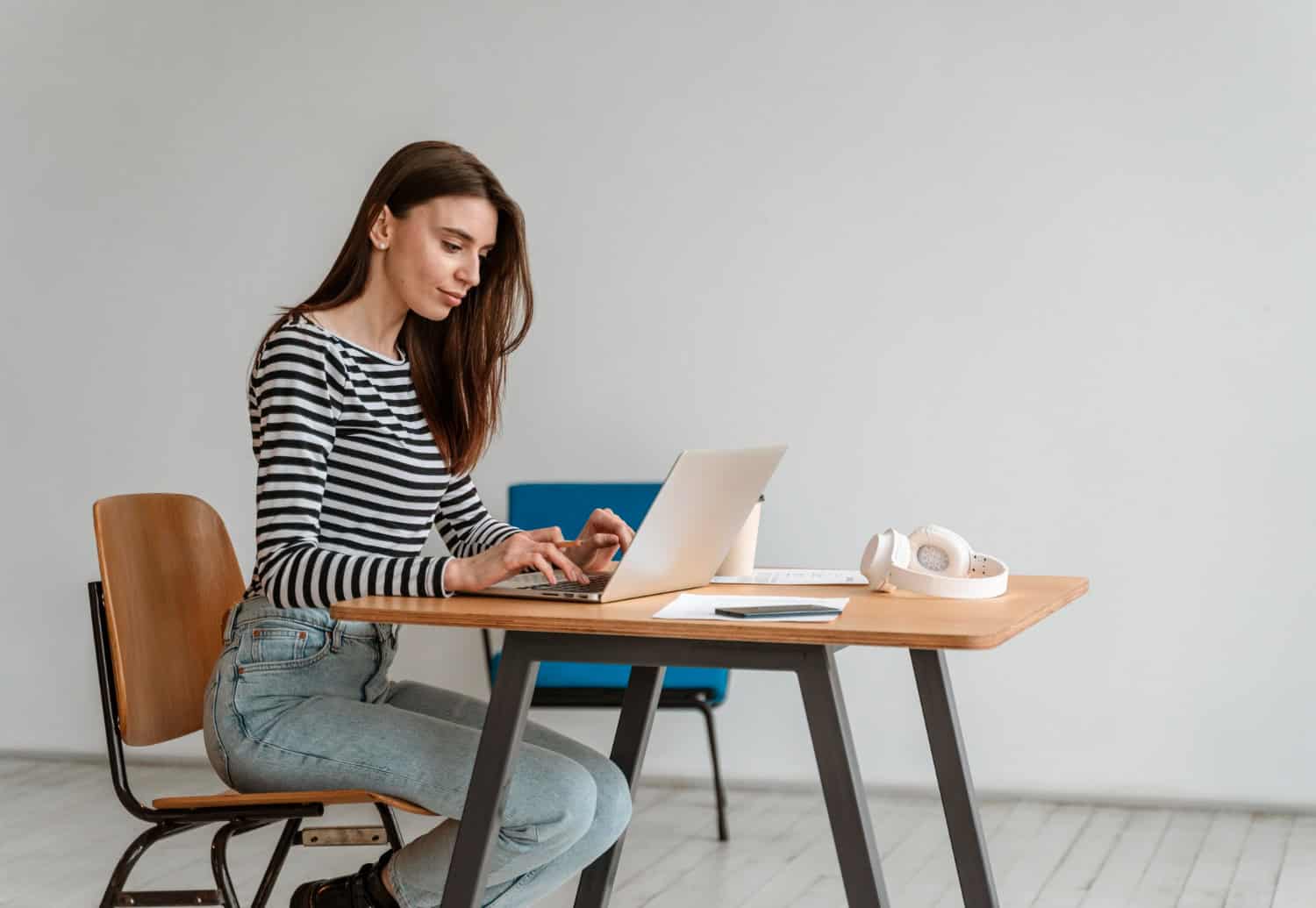
You don’t have to be sitting for 9 hours to feel rigid or uncomfortable. These 7 easy non-equipment exercises can be done in less time and are easy to do. The idea is not to substitute regular workouts with these exercises but to reduce time spent in a sitting position. Combined with short walking breaks and good posture habits, these simple movements can help keep your muscles active, your joints more mobile, and your workday a little more comfortable.
FAQs
Q. How often should I perform sitting exercises?
Aim to do desk exercises every 30–60 minutes during long sitting periods. Even a 2–5 minute movement break can help reduce stiffness.
Q. Can sitting exercises improve posture?
Yes, they can help decrease stiffness and enable better posture.
Q. Is there any additional apparatus or equipment needed?
No, Most desk exercises require only a chair or a sturdy table.
Q. Can these exercises reduce neck pain?
They may ease tension in the muscles being contracted for long periods of time.
Q. Are desk push-ups safe for beginners?
Indeed, desk push-ups are suitable for beginners as long as they are performed on a desk or wall that is strong enough. It is best to perform the exercise slowly in order to execute the movement with the right technique.
Q. Do leg raises help blood circulation?
Certainly, seated leg extensions activate the muscles of the legs and improve blood flow quite efficiently, especially after prolonged sitting.
Q. Can I do these exercises in office clothes?
Yes, these movements are simple enough to perform in everyday office attire. They don’t require changing into workout clothes.
Q. Are five-minute movement breaks enough?
Five-minute breaks can be effective in breaking long periods of sitting and preventing stiffness, but they will be more effective when combined with physical activity done on a daily basis.
(The article is written by Deepa Sarkar, Senior Medical Writer, and reviewed by Monalisa Deka, Deputy Manager, Clinical Health & Content, Medical Affairs)
Recommended Reads