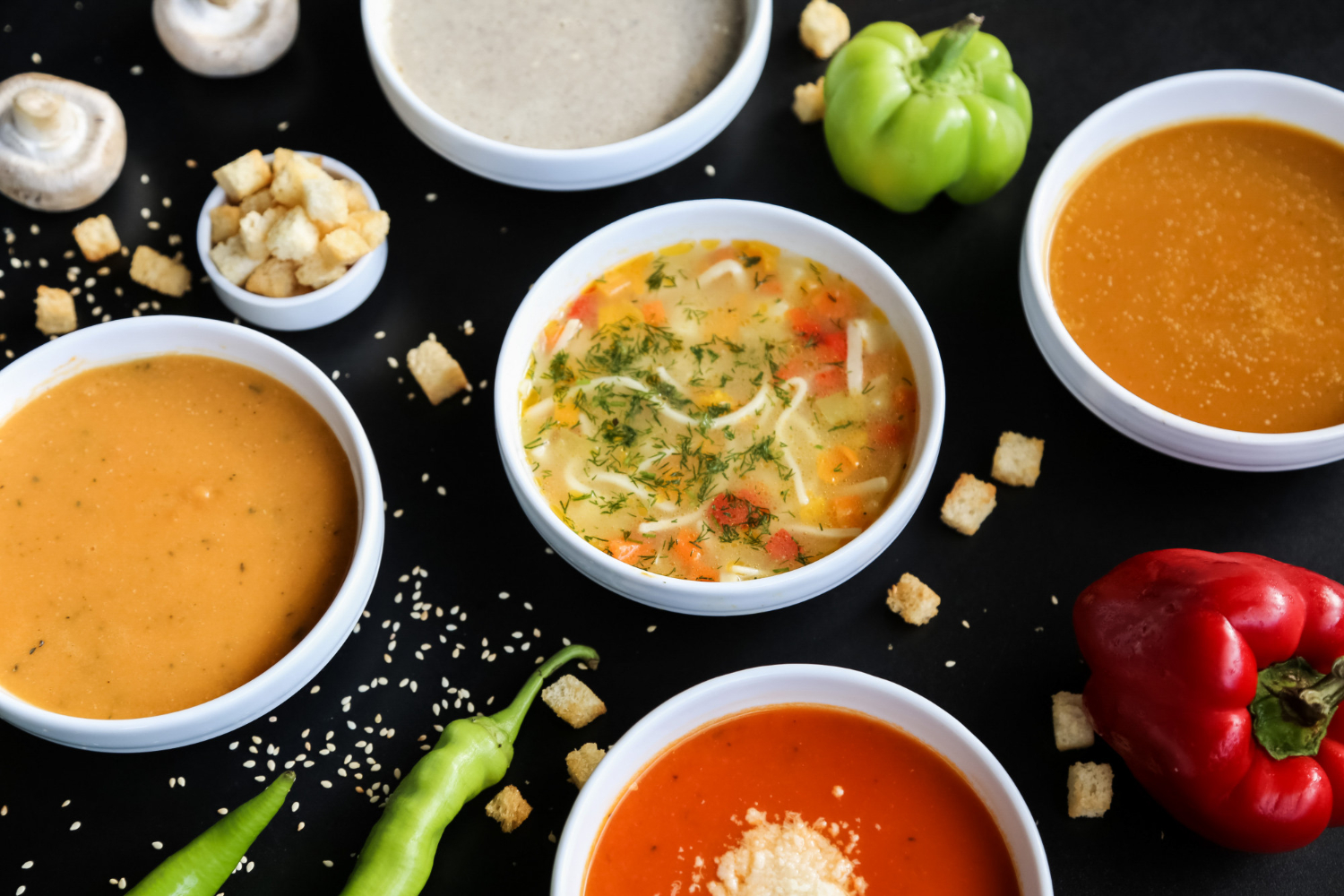
When the evenings start getting colder, a warm bowl of soup can make dinner feel a little more comforting. But if you’re relying on plain vegetable soup, you might find yourself hungry again within an hour. The solution? Add protein-rich ingredients that help you feel full and make your meal more balanced.
Protein supports muscle maintenance, tissue repair, and several essential functions in your body [1]. Including protein in your meals can also help you manage hunger between meals.
You don’t need expensive protein powders or complicated recipes to make a filling soup. Everyday ingredients like lentils, chicken, beans, paneer, and eggs can turn a simple broth into a satisfying meal.
Here are seven high-protein soup recipes to try before winter sets in. They’re easy to prepare, use ingredients commonly available in Indian kitchens, and work well for lunch or dinner.
1. Chicken and Vegetable Soup
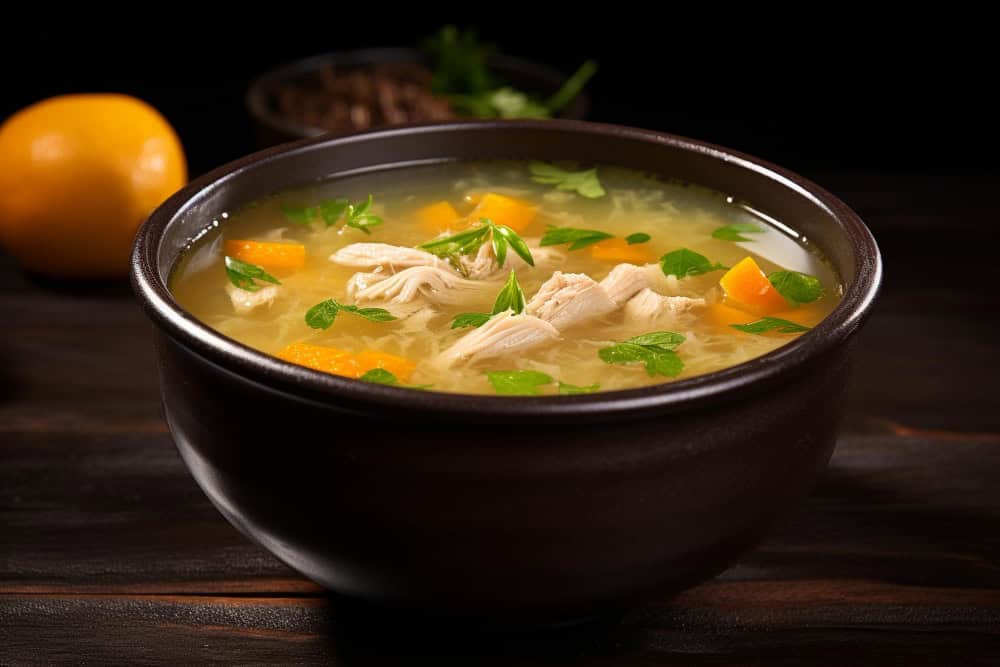
If you want a protein-rich soup that feels light but satisfying, chicken and vegetable soup is a good place to start. Chicken provides complete protein, while vegetables add fiber, vitamins, and minerals.
Ingredients:
- 100 g boneless chicken breast
- 1 cup chopped carrots, beans, and cabbage
- 2 cups water or low-salt chicken stock
- 1 garlic clove, finely chopped
- Black pepper and salt to taste
How to make it:
Boil the chicken with garlic and water until it’s fully cooked. Remove the chicken, shred it, and return it to the pot. Add the vegetables and simmer until tender. Season with black pepper and a little salt.
Estimated protein: 24–26 g per serving.
You can add ginger for extra flavor or squeeze some lemon juice into the soup before serving. If you’re looking for a light dinner that still provides a good amount of protein, this recipe is worth trying.
2. Moong Dal Soup
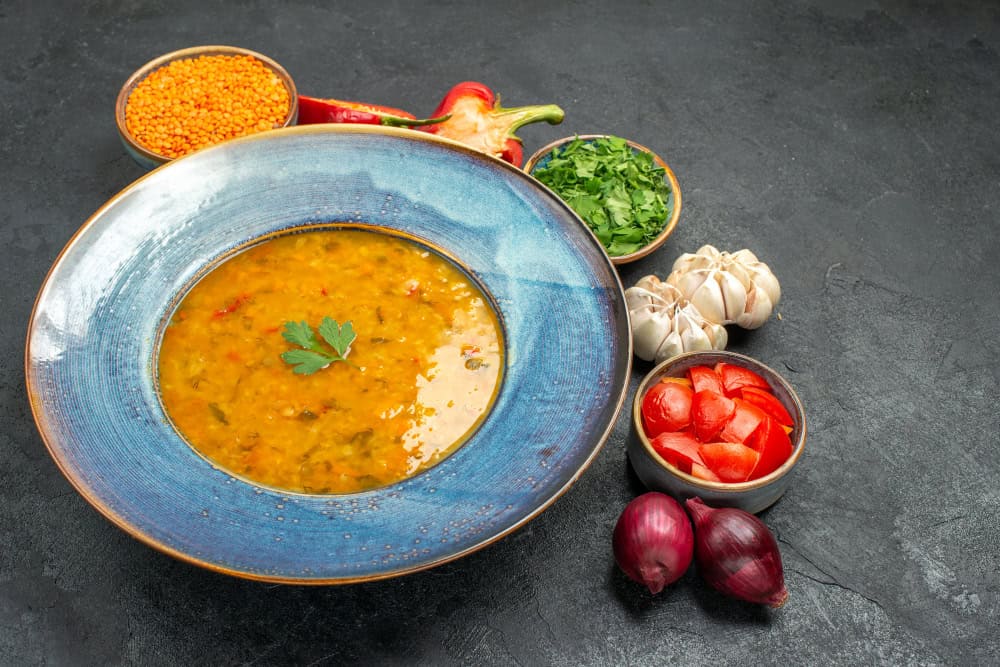
Moong dal soup is a comforting option if you prefer vegetarian meals. Yellow moong dal cooks quickly, has a mild flavor, and provides plant-based protein.
Ingredients:
- 50 g dry yellow moong dal
- 1 small tomato, chopped
- 1 garlic clove
- ¼ teaspoon cumin seeds
- 2 cups water
- A pinch of turmeric and black pepper
How to make it:
Wash the dal and cook it with water, tomato, turmeric, and garlic until soft. Blend it for a smooth texture or leave it slightly chunky. Heat the cumin seeds in a little oil and add the tempering to the soup.
Estimated protein: 12–14 g per serving.
Want to make it more filling? Add a small portion of cooked vegetables or serve it with whole-wheat toast.
Moong dal also contains folate, a B vitamin needed for cell growth and normal blood cell formation [2]. You can explore other dietary sources in our guide to 7 folate-rich foods to add to your pregnancy diet.
3. Paneer and Spinach Soup
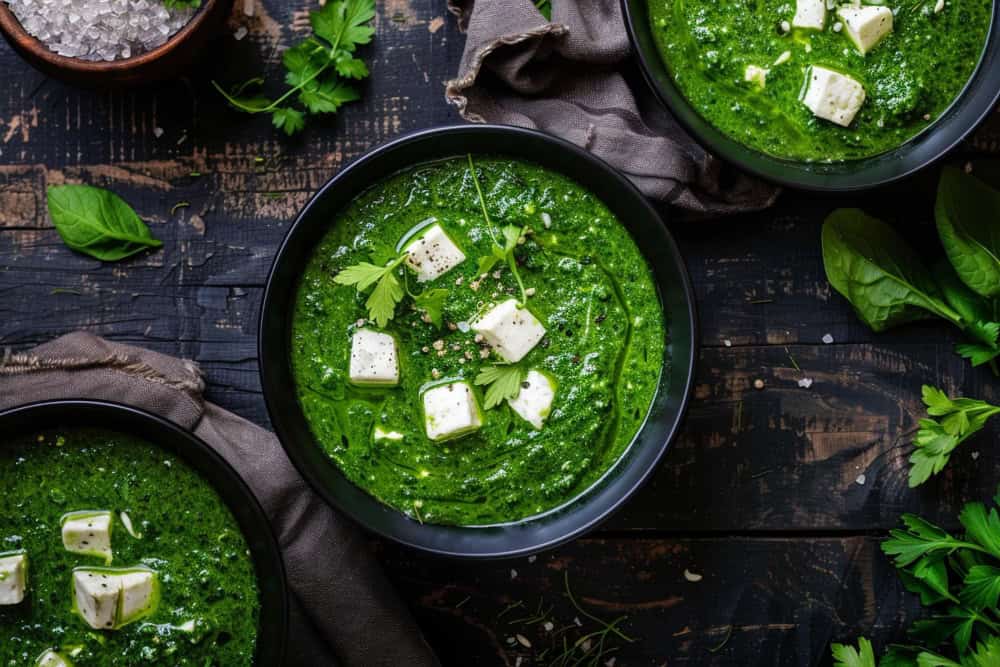
Paneer adds protein and calcium, while spinach provides folate and other nutrients. Together, they make a creamy soup without requiring heavy cream.
Ingredients:
- 100 g paneer
- 1 cup spinach leaves
- ¼ small onion
- 1 garlic clove
- 1 cup milk
- 1 cup water
- Black pepper to taste
How to make it:
Cook the onion and garlic in a teaspoon of oil until soft. Add the spinach and cook until wilted. Blend with the milk and water, then return the mixture to the pan. Add crumbled paneer and simmer for a few minutes. Avoid boiling it for too long.
Estimated protein: 25–29 g per serving.
The exact amount depends on the paneer and milk you use. Check the nutrition label if you want a more precise estimate.
If you enjoy creamy soups, this recipe is a useful alternative to versions made with large amounts of cream. For additional nutrition reading, check out our guide to iron supplements and seven factors that affect their absorption. Spinach contains iron, although the body doesn’t absorb all the iron in spinach as easily as it absorbs iron from many animal foods [3].
4. Chickpea and Tomato Soup
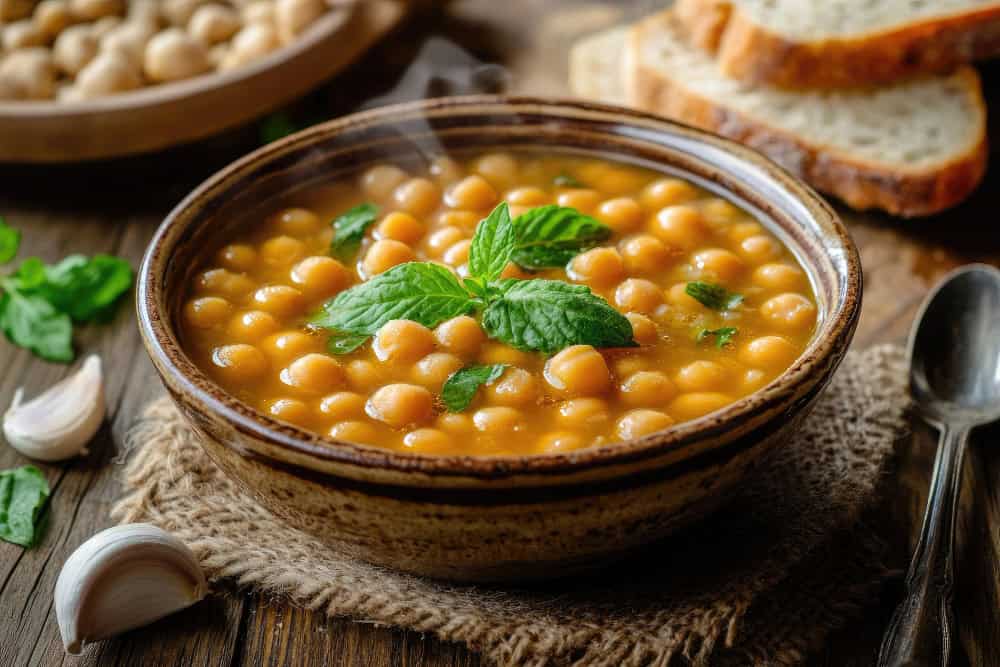
Chickpeas are rich in plant protein and fibre, making them a practical choice for a filling vegetarian soup. Canned chickpeas work well, too, as long as you rinse them before use.
Ingredients:
- ¾ cup cooked chickpeas
- 2 medium tomatoes
- ¼ onion
- 1 garlic clove
- 1½ cups water or low-salt vegetable stock
- Cumin, black pepper, and salt to taste
How to make it:
Cook the onion and garlic until soft. Add chopped tomatoes, cumin, and water, then simmer until the tomatoes break down. Add the chickpeas and cook for another 10 minutes. Blend half the soup if you prefer a thicker texture.
Estimated protein: 11–13 g per serving.
Serve it with whole-wheat toast for a more substantial meal. Chickpeas also provide fiber, which supports regular bowel movements. However, they can cause gas or bloating in some people. If you experience digestive discomfort, try a smaller portion and see how you feel.
5. Egg Drop Soup
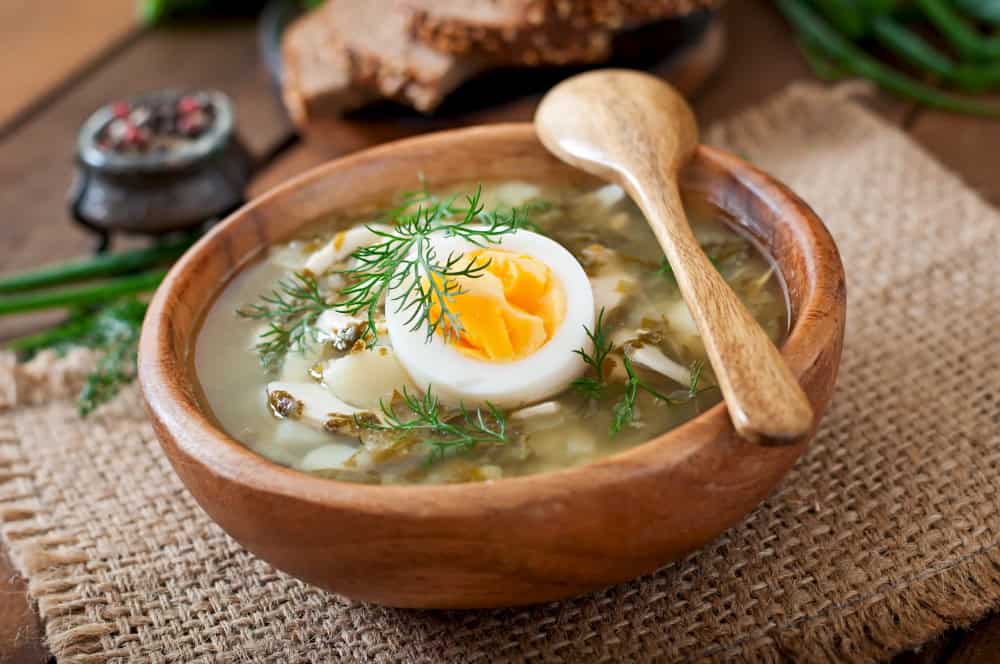
Egg drop soup is one of the quickest ways to add protein to your evening meal. It requires just a few ingredients and can be ready in about 10 minutes.
Ingredients:
- 2 eggs
- 2 cups low-salt vegetable or chicken stock
- 1 garlic clove
- ½ teaspoon grated ginger
- Black pepper and spring onions
How to make it:
Bring the stock to a gentle simmer with garlic and ginger. Beat the eggs in a bowl. Slowly pour them into the simmering broth while stirring gently to create soft ribbons. Cook until the eggs are fully set. Finish with black pepper and chopped spring onions.
Estimated protein: 13–15 g per serving.
For a more substantial meal, add tofu, mushrooms, or cooked shredded chicken. If you need dinner in a hurry after work, this recipe is easy to keep in your regular rotation.
6. Rajma Soup

Rajma isn’t just for rice. Red kidney beans can also form the base of a thick, flavorful soup that provides protein and fiber.
Ingredients:
- ¾ cup cooked rajma
- 1 medium tomato
- ¼ onion
- 1 garlic clove
- 1½ cups water
- Cumin, coriander powder, and black pepper
How to make it:
Cook the onion and garlic in a little oil. Add the tomato and spices, then cook until soft. Stir in the cooked rajma and water. Simmer for 10–15 minutes, then blend part of the mixture to make it thicker.
Estimated protein: 12–14 g per serving.
Always cook dried kidney beans thoroughly after soaking them, or use canned beans that are ready to eat. Raw or undercooked kidney beans contain a natural toxin that can cause severe nausea, vomiting and diarrhoea [4].
For extra protein, add some crumbled paneer or serve the soup with plain curd on the side.
7. Chicken and Lentil Soup
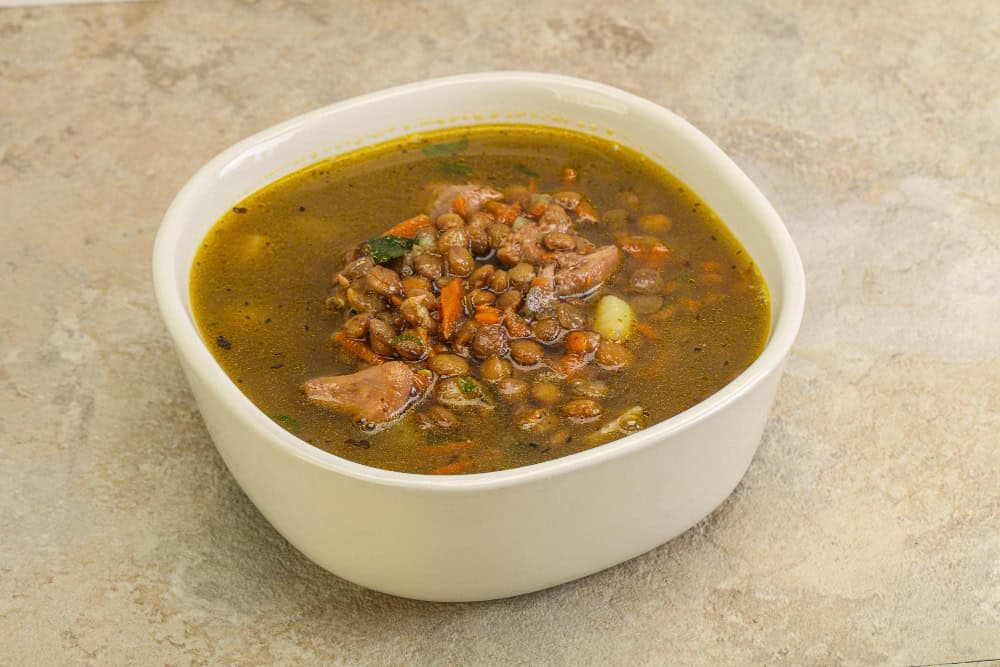
Can’t decide between chicken soup and dal? Combine both. Chicken and lentils provide protein from different sources, while carrots, tomatoes, and other vegetables add flavor and nutrients.
Ingredients:
- 75 g boneless chicken breast
- 30 g dry red lentils (masoor dal)
- ½ carrot, chopped
- 1 small tomato
- ¼ onion
- 2½ cups water
- Cumin, turmeric, and black pepper
How to make it:
Cook the onion, tomato, carrot, and spices in a little oil. Add the washed lentils, chicken, and water. Simmer until the lentils are soft and the chicken is fully cooked. Shred the chicken into small pieces and stir it back into the soup.
Estimated protein: 25–28 g per serving.
This soup is a good option when you want something more substantial than a clear broth. You can prepare a larger batch and refrigerate the leftovers promptly for another meal.
The Indian Food Composition Tables report approximately 21.8 g protein per 100 g of raw skinless chicken breast, 23.9 g per 100 g of raw split moong dal, 24.4 g per 100 g of raw masoor dal, and 18.9 g per 100 g of paneer [6].
How to Make Your Soup More Filling
A high-protein soup doesn’t need to be complicated. Start with a protein source, add vegetables, and adjust the portion to suit your appetite.
Here are a few simple ways to improve your soup:
- Add chicken, eggs, paneer, tofu, or cooked lentils.
- Include vegetables such as carrots, spinach, tomatoes, and beans.
- Add whole grains or serve your soup with whole-wheat toast if you need more energy.
- Use herbs, garlic, ginger, and spices for flavor instead of relying on excess salt.
- Pair your soup with another food if it doesn’t provide enough energy to keep you satisfied.
Your protein needs depend on your body weight, activity level, health, and overall diet. You don’t have to make every bowl extremely high in protein. What matters is getting enough protein across your meals throughout the day.
Safety note: If you have kidney disease or liver disease, your protein needs may differ depending on your condition and its severity. Consult your doctor or a registered dietitian before increasing your protein intake or making major dietary changes.
Frequently Asked Questions
1. Which soup has the highest protein content?
Chicken and lentil soup and chicken and vegetable soup can provide around 25–30 g of protein per serving, depending on the quantity of chicken used. Paneer and spinach soup can also provide a substantial amount of protein.
2. Can I have protein soup every day?
Yes, you can include protein-rich soups in your daily diet if they suit your nutritional needs. Rotate your ingredients to get a variety of nutrients. You can alternate between chicken, eggs, lentils, beans, and paneer rather than eating the same soup every day.
3. Are high-protein soups good for weight management?
They can help you feel full, which may make it easier to manage hunger between meals. However, weight management depends on your overall food intake, physical activity, sleep, and other factors. A protein-rich soup alone won’t cause weight loss.
4. Can I make these soups ahead of time?
Yes. Refrigerate cooked soup in covered containers within two hours of cooking, and eat it within three to four days [5]. Reheat it thoroughly before serving. Freeze portions if you want to store them for longer.
5. Which vegetarian soup is best for protein?
Paneer and spinach soup provides protein from dairy, while moong dal, chickpea, and rajma soups offer plant-based protein. For a higher-protein vegetarian meal, you can combine lentils with paneer or tofu.
6. Are soups enough for dinner?
That depends on the ingredients and portion size. A clear vegetable broth may not provide enough protein or energy to serve as a complete dinner. Add a protein source, vegetables, and a suitable serving of grains or bread if needed.
7. Can I eat soup if I experience bloating?
It depends on what’s causing your bloating. Lentils, chickpeas, beans, onions, and milk can trigger symptoms in some people. Try smaller portions, cook legumes thoroughly, and notice which ingredients affect you. If bloating persists or comes with severe pain, vomiting, blood in your stool, or unexplained weight loss, seek medical advice.
The Bottom Line
Cooler evenings are a good excuse to bring soup back to your dinner table. With ingredients such as chicken, eggs, paneer, and lentils, you can make a warm meal that provides protein, vegetables, and plenty of flavor.
Try one of these seven recipes this week and adjust the ingredients to suit your taste. A bowl of soup can be comforting, filling, and nutritious without taking hours to prepare.
References
1. National Institutes of Health, Office of Dietary Supplements. Protein and amino acids: fact sheet for health professionals. Bethesda (MD): National Institutes of Health. Available from:https://ods.od.nih.gov/
2. National Institutes of Health, Office of Dietary Supplements. Folate: fact sheet for health professionals. Bethesda (MD): National Institutes of Health. Available from: https://ods.od.nih.gov/factsheets/Folate-HealthProfessional/
3. National Institutes of Health, Office of Dietary Supplements. Iron: fact sheet for health professionals. Bethesda (MD): National Institutes of Health. Available from: /ods.od.nih.gov/factsheets/Folate-HealthProfessional/
4. US Food and Drug Administration. Bad bug book: foodborne pathogenic microorganisms and natural toxins handbook. 2nd ed. Silver Spring (MD): US Food and Drug Administration. Available from:https://www.fda.gov/food/retail-food-protection/fda-food-code
5. US Department of Agriculture, Food Safety and Inspection Service. Leftovers and food safety. Available from:https://www.fsis.usda.gov/food-safety/safe-food-handling-and-preparation
6. https://www.nin.res.in/ebooks/IFCT2017.pdf
(The article is written by Mantasha, Sr. Executive, Clinical Health & Content, and reviewed by Monalisa Deka, Deputy Manager, Clinical Health & Content, Medical Affairs.)