Sign in to your account
or
By signing in you agree to our
Terms & conditions
 and 
Privacy policy

Extended Lipid Profile

Also referred as
Extended lipid panel test
Complete lipid profile test
xyz people viewed recently
973+ booked recently
For men & women
Earliest reports in
12 hours
Contains
14 tests
Test price:
₹2850
Get it at ₹2565 with coupon
Apply coupon 1MGNEWG during checkout
arrow
discount_stamp
More offers available
Know more about this test

<font color='#864291'>Know more about this test</font>

An Extended Lipid Profile gives detailed insights into different types of cholesterol and fats in your blood, going beyond the standard lipid profile. This test provides a better understanding of your heart health and tells about the risks of heart disease and stroke. 

Samples required
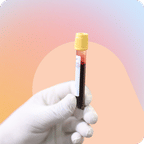
Blood

Find out
Why is this test booked?

Preparations
Overnight fasting required for 8 to 12 hours

Sample Collection
Who will collect your samples?
Conducted by

know_more_icon
Tata 1mg Labs
chevron
most trusted lab
Accredited labs
Highly skilled Phlebos
Verified reports
Who will collect your samples?
Tata 1mg certified phlebotomists
View phlebo details

Understanding Extended Lipid Profile

Lipids are fatty compounds that are essential to many body functions such as the maintenance of cell membrane structure, hormone production, energy storage, etc., and serve as the building blocks for all living cells. 

An Extended Lipid Profile offers a thorough evaluation of these lipids, going beyond the scope of a standard lipid profile. This advanced test offers a more nuanced understanding of your cardiovascular health by examining additional markers beyond the basic lipid profile. The standard lipid profile generally includes measurements of total cholesterol, LDL cholesterol (bad cholesterol), HDL cholesterol (good cholesterol), and triglycerides while an extended lipid profile includes additional biomarkers, also known as cardiac risk markers such as serum Apolipoprotein B and A1, Lipoprotein A, homocysteine, and high-sensitivity C-reactive protein (hs-CRP). Elevated levels of these markers may indicate an increased risk of heart disease. 

Unlike the standard lipid profile, the extended lipid profile offers a holistic view of lipid metabolism, allowing for better risk stratification and personalized treatment. 

The doctor may recommend extended lipid profile testing for Individuals with a family history of cardiovascular disease, obesity, diabetes, or hypertension to comprehensively assess their specific risk factors. If previous lipid profile results showed abnormalities or borderline values, an extended lipid profile can provide a more detailed evaluation to guide treatment decisions. Individuals with suspected cardiovascular disease may undergo this test to evaluate their risk more accurately. Certain individuals with unique risk factors or health conditions like chronic kidney disease, metabolic syndrome, or autoimmune disorders may require a thorough lipid profile assessment. Those on lipid-lowering therapy, such as statins, may undergo periodic extended lipid profile testing to monitor treatment effectiveness and adjust medication dosage as needed. Proactive individuals interested in heart disease prevention may opt for an extended lipid profile to obtain a comprehensive evaluation of their cardiovascular health status and early identification of potential risk factors.

Usually, overnight fasting (8-12 hours) is required before going for an Extended Lipid Profile. However, drinking water is acceptable. Also, avoid binge eating, and intake of high-calorie foods and alcohol a day before the test. It is important to inform the doctor if you are taking other medications or supplements as they might interfere with test results. Your doctor may ask you to stop taking them temporarily.

Lab test results may vary across different laboratories. Abnormal test results require an expert interpretation, therefore, never try to self-medicate at home based solely on these results, and always consult a doctor for proper understanding of the test results. Discuss your symptoms and medical history to help the doctor correlate your clinical and laboratory findings, leading to a more accurate diagnosis and effective treatment plan tailored to your specific health needs.

See more

What does Extended Lipid Profile measure?

Contains 14 tests

An Extended Lipid Profile measures various parameters related to cholesterol and other fats in the blood, providing a more comprehensive assessment of cardiovascular health. 

This profile includes Apolipoprotein A1 and B serum, High-sensitivity C-reactive protein test (hs -CRP), serum homocysteine test, Lipid profile, and Lipoprotein A test. hs -CRP is a marker of inflammation in the body and high levels of hs-CRP are associated with an increased risk of cardiovascular disease. Homocysteine is an amino acid linked to increased risk of heart disease and stroke when present in high levels and this test helps evaluate cardiovascular risk and may guide treatment decisions. The lipid profile includes measurements of total cholesterol, LDL cholesterol, HDL cholesterol, and triglycerides. These all are crucial indicators of cardiovascular health and risk. Furthermore, Lipoprotein A is a type of cholesterol particle associated with an increased risk of cardiovascular disease. Elevated Apolipoprotein B (ApoB), the primary protein component of low-density lipoprotein (LDL), and decreased Apolipoprotein A1 (ApoA1), the primary protein component of high-density lipoprotein (HDL) associated with increased risk of cardiovascular disease.

An Extended Lipid Profile aimed at providing a comprehensive evaluation of cardiovascular risk by assessing not only traditional lipid parameters but also inflammation and other risk factors. 

The Lipid Profile assesses the level of specific fat molecules called lipids in the blood and helps determine the risk of heart ailments. This profile determines the amount of different types of lipids, including total cholesterol, low-density lipoprotein (LDL) cholesterol, very-low-density lipoprotein (VLDL) cholesterol, high-density lipoprotein (HDL) cholesterol, and triglycerides. Lipids play a pivotal role in the functioning of the body. They are crucial components of the cell membranes and hormones, provide cushioning, and are a storehouse of energy. Any alterations in the lipid levels may increase the risk of potential heart ailments, making their monitoring crucial.

Know more about Lipid Profile

This further contains

  • Non HDL Cholesterol
  • Cholesterol - HDL
  • Very Low Density Lipoprotein
  • Total Cholesterol/HDL Cholesterol Ratio
  • LDL/HDL Ratio
  • Cholesterol - LDL
  • Triglycerides
  • Cholesterol - Total

An hsCRP (High Sensitive CRP) test is a state-of-the-art biochemical marker to predict potential risks of future diseases. This test is more sensitive than the standard CRP test and can also detect lower CRP levels in the blood. Its accuracy in predicting cardiovascular issues, autoimmune disorders, and other health issues makes it an excellent test to detect asymptomatic conditions with limited diagnosis.

Know more about hsCRP (High Sensitive CRP)

The Lipoprotein (a) test measures the amount of lipoprotein A (Lp-A) particles in your blood. Lipoprotein A is a mixture of Low-density lipoprotein (LDL) and a protein called apolipoprotein a. Lp-A levels are largely determined by genetics. Lp-A levels are not significantly affected by diet, exercise, or lifestyle changes, unlike other types of cholesterol. That is why testing for Lp-A is essential, particularly for individuals with a strong family history of cardiovascular (heart or blood vessel) disease as it is considered an independent risk factor for heart attack and stroke. This test can help identify individuals who are at high risk, enabling early intervention to prevent future complications.

Know more about Lipoprotein (a)

The Serum Homocysteine test measures your blood levels of homocysteine that serves in the body as an intermediate in the metabolism of methionine and cysteine. Methionine is an essential amino acid and antioxidant that synthesizes proteins. Cysteine is a nonessential amino acid synthesized from methionine. It reduces inflammation, increases communication between immune cells, and increases liver health.

The human body generally has low levels of homocysteine. This is because our body uses vitamins B12, B6, and folic acid (also called folate or vitamin B9) to break down homocysteine rapidly, convert it into other compounds, and transport it to our body. However, high levels can damage blood vessels and increase the risk of heart attacks, damage to arteries, and brain stroke.

Know more about Serum Homocysteine

The Apolipoproteins A1 & B test helps check the levels of Apolipoproteins in your blood. It contains three tests namely, Apolipoprotein - A1, Apolipoprotein - B, and Apolipoprotein B/A1 ratio. Apolipoprotein - A1 is the primary protein associated with HDL cholesterol (good cholesterol) and its increased concentrations are associated with reduced risk of cardiovascular disease. Apolipoprotein B is the primary protein associated with LDL cholesterol (bad cholesterol) and other lipid molecules. An increase in LDL cholesterol is associated with increased risk of cardiovascular disease. While the apolipoprotein B/A1 ratio compares the values of Apo B to ApoA1 and an elevated ApoB:ApoA1 ratio confers increased risk of atherosclerotic cardiovascular disease.

Getting tested with the Apolipoproteins A1 & B test can help lower your risk for cardiovascular disease and ensure that you live a longer, healthier life.

Know more about Apolipoproteins A1 & B

This further contains

  • Apolipoprotein - A1
  • Apolipoprotein - B
  • Apolipoprotein B/A1 Ratio
Frequently booked together
Did you find information useful ?
yesYES (11)
noNO (1)

Extended Lipid Profile test price for other cities

Price inBangaloreRs. 2631
Price inMumbaiRs. 2631
Price inNew DelhiRs. 2850
Price inNoidaRs. 1430
Price inPuneRs. 2631
Book a Extended Lipid Profile test at home near me

Easy online booking
Easy online booking
Search for tests and packages, book your preferred time slot and enter your address for seamless at-home lab tests.

Live tracking of phlebotomist
Track our trained phlebotomist's real time location for seamless sample collection.

Safe Sample Collection
Our phlebotomists follow strict safety protocols to collect samples safely at home and on time.

Sample received at lab
Samples are transported securely to our accredited labs with world-class machines for testing by qualified experts.

Quick, Doctor-Verified Reports
Get doctor-approved reports via email and WhatsApp, with options for doctor follow-ups and AI insights.

FAQs related to Extended Lipid Profile

Taking an Extended Lipid Profile provides a more comprehensive assessment of cardiovascular health by evaluating additional risk factors such as inflammation and homocysteine levels, which can help in early detection and management of heart disease.
No, there is no risk associated with an Extended Lipid Profile. However, some individuals may feel a slight sting when a needle is pricked and experience some normal bleeding that is usually not bothersome. Rarely, some individuals may also experience slight swelling or bruising at the site of the needle prick. Applying ice 3-4 times a day for about a week may help reduce swelling and bruising. If it does not get better, consult your doctor.
The frequency depends on your individual condition and risk factors such as age, family history, lifestyle habits, and presence of other underlying diseases. Your doctor will guide how often you should book this package.
Common examples of heart disease include Coronary artery disease, Cardiac ischemia, Angina pectoris, Congestive cardiac failure, Arrhythmias, and Valvular heart disease.
Common symptoms of heart disease include chest pain or discomfort, left shoulder tip pain, shortness of breath, fatigue or weakness, palpitations, dizziness, swelling in the legs, ankle, feet etc. cold sweats, nausea, etc.
The lipid profile is important because high levels of lipid molecules such as cholesterol, triglycerides, etc, can increase the risk of developing atherosclerosis and other heart diseases.
hsCRP and homocysteine tests are markers that can indicate inflammation in the body, which is linked to a higher risk of heart disease.
A heart attack happens when a blockage restricts the blood flow to the heart, while a stroke occurs when there is a blockage or a burst blood vessel that affects blood flow to the brain. Both these conditions are serious and need immediate medical help.
Atherosclerosis is a condition where plaque (buildup of cholesterol, and other substances) inside the arteries, which can cause heart attack or stroke.
References
  1. What is heart disease? [Internet]. CDC; 15 May 2023 [Accessed 20 Mar. 2024]. Available from:
  2. Cardiovascular Disease [Internet]. NHS; 22 Apr.2022 [Accessed 20 Mar. 2024]. Available from:
  3. Cardiovascular Diseases (CVDs) [Internet]. WHO; 11 June. 2021 [Accessed 20 Mar. 2024]. Available from:
  4. Olvera Lopez E, Ballard BD, Jan A. Cardiovascular Disease. [Updated 2023 Aug 22]. In: StatPearls [Internet]. Treasure Island (FL): StatPearls Publishing; 2023 Jan-. Available from:
  5. Sreeniwas Kumar A, Sinha N. Cardiovascular disease in India: A 360 degree overview. Med J Armed Forces India. 2020 Jan;76(1):1-3.
  6. Cardiovascular Risk Factors and Markers. A literature review. Vasculopathies. 19 Jan. 2003. [Accessed 20 Mar. 2024]. Available from:
  7. Gofman JW, Lindgren F. The role of lipids and lipoproteins in atherosclerosis. Science. 1950 Feb 17;111(2877):166-71. [Accessed 20 Mar. 2024]. Available from:
  8. Rippe JM. Lifestyle Strategies for Risk Factor Reduction, Prevention, and Treatment of Cardiovascular Disease. Am J Lifestyle Med. 2018 Dec 2;13(2):204-212. [Accessed 20 Mar. 2024]. Available from:
  9. Prevent Heart Disease [Internet]. CDC; 21 Mar. 2023 [Accessed 20 Mar. 2024]. Available from:
  10. Thiriet M. Cardiovascular Risk Factors and Markers. Vasculopathies. 2019 Feb 19;8:91–198. [Accessed 20 Mar. 2024]. Available from:
  11. Upadhyay RK. Emerging risk biomarkers in cardiovascular diseases and disorders. J Lipids. 2015;2015:971453. [Accessed 20 Mar. 2024]. Available from:
  12. Understand Your Risk For Heart Disease [Internet]. NIH; 24 March 2022. [Accessed 20 Mar. 2024]. Available from:
  13. Singh S, Zeltser R. Cardiac Risk Stratification. [Updated 2023 May 16]. In: StatPearls [Internet]. Treasure Island (FL): StatPearls Publishing; 2023 Jan-. Available from:
Contains 14 tests
Report delivery
Samples required
Preparations
Why is this test booked?
Coupon details
Available Offers