ECG at Center


The ECG at Center is a noninvasive test that measures the electrical activity of the heart, providing insights into its function and rhythm. This test is done to diagnose and monitor various heart conditions, ensuring accurate and timely treatment.



Understanding ECG at Center
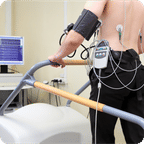
The ECG at Center (ECG) test captures the heart's electrical activity in real time by placing electrodes on the skin at specific points on the chest, arms, and legs. These electrodes detect the heart's electrical signals and produce a detailed waveform displayed on a monitor or recorded on paper. The ECG at Center test identifies critical information about the heart's rhythm, rate, and overall function by recording the heart's electrical activity. This test helps diagnose structural issues and conditions such as arrhythmias (irregular heartbeats), myocardial infarction (heart attack), and other abnormalities of the heart, guiding appropriate treatment and management.
Unlike other imaging techniques such as X-rays, CT scans, or MRIs, an ECG does not involve exposure to radiation or the need for contrast agents, making it a safe and painless procedure that can be repeated multiple times without any risks.
The ECG at Center test is advised when an individual presents with symptoms or conditions that suggest potential heart problems, such as chest pain, shortness of breath, palpitations, or dizziness. It is widely used in routine health checkups, emergencies, and preoperative health assessments to diagnose heart conditions promptly or evaluate an individual with risk factors for heart disease. An ECG at Center test is also used to monitor treatment response and the effects of certain medications.
For an ECG at Center test, the individual needs to carry two passport-size photographs and ID proof. Before the test, refrain from caffeine and other stimulants, which can affect heart rate and rhythm. Wear loose clothing and remove any metal objects or accessories that might interfere with the electrodes. The individual may need to lie still for a few minutes to ensure an accurate reading.
Interpretation of ECG results requires professional expertise. Therefore, it is essential to consult the doctor to understand the implications of the ECG findings.
Disclaimer: You must visit your nearest Tata 1mg partnered lab facility for this test.
What does ECG at Center measure?
The ECG at Center test is a diagnostic tool used to measure the electrical activity of the heart. This test provides a detailed recording of the heart's electrical impulses, which are crucial for its rhythm and function. By capturing the heart's electrical signals, the ECG test can identify various conditions affecting heart health, such as arrhythmias, heart attacks, and other cardiac abnormalities.
The ECG machine consists of a series of electrodes attached to the skin at specific locations on the chest, arms, and legs. These electrodes sense the electrical impulses produced by the heart as it beats. The impulses are then transmitted to the ECG machine, which records them as a waveform on a computer or paper printout. This waveform represents the heart's electrical activity over time, allowing for the analysis of the heart's rhythm, rate, and electrical conduction.
Doctors examine the ECG trace to diagnose heart conditions and determine appropriate treatments. By evaluating the size and timing of each electrical impulse, doctors can detect issues such as irregular heartbeats, heart muscle damage, and other cardiovascular problems.


.png?dpr=3&format=auto)


FAQs related to ECG at Center
- Electrocardiogram (ECG) [Internet]. NHS; 09 Nov. 2023 [Accessed 31 Jul. 2024]. Available from:
- InformedHealth.org [Internet]. Cologne, Germany: Institute for Quality and Efficiency in Health Care (IQWiG); 2006-. In brief: What is an electrocardiogram (ECG)? [Updated 2023 Jun 6]. Available from:
- Electrocardiogram (ECG or EKG) [Internet]. Dallas, Texas: American Heart Association; [Accessed 31 Jul. 2024]. Available from:
- Electrocardiogram (ECG) [Internet]. Healthdirect; July 2022 [Accessed 31 Jul. 2024]. Available from:
- Sattar Y, Chhabra L. Electrocardiogram. [Updated 2023 Jun 5]. In: StatPearls [Internet]. Treasure Island (FL): StatPearls Publishing; 2024 Jan-. Available from:
Other tests
- CBC (Complete Blood Count)
- FBS (Fasting Blood Sugar)
- Thyroid Profile Total (T3, T4 & TSH)
- HbA1c (Glycosylated Hemoglobin)
- PPBS (Postprandial Blood Sugar)
- Lipid Profile
- Vitamin D (25-Hydroxy)
- Urine R/M (Urine Routine & Microscopy)
- Coronavirus Covid -19 test- RT PCR
- LFT (Liver Function Test)
- KFT (Kidney Function Test)
- TSH (Thyroid Stimulating Hormone) Ultrasensitive
- ESR (Erythrocyte Sedimentation Rate)
- Uric Acid, Serum
- Vitamin B12
- CRP (C-Reactive Protein), Quantitative
- Urine C/S (Urine Culture and Sensitivity)
- Serum Electrolytes
- Serum Calcium
- Serum Creatinine
- Diabetes Screening (HbA1C & Fasting Sugar)
- KFT with Electrolytes (Kidney Function Test with Electrolytes)
- Cholesterol - Total
- Hb (Hemoglobin)
- Complete Hemogram (CBC & ESR)


.png?dpr=3&format=auto&w=48px)