Gastrin
Also referred as
GAST Test
+2
Gastrin (GAST)
Serum

For men & women
Earliest reports in

57 hours

Contains

1 test
Test price:
₹1329
Get it at ₹1196 with coupon
Apply coupon 1MGNEWG during checkout


More offers available

Know more about this test

The Gastrin test is a blood test that measures the level of gastrin, a hormone that stimulates the stomach to produce acid. This test helps detect abnormal gastrin production and is mainly used to help diagnose conditions linked to excessive acid production, such as Zollinger–Ellison syndrome. It may also assist doctors in assessing causes of recurrent or treatment-resistant


Samples required
Blood

Find out
Why is this test booked?

Preparations
Overnight fasting required for 8 to 12 hours

Sample Collection
Who will collect your samples?
Conducted by

NABL accredited partner lab


Accredited
labs
Highly skilled
Phlebos
Verified
reports
Who will collect your samples?
Tata 1mg certified phlebotomists
Know more about lab
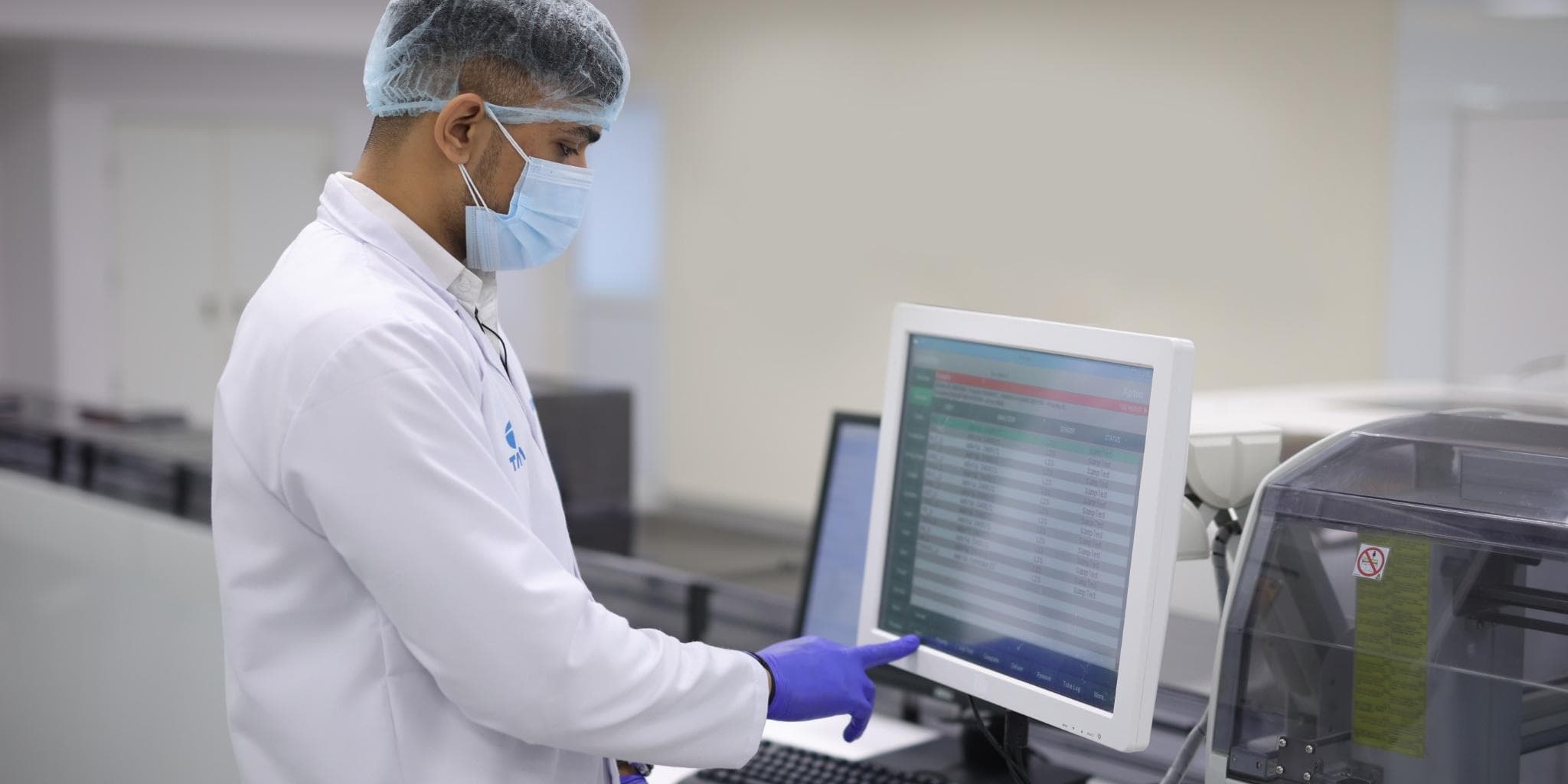
Test Information is reviewed by: Dr. Swati Gupta (Anand), MD Lab Medicine, MBBS and written by Shweta Prakash, MSc, BSc . The test details are for information purpose only. Consult a doctor before taking any test. Last updated on: 24th Jul 2026
Did you find information useful ?
 YES (1)
 NO
NO 
Book a Gastrin test at home near me
Easy online booking
Search for tests and packages, book your preferred time slot and enter your address for seamless at-home lab tests.

Live tracking of phlebotomist
Track our trained phlebotomist's real time location for seamless sample collection.
Safe Sample Collection
Our phlebotomists follow strict safety protocols to collect samples safely at home and on time.
Sample received at lab
Samples are transported securely to our accredited labs with world-class machines for testing by qualified experts.
Quick, Doctor-Verified Reports
Get doctor-approved reports via email and WhatsApp, with options for doctor follow-ups and AI insights.



References
- Prosapio JG, Sankar P, Jialal I. Physiology, Gastrin. [Updated 2023 Apr 6]. In: StatPearls [Internet]. Treasure Island (FL): StatPearls Publishing; 2025 Jan-. Available from:

- Helbing A, Menon G, Karanchi H. Gastrinoma. [Updated 2025 Feb 19]. In: StatPearls [Internet]. Treasure Island (FL): StatPearls Publishing; 2025 Jan-. Available from:
- Chatzipanagiotou O, Schizas D, Vailas M, Tsoli M, Sakarellos P, Sotiropoulou M, Papalambros A, Felekouras E. All you need to know about gastrinoma today | Gastrinoma and Zollinger-Ellison syndrome: A thorough update. J Neuroendocrinol. 2023 Apr;35(4):e13267. [Accessed 25 Aug. 2025]. Available from:

Recommended for everyone
This package is designed with everyone’s overall health considerations in mind, offering assessments to address a wide range of wellness needs.
Contains 1 test
Report delivery
Standard time
57 hrs
For slots after 11 AM, report will be delivered in 96 hours.
Samples required

Blood
1 vial required
Our phlebotomist will draw a blood sample, typically from a vein in your inner elbow.
Preparations
1
It is recommended that patient discontinues proton pump inhibitor drugs for at least 2 weeks prior to sample collection. Discontinuation should be with prior consent from the treating physician.
2
Overnight fasting (8-12 hrs) is required. Do not eat or drink anything except water before the test.
Why is this test booked?
1
When there are symptoms of gastric acid hypersecretion, such as abdominal pain, diarrhea, heartburn, or nausea.
2
To evaluate abnormal gastrin production and help diagnose disorders related to gastric acid hypersecretion.
3
To assist in the diagnosis of Zollinger-Ellison (ZE) syndrome, hyperplasia of G-cells, and gastrinomas, which are gastrin-producing tumors.
4
To support evaluation of pernicious anemia (with other tests).
5
To assess effects of long-term acid-suppressing medicines in selected cases.
6
As an adjunct to clinical assessment, imaging studies, and other tests in the evaluation of patients with recurrent peptic ulcers or chronic gastritis.
Coupon details
Get it at ₹1196 with coupon
Get upto 15% off on your lab tests
Maximum discount: ₹1500
1MGNEWG

10% off
₹999

13% off
₹3000
15% off
₹5000
Available Offers
Get additional 15% off
Get 15% off on your first order of lab tests
Maximum discount: ₹300
1MGNEW
Get additional upto 15% off
Get upto 15% off on your lab tests
Maximum discount: ₹1500
1MGNEWG
Upto ₹650 off on all lab tests
Get upto ₹650 off on all lab tests
Maximum discount: ₹650
1MGSUPER
Upto Rs 1500 off on all lab tests
Get upto ₹1500 off on all lab tests
Maximum discount: ₹1500
1MGSUPERMAX
Flat 20% off on all lab tests
Get flat 20% off on all lab tests
Maximum discount: ₹2500
1MGMAX20
Who's behind your sample collection?




MEET YOUR PHLEBO

Certified & experienced professionals
Tata 1mg phlebotomists are DMLT / B.Sc MLT certified and have 1+ years of experience

Best in-class collections
Tata 1mg phlebotomists are trained for painless, single-prick hygienic sample collection

Comprehensive expertise
Other than sample collection, our phlebos are also skilled in first aid, ECG & BP monitoring
WHAT OUR CUSTOMERS ARE SAYING
Better service
~ Manisha Kobnak