







103 people
viewed recently
Lezole 200mg Tablet
Ketoconazole (200mg)
 Genuine
Authenticity Assured
 Prescription
required
Lezole 200mg Tablet belongs to a group of medicines called antifungals. It works by stopping the growth of fungus and is used to treat infections of the mouth, throat, vagina, and other parts of the body including fingernails and toenails. It kills fungi by destroying the fungal cell membrane.
Written By Dr. Sakshi Jain, MS, BDS,
Reviewed By Dr. Mekhala Chandra, MD, MBBS,
Last updated on 27 Aug 2026 | 01:03 AM (IST)
Written By Dr. Sakshi Jain, MS, BDS,
Reviewed By Dr. Mekhala Chandra, MD, MBBS,
Last updated on 27 Aug 2026 | 01:03 AM (IST)
Save 39% more with alternative

₹151
₹164.06
8% off
Get for
₹128

on orders above ₹1200
Use Code 1MGNEWPLUS
Get for
₹139

on orders above ₹300
Use Code 1MGNEW
1/2
Welcome Gift | For First Order
15% EXTRA OFF


Get Extra 4% off + Free Delivery
at ₹165 (3 months)


Are you sure you want to remove Care Plan?

10 tablets


Payment, Returns & Expiry

Cash on delivery
Available
Free Return
within 7 days

Expiry after
Nov, 2026
Price Info
The price displayed is the MRP (inclusive of applicable taxes). Any additional fee (shipping, handling and/or platform fee, etc.) will be disclosed before you complete your purchase.


Pay 39% less with a generic alternative with same composition
 Contains same composition
Currently viewing

Lezole 200mg Tablet
strip of 10 tablets
₹12.8 per tablet
₹151
₹128
order for
₹1200
Get by Thursday, 3 September
by Lepidus Pharma India Pvt Ltd
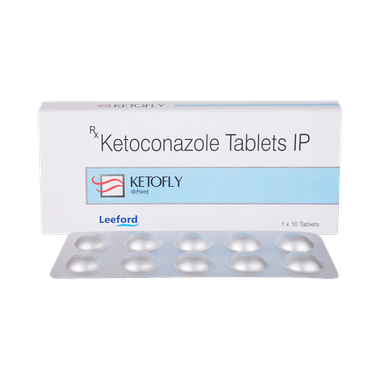
39% lower price



Save more with additional offers

Assured cashback up to ₹300*. T&C Apply*
Assured cashback up to ₹300*. T&C Apply*


Get up to ₹75 cashback on a minimum order value (MOV) of ₹499 and above, valid once per customer.
Get up to ₹75 cashback on a minimum order value (MOV) of ₹499 and above, valid once per customer.

Get upto Rs.500 Cashback on minimum transaction of Rs.999/- with Mobikwik Wallet.
Get upto Rs.500 Cashback on minimum transaction of Rs.999/- with Mobikwik Wallet.
Assured cashback up to ₹300*. T&C Apply*
Assured cashback up to ₹300*. T&C Apply*
Get up to ₹75 cashback on a minimum order value (MOV) of ₹499 and above, valid once per customer.
Get up to ₹75 cashback on a minimum order value (MOV) of ₹499 and above, valid once per customer.
Get upto Rs.500 Cashback on minimum transaction of Rs.999/- with Mobikwik Wallet.
Get upto Rs.500 Cashback on minimum transaction of Rs.999/- with Mobikwik Wallet.
Get upto Rs.150 Cashback on minimum transaction of Rs.599/- with Mobikwik UPI.
Get upto Rs.150 Cashback on minimum transaction of Rs.599/- with Mobikwik UPI.
General Information

The content is shown in English




All substitutes for Lezole 200mg Tablet
For information purposes only. Consult a doctor before taking any medicine.
Ketofly 200mg Tablet
by Leeford Healthcare Ltd
₹9.17/tablet
39% cheaper
KetoSCALP Tablet
by Leeford Healthcare Ltd
₹9.75/tablet
35% cheaper
KetoCIP Tablet
by Cipla Ltd
₹15.2/tablet
1% costlier
Phytoral Tablet
by Micro Labs Ltd
₹44.2/tablet
193% costlier
Fungicide Tablet
by Torrent Pharmaceuticals Ltd
₹50.1/tablet
232% costlier
Safety advice
Alcohol
CONSULT YOUR DOCTOR
It is not known whether it is safe to consume alcohol with Lezole 200mg Tablet. Please consult your doctor.

Pregnancy
CONSULT YOUR DOCTOR
The safety of Lezole 200mg Tablet during pregnancy has not been established. There are no adequate and well-controlled studies in pregnant women, and animal data on reproductive toxicity are insufficient. Your doctor will weigh the benefits and any potential risks before prescribing.

Breast feeding
CAUTION
Lezole 200mg Tablet should be used with caution during breastfeeding. Breastfeeding should be held until the treatment of the mother is completed and the drug is eliminated from the body.

Driving
SAFE
Lezole 200mg Tablet does not usually affect your ability to drive.
Kidney
CONSULT YOUR DOCTOR
There is limited data available on the use of Lezole 200mg Tablet in patients with kidney disease. Please consult your doctor.
Liver
UNSAFE
Lezole 200mg Tablet is unsafe to use in patients with liver disease and should be avoided.
Related lab tests
References
- Schimmer BP, Funder JW. ACTH, Adrenal Steroids, and Pharmacology of the Adrenal Cortex. In: Brunton LL, Chabner BA, Knollmann BC, editors. Goodman & Gilman’s: The Pharmacological Basis of Therapeutics. 12th ed. New York, New York: McGraw-Hill Medical; 2011. p. 1233.
- Bennett JE. Antifungal Agents. In: Brunton LL, Chabner BA, Knollmann BC, editors. Goodman & Gilman’s: The Pharmacological Basis of Therapeutics. New York, New York: McGraw-Hill Medical; 2011. p. 1576.
- Chrousos GP. Adrenocorticosteroids & Adrenocortical Antagonists. In: Katzung BG, Masters SB, Trevor AJ, editors. Basic and Clinical Pharmacology. 11th ed. New Delhi, India: Tata McGraw Hill Education Private Limited; 2009. p. 693.
- Briggs GG, Freeman RK, editors. A Reference Guide to Fetal and Neonatal Risk: Drugs in Pregnancy and Lactation. 10th ed. Philadelphia, PA: Wolters Kluwer Health; 2015. pp. 758-59.
- Ketoconazole. Titusville, New Jersey: Janssen Pharmaceuticals, Inc.; 2014. [Accessed 29 Mar. 2019] (online) Available from:

- Chaves RG, Lamounier JA. Breastfeeding and maternal medications. J Pediatr (Rio J). 2004;80(5 Suppl):S189-98. [Accessed 29 Mar. 2019] (online) Available from:
- Ketoconazole [Prescribing Information]. Titusville, New Jersey: Janssen Pharmaceuticals, Inc.; 2014. [Accessed 13 Mar. 2024] (online) Available from:
- Ketoconazole. Bridgewater, NJ: Strides Pharma Science Limited; 2025.
Related products
Products related to Lezole 200mg Tablet



100% genuine products

Safe & secure payments
No contact delivery
Fully sanitized facilities

Want to know more
We provide you with authentic, trustworthy and relevant information
Have issue with the content
Why we need a prescription?

