







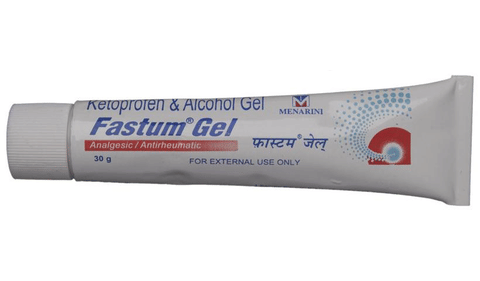

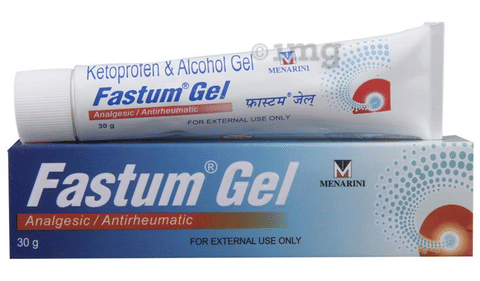
Fastum Gel
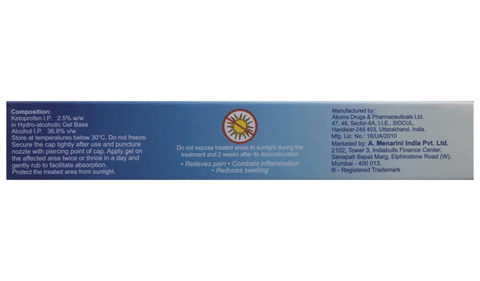
Ketoprofen (2.5% w/w)
 Genuine
Authenticity Assured
 Prescription
required
Fastum Gel is a pain-relieving medicine. It is used to relieve the pain of soft tissue injuries, and acute strains and sprains. It also use to treat inflammation and other painful conditions of the bone or muscle.
Written By Dr. Syeda Aafia, MBA, BDS,
Reviewed By Dr. Rajeev Sharma, MBA, MBBS,
Last updated on 07 Apr 2026 | 03:08 PM (IST)
Written By Dr. Syeda Aafia, MBA, BDS,
Reviewed By Dr. Rajeev Sharma, MBA, MBBS,
Last updated on 07 Apr 2026 | 03:08 PM (IST)
Save more with additional offers

Pay with Amazon Pay Balance and get cashback up to Rs. 75 with minimum cashback of Rs. 15
Pay with Amazon Pay Balance and get cashback up to Rs. 75 with minimum cashback of Rs. 15

Earn cashback up to Rs.75 with Amazon Pay Later
Earn cashback up to Rs.75 with Amazon Pay Later

Get upto Rs.500 Cashback on minimum transaction of Rs.999/- with Mobikwik Wallet.
Get upto Rs.500 Cashback on minimum transaction of Rs.999/- with Mobikwik Wallet.
Pay with Amazon Pay Balance and get cashback up to Rs. 75 with minimum cashback of Rs. 15
Pay with Amazon Pay Balance and get cashback up to Rs. 75 with minimum cashback of Rs. 15
Earn cashback up to Rs.75 with Amazon Pay Later
Earn cashback up to Rs.75 with Amazon Pay Later
Get upto Rs.500 Cashback on minimum transaction of Rs.999/- with Mobikwik Wallet.
Get upto Rs.500 Cashback on minimum transaction of Rs.999/- with Mobikwik Wallet.
Get upto Rs.150 Cashback on minimum transaction of Rs.599/- with Mobikwik UPI.
Get upto Rs.150 Cashback on minimum transaction of Rs.599/- with Mobikwik UPI.

Assured cashback up to ₹300 on minimum payment of ₹300 using Paytm UPI*
Assured cashback up to ₹300 on minimum payment of ₹300 using Paytm UPI*
General Information

The content is shown in English



All substitutes for Fastum Gel
For information purposes only. Consult a doctor before taking any medicine.
Safety advice

Alcohol
No interaction found/established

Pregnancy
CONSULT YOUR DOCTOR
Information regarding the use of Fastum Gel during pregnancy is not available. Please consult your doctor.

Breast feeding
CONSULT YOUR DOCTOR
Information regarding the use of Fastum Gel during breastfeeding is not available. Please consult your doctor.

Driving
No interaction found/established
Kidney
No interaction found/established

Liver
No interaction found/established
References
- Furst DE, Ulrich RW, Varkey-Altamirano C. Nonsteroidal Anti-Inflammatory Drugs, Disease Modifying Antirheumatic Drugs, Nonopioids Analgesics, & Drugs Used in Gout. In: Katzung BG, Masters SB, Trevor AJ, editors. Basic and Clinical Pharmacology. 11th ed. New Delhi, India: Tata McGraw Hill Education Private Limited; 2009. p. 627.
- Briggs GG, Freeman RK, editors. A Reference Guide to Fetal and Neonatal Risk: Drugs in Pregnancy and Lactation. 10th ed. Philadelphia, PA: Wolters Kluwer Health; 2015. pp. 759-60.
- Ketoprofen. Wooburn Green, Buckinghamshire: A. Menarini Farmaceutica Internazionale SRL; 1993 [revised 28 Aug. 2018]. [Accessed 02 Apr. 2019] (online) Available from:

- Central Drugs Standard Control Organisation (CDSCO). [Accessed 02 Apr. 2019] (online) Available from:
Related products
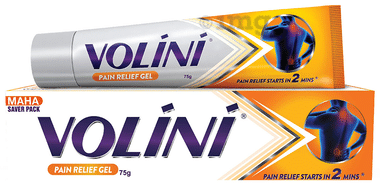
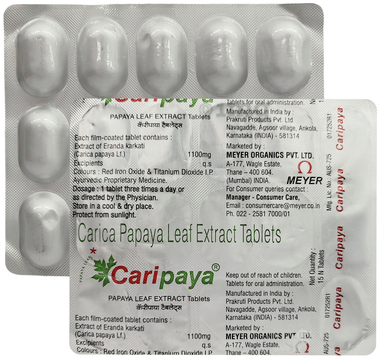
Products related to Fastum Gel






100% genuine products

Safe & secure payments

No contact delivery
Fully sanitized facilities

Want to know more
We provide you with authentic, trustworthy and relevant information
Have issue with the content
Why we need a prescription?
