
Most people believe that tomatoes are linked with kidney stones. But are tomato seeds really to be blamed? We asked Dr Hemal Shah, senior nephrologist and secretary, Amar Gandhi Foundation, Mumbai, whether tomatoes are harmful for the kidneys. Here is what he has to say.
Do Tomatoes Cause Kidney Stones?
No. It is a myth that tomatoes cause kidney stones. Tomatoes are among the most commonly eaten vegetables in the world, and if they caused kidney stones, the number of people suffering from them would be alarming.
Then How Did This Myth Arise?
Tomatoes contain oxalates, which are responsible for the formation of kidney stones. However, what people fail to understand is that the amount of oxalates in tomatoes is not enough to cause kidney stones, as 100 g of tomatoes contain only around 5 mg of oxalates. Also, people diagnosed with kidney stones are advised to limit and not completely shun tomatoes from their diet.
Which Part Of A Tomato Causes Kidney Stones?

Tomato seeds carry most of the blame for this myth, and there’s a reason why. The seeds concentrate more calcium and oxalate than the flesh of the tomato, which is exactly the combination that forms calcium oxalate stones, the most common type. However, the actual amount even in the seeds isn’t high enough to be a real risk for most healthy people.
If you already have a history of oxalate stones, it’s worth removing the seeds before eating tomatoes raw, especially in salads where you eat the whole fruit. That said, cooking tomatoes into curries, gravies, or sauces breaks this concern down even further, since heat reduces the seed’s impact on your overall oxalate intake.
So, the short answer: it’s not the tomato itself, and it’s not even really the seeds in normal amounts. It’s only a concern if you’re already prone to stones and eating large quantities of raw, unseeded tomatoes regularly.
| Quick Byte: Who Actually Needs To Avoid Tomatoes? Almost no one. Only people with rare conditions like a genetic oxalate disorder, major gut surgery, or advanced kidney disease need to watch their tomato intake. Everyone else can eat them without worry. That said, if you have kidney stones or any chronic condition, it’s always best to check with your doctor before making dietary changes. |
Can Changing the Diet Prevent Kidney Stones?
Not all kidney stones are made up from the same crystals. Kidney stones can be formed from calcium oxalate or other oxalate crystals, uric acid, struvite stones, and cystine stones. However, oxalate crystals are the most common types of kidney stones.
Just as eliminating tomatoes from your diet will not help, it is a common misconception that some foods, such as meat, increase the risk of kidney stones.
For example, if excess uric acid in the body causes the condition, then doctors will recommend medications. Foods that are rich in purine content, such as animal proteins from fish and meat, are restricted. However, in this case, diet does not play a major role and hence, cutting down on these foods might fail to improve the condition unless supported by medications.
Also, if you suffer from oxalosis, an inborn error of metabolism in which the kidneys fail to eliminate calcium oxalate crystals from the body, leading to their accumulation and stone formation, diet modification will not suffice. Although a diet low in oxalates will be prescribed to patients suffering from this condition, medications form the major line of treatment.
Foods To Limit If If You’re Prone To Kidney Stones

If your doctor has confirmed that you form oxalate stones specifically, it helps to know which foods carry the highest oxalate load. Reduce your consumption of oxalate-rich foods, since this is the most direct way to lower your risk going forward.
Foods rich in oxalate include:
- Blackberries, gooseberries, kiwi fruit, raspberries, purple grapes, rhubarb, strawberries, and tangerines
- Beetroot, celery, leeks, okra, spinach, Swiss chard, and sweet potatoes
- Soy products, including soy milk, soy sauce, tofu, and miso
- Chocolate and cocoa drinks
- Nuts and nut butters
Additionally, limit tea and coffee to 2-3 cups a day, and keep them weak rather than strong.
So What Causes Kidney Stones?
An underlying health problem, a deficiency of certain enzymes, or metabolic problems can increase your risk of developing kidney stones. You might need medications to treat these underlying conditions.
Tips to Prevent Kidney Stones

- In India, the number one cause of kidney stones is poor hydration. This problem could be due to weather or availability of pure drinking water. Hence, whether you have a desk job or do field work, ensure you drink at least 2-3 litres of water or fluids every day.
- Most people tend to drink a litre of water in the morning and a litre at night, which is not good for the kidneys. Instead, you need to religiously drink fluids throughout the day to dilute the urine and thus prevent kidney stones in the long run.
- If the kidneys are not functioning properly or if you suffer from diabetes and hypertension, then a diet low in proteins is advised, which means restricting non-vegetarian food, dal, milk and milk products is advised.
Does Tomato Ketchup Affect Kidney Stones More Than Fresh Tomatoes?
This information is worth knowing if you eat a lot of packaged sauces. Tomato ketchup and concentrated tomato pastes have a much higher oxalate density than fresh tomatoes, simply because they’re cooked down and reduced, concentrating everything in the process. If you’re prone to stones, moderating ketchup and tomato-based sauces matters more than worrying about a fresh tomato in your salad.
Does Calcium Intake Affect How Tomatoes Impact Kidney Stones?
Your calcium intake actually plays a bigger role than most people realise. When your diet lacks calcium, your body absorbs more oxalate from food, which raises your risk of stone formation. Eating calcium-rich foods alongside oxalate-containing foods like tomatoes can help bind the oxalate in your gut before it reaches your kidneys.
This is why doctors generally advise against cutting calcium from your diet if you’re prone to kidney stones. Counterintuitively, that approach often makes things worse, not better.
Can You Eat Tomatoes Every Day If You Don’t Have Kidney Stones?
Yes, you can. Tomatoes bring real nutritional value to the table, including lycopene, potassium, and vitamin C. For someone with no history of kidney stones, there’s no scientific reason to limit tomatoes out of fear.
That said, balance still matters. Eating tomatoes as part of a varied diet, rather than in huge quantities every single day, is the simplest way to keep any food, tomatoes included, from becoming a problem.
How To Eat Tomatoes Safely If You Have Kidney Stones?
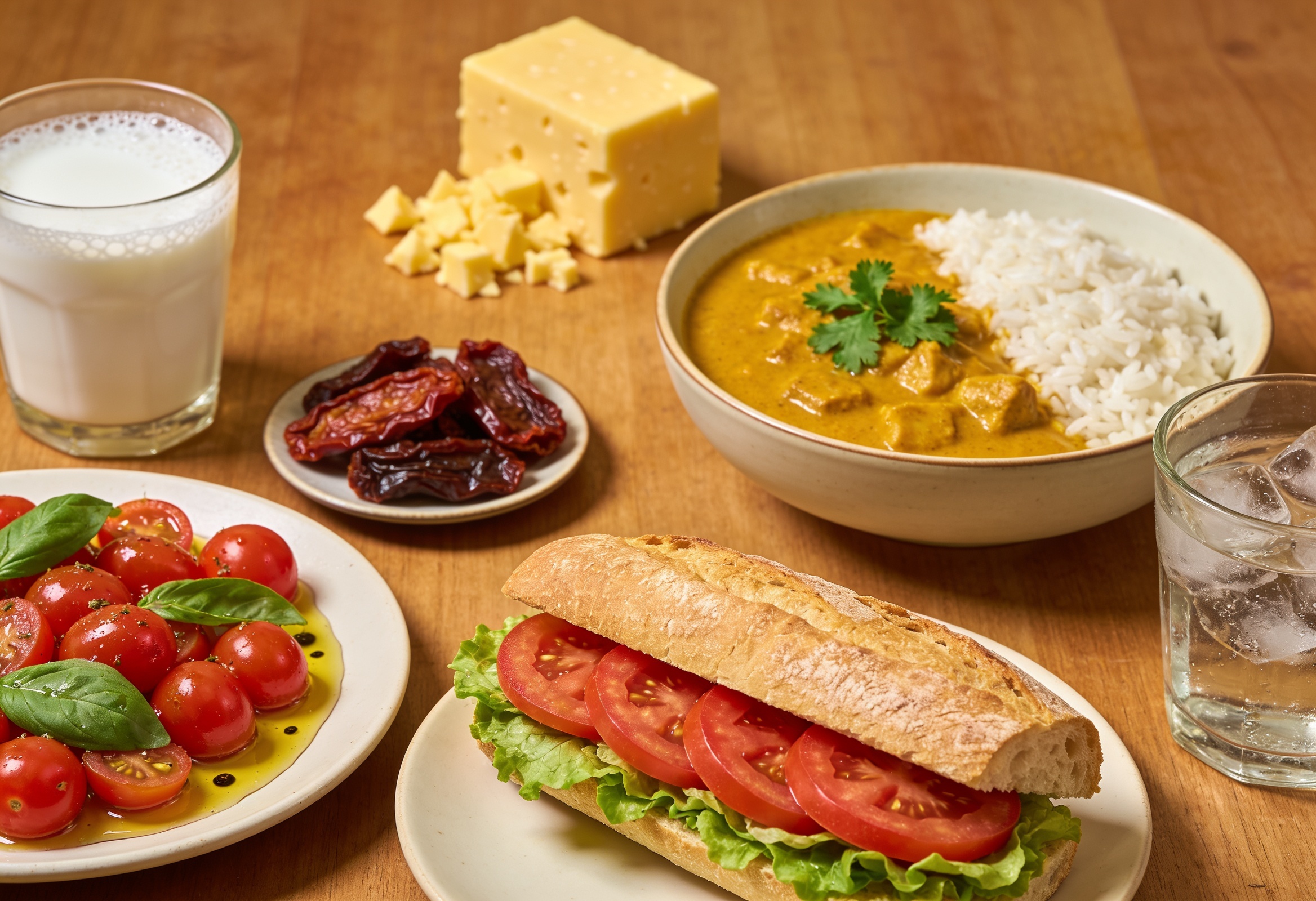
- Enjoy fresh tomatoes daily in salads, sandwiches, or as a snack
- Use tomato paste sparingly; a spoonful in a curry is fine, but skip recipes calling for half a can or more
- Treat sun-dried tomatoes as a garnish, not a main ingredient, since they’re far more concentrated
- Pair tomato-based dishes with a calcium source like cheese or milk; the calcium binds oxalate in your gut before it reaches your kidneys
- Drink water alongside tomato-heavy meals to help flush out any oxalate.
FAQs
Do tomato seeds alone cause kidney stones?
No, not on their own. Seeds carry slightly more oxalate than the flesh, but the overall amount is still too low to cause stones in most healthy people.
Is tomato ketchup worse than fresh tomatoes for kidney stones?
Yes, ketchup and tomato paste have a much higher oxalate concentration since they’re cooked down and reduced.
Should I avoid tomatoes completely if I have kidney stones?
No, doctors usually recommend moderation, not elimination, unless your stones are specifically oxalate-related.
Does cooking tomatoes reduce their oxalate content?
Yes, cooking and removing seeds both help lower the oxalate load compared to eating tomatoes raw and unseeded.
Can low calcium intake increase kidney stone risk from foods like tomatoes?
Yes, low calcium intake actually increases oxalate absorption, which raises stone risk, so cutting calcium isn’t the answer.
What other common foods are high in oxalates besides tomatoes?
Spinach, beetroot, nuts, and chocolate all carry significantly higher oxalate levels than tomatoes.
Can drinking more water help even if I eat oxalate-rich foods?
Yes, staying well-hydrated dilutes urine and helps flush out oxalates before they crystallize into stones.
Do all kidney stones form the same way?
No, stones can form from calcium oxalate, uric acid, struvite, or cystine, and each type responds differently to diet and treatment.
What nutrients in tomatoes help with kidney stones?
Tomatoes are about 95% water, which supports hydration, the top stone-prevention strategy. They also have potassium, which helps lower urinary calcium, plus moderate vitamin C and lycopene for added antioxidant support.
Does vitamin C in tomatoes increase kidney stone risk?
No, food sources of vitamin C, such as tomatoes, are safe. The risk applies mainly to high-dose vitamin C supplements, not whole foods.
Is lycopene in tomatoes beneficial for kidney health?
Lycopene may help reduce oxidative stress in the kidneys, though its effect isn’t yet directly proven to prevent stones. Either way, fresh tomatoes remain a safe addition for most stone formers.
References:
1. Taylor EN, Curhan GC. Determinants of 24-hour urinary oxalate excretion. Clin J Am Soc Nephrol. 2008 Sep;3(5):1453-60. doi: 10.2215/CJN.01410308. Epub 2008 Jul 23. PMID: 18650406; PMCID: PMC2518810. Available from: https://pmc.ncbi.nlm.nih.gov/articles/PMC2518810/
2. Curhan GC, Willett WC, Speizer FE, Spiegelman D, Stampfer MJ. Comparison of dietary calcium with supplemental calcium and other nutrients as factors affecting the risk for kidney stones in women. Ann Intern Med. 1997 Apr 1;126(7):497-504. Available from: https://pubmed.ncbi.nlm.nih.gov/9092314/
3. National Institute of Diabetes and Digestive and Kidney Diseases. Kidney stones [Internet]. Bethesda (MD): NIDDK; 2017 [cited 2026 Jun 26]. Available from: https://www.niddk.nih.gov/health-information/urologic-diseases/kidney-stones
4. Royal Devon University Healthcare NHS Foundation Trust. Kidney stones and how to avoid them [Internet]. Exeter (UK): Royal Devon NHS; 2023 [cited 2026 Jun 26]. Available from: https://www.royaldevon.nhs.uk/media/51oftkz0/patient-information-leaflet-kidney-stones-and-how-to-avoid-them-rde-18-136-003.pdf
5. National Kidney Foundation. Tomatoes: Superfoods for kidney health [Internet]. New York (NY): National Kidney Foundation; [cited 2026 Jun 26]. Available from: https://www.kidney.org/sites/default/files/tomatoes_superfoods.pdf
6. National Kidney Foundation. Tomatoes [Internet]. New York (NY): National Kidney Foundation; [cited 2026 Jun 26]. Available from: https://www.kidney.org/kidney-topics/tomatoes#
(The article is written by Nancy Dixit, Associate Manager, Clinical Health & Content, Medical Affairs, and reviewed by Monalisa Deka, Deputy Manager, Clinical Health & Content, Medical Affairs.)
Recommended Reads:
W8 Surprising Reasons For You To Enjoy Tomatoes In Your Daily Meals!
5 Morning Habits That Can Harm Your Kidneys – Change Them Now