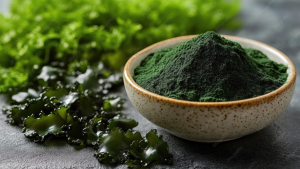
 Spirulina is now one of those terms that can be found in many products. You can see spirulina in tablets, powders, smoothies, protein bars, and indeed, in daily wellness routines. Spirulina is heavily pigmented and is an appealing exotic ingredient in any healthy program due to its unique properties as a superfood.
Some of the advantages attributed to spirulina include: increased energy levels, improvement of immunity, decrease in cholesterol levels, decrease in inflammation, and stabilization of sugar levels in blood. Some sources even say that spirulina contributes to weight loss, the prevention of chronic diseases, or is a food substitute.
The attraction of spirulina is easy to understand since it is very concentrated in nutrients and has much protein and many other compounds with bioactive properties, such as phycocyanin and carotenoids. However, it is important to realize that although this ingredient may have relatively useful components, it may not bring any expected benefits to consumers.
So, what is being backed by scientific data?
What Is Spirulina?
While it is commonly referred to as blue-green algae, spirulina is actually classified as cyanobacteria. Spirulina most commonly refers to the genus Arthrospira, of which species such as Arthrospira platensis are cultivated and used as dietary supplements.
One of the reasons spirulina became so well-known is because of its nutritional makeup. Studies have shown that it is an excellent source of protein, as well as other components such as carbohydrates, essential fatty acids, minerals, carotenoids, and pigments like phycocyanin.
Of course, this does not mean that spirulina can be used as medicine. However, it does explain why researchers became interested in finding out if the nutrients and bioactive substances found in spirulina have an influence on health markers.
And that is where the real interest of the research is.
Cholesterol & Blood Fats: One of the Interesting Areas of Study
Negative correlation between the levels of blood lipids and spirulina administration is one of the “classical” proven advantages of spirulina consumption.
According to the research completed through combining the results of 7 studies, it was discovered that spirulina consumption led to lowering the levels of total cholesterol, LDL cholesterol, and triglycerides while raising the levels of HDL cholesterol in the blood.[1]
A series of later studies demonstrated similar results. One of the post-2025 studies, combining the results of 35 studies, concluded the positive influence of spirulina consumption on some cardiovascular risk factors, including triglycerides, total cholesterol, and LDL cholesterol. However, the quality of evidence was not the same in all cases; for instance, the evidence regarding LDL cholesterol was rated as low by the researchers. Such a difference in the quality of evidence is important.[2]
These pieces of research indicate that spirulina may influence blood lipid levels in a positive way, but the effect is negligible for healthy people.
Blood Pressure: Good News but No Miracle Cure
Blood pressure is yet another field of study in which research has produced interesting discoveries.
A recent systematic review and meta-analysis of randomized controlled trials published in the year 2024 reported that spirulina supplementation is linked to a decrease in systolic and diastolic blood pressure. The mean decrease in systolic pressure was approximately 4.4 mmHg and 2.8 mmHg in diastolic pressure. However, while the authors regarded the evidence as moderately reliable, they also pointed out the limited number of studies and subjects included in the review.[3]
In fact, a previous meta-analysis of five randomized trials also demonstrated the positive effects of spirulina on blood pressure. More precisely, the effects were stronger for some individuals suffering from high blood pressure, as compared to others.
The reason this conclusion is beneficial is that blood pressure can be measured as a clinical outcome rather than simply described as feeling good.
Nonetheless, the number of studied patients should not be ignored. The majority of studies did not last long and used different doses and formulations of spirulina, giving us no information about the ways it could help different patients over the years.
Blood Glucose Levels & Metabolic Health

Current studies are looking at spirulina’s role in blood glucose regulation and insulin resistance.
A systematic evaluation and meta-analyses of studies highlighted that taking spirulina reduced not only fasting plasma glucose levels but also increased some cholesterol levels.
Recent evidence seems to be consistent with this conclusion. The 2025 systematic review of 35 studies brought to light that taking spirulina made the decrease of fasting blood glucose and insulin easier, as well as helped reduce HOMA-IR, one of the indicators of insulin resistance, even though the certainty of the evidence was low for some glucose markers.[2]
This distinction is important.
The evidence we have allows us to make sure that, although spirulina may have an impact on certain metabolic markers, it does not equal proof that it treats or prevents diabetes.
What About Inflammation & Antioxidants?
This is mostly where the reputation of spirulina exceeds the proof.
Spirulina has antioxidant and anti-inflammatory components, and the studies in organisms have produced many interesting results. In particular, phycocyanin has attracted lots of attention from scientists.
The research in humans is a more complicated issue.
In a systematic review, including studies on antioxidant function, immune modulation, and anti-inflammatory effects, it was discovered that the studies show potentially positive results in several diseases while at the same time indicating the small number of controlled studies and differences in quality.[4]
Another systematic review and meta-analysis of controlled clinical trials show that spirulina has only minor importance for some measures of antioxidant efficacy while representing no importance in the process of research in the case of the glutathione peroxidase study.[4]
The situation with inflammatory markers is similar. The meta-analysis of 2021 reported a slight decrease in IL-6 and oxidative stress markers while discovering no significance in the case of TNF-α.
A new meta-analysis of research dated in 2025 that included 7 trials and 283 participants shows that spirulina decreases C-reactive protein, which is an inflammatory marker. However, heterogeneity between the studies was high, meaning the results varied substantially across trials.[5]
So “spirulina contains antioxidant and anti-inflammatory compounds” is a reasonable description of the evidence.
“Spirulina reduces chronic inflammation and protects you from disease” goes much further than the current human research allows.
One Common Misunderstanding: Spirulina Is Not an Effective Source of Vitamin B12

Spirulina is sometimes presented as a plant-based source of vitamin B12, which is very attractive to vegetarians and vegans.
Nevertheless, a considerable portion of the B12-like compound found in spirulina is pseudo B12, an inactive ingredient that does not provide the same role as the original vitamin B12 in humans. Studies focused entirely on the spirulina tablet have identified pseudo B12 as the major cobamide found. Thus, while spirulina can help provide some proteins and nutrients, it should not be used as a reliable means of preventing vitamin B12 deficiency. For those who face vitamin deficiency, a proper B12 supplement or any fortified food product is a much better choice.
Is It Safe To Use Spirulina?

Spirulina products are considered to be well-tolerated among most healthy individuals, but the quality of the product is significant.
One of the concerns is contamination. Cyanobacterial products can contain unwanted constituents or toxins, depending on how and where they were grown and processed. The U.S. Food and Drug Administration has warned, among others, that some blue-green algae products can harbor microcystins—toxins produced by certain cyanobacteria.[6]
This applies especially to products that use mixed sources or harvested cyanobacterial products. Awareness does not mean that all spirulina products will contain contamination, but it certainly proves that it is very important to buy products from manufacturers who are ethical and able to test their quality.
Just because something is “natural” does not mean that it is “free from risk.” Those who are pregnant or lactating, have health issues, are allergic to some substances, or regularly take medicine are advised to talk to their health caregiver before trying spirulina.
Then, The Question Is: What Does The Research Show?

The most reasonable conclusion is surprisingly simple: spirulina is an interesting and nutrient-rich supplement with some promising scientific findings behind it, but it is not really a wonder food as advertised.
The strongest evidence obtained in humans suggests some moderate improvements in blood lipid levels and blood pressure, with newer studies hinting at a potential benefit in blood pressure, as well as possibly even some indications surrounding insulin resistance, body weight, and inflammatory markers.
At the same time, there are different levels of confidence in the available evidence since many studies were small and/or short-term. Therefore, one cannot really say who exactly benefits, what ideal dosage should be, or whether the many benefits found in studies translate into the risk reduction of actually disease-related complications in real life.
There is also much less evidence supporting statements about the possibility of using spirulina for cancer prevention, significant immune-enhancing abilities, detoxification, vitamin B12 replacement, or weight loss.
And this difference matters.
A dietary supplement does not have to be a magical remedy to be effective. Spirulina can be a good source of protein and bioactive substances, supported by evidence that there may be some benefits for the cardiovascular and metabolic systems. But these benefits are best understood in the context of a healthy diet as a whole, and not as a substitute for one.
When you next see a green juice claiming to change your life, the best question may not be, “Is spirulina a superfood?”
But rather: What has actually been studied in human beings, what was the impact size, and how sure are we that it can be linked to spirulina?
References
- Serban MC, Sahebkar A, Dragan S, Stoichescu-Hogea G, Ursoniu S, Andrica F, et al. A systematic review and meta-analysis of the impact of Spirulina supplementation on plasma lipid concentrations. Clin Nutr [Internet]. 2016;35(4):842–51. Available from: http://dx.doi.org/10.1016/j.clnu.2015.09.007
- Shiri H, Soleimani AA, Omidi Sarajar B, Talebi Taheri A, Esmaeili F, Nematollahi MH, et al. Spirulina’s impacts on cardiovascular health: Insights from a systematic meta-analysis of RCT. Complement Ther Med [Internet]. 2025;94(103242):103242. Available from: http://dx.doi.org/10.1016/j.ctim.2025.103242
- Shiri H, Yasbolaghi Sharahi J, Alizadeh Sani M, Mousavi SMJ, Nematollahi MH, Soleimani AA, et al. The effect of Spirulina supplementation on blood pressure in adults: A GRADE-assessed systematic review and meta-analysis of randomized clinical trials. Phytother Res [Internet]. 2025;39(1):397–412. Available from: http://dx.doi.org/10.1002/ptr.8377
- Pisoschi AM, Pop A, Iordache F, Stanca L, Geicu OI, Bilteanu L, et al. Antioxidant, anti-inflammatory and immunomodulatory roles of vitamins in COVID-19 therapy. Eur J Med Chem [Internet]. 2022;232(114175):114175. Available from: http://dx.doi.org/10.1016/j.ejmech.2022.114175
- Shahraki Jazinaki M, Rashidmayvan M, Rahbarinejad P, Shadmand Foumani Moghadam MR, Pahlavani N. Effects of Spirulina supplementation on C-reactive protein (CRP): A systematic review and dose-response meta-analysis. Food Sci Nutr [Internet]. 2025;13(5):e70196. Available from: http://dx.doi.org/10.1002/fsn3.70196
- Fda.gov [Internet]. [cited 2026 Sept 21]. Available from: https://www.fda.gov/food/natural-toxins-food/blue-green-algae-products-and-microcystins
FAQs
Q. What is spirulina and why is it called a superfood?
Spirulina is referred to as a blue-green algae known for its richness in protein, vitamins, minerals, and antioxidants.
Q. Can spirulina help in boosting immunity?
Although it may have some positive effects on the function of the immune system, more studies are needed to support this effect.
Q. Does taking spirulina help lower cholesterol levels?
The answer may be yes to some extent since some studies show that spirulina may decrease levels of low-density lipoprotein and triglycerides.
Q. Is spirulina effective for weight loss?
The answer is no. Spirulina is not a weight-loss supplement, and it works best in combination with healthy eating.
Q. Is spirulina safe for diabetics?
Although spirulina may aid blood sugar regulation, it should not be viewed as a substitute for medication.
Q. Are there any side effects from taking spirulina?
Some people may experience mild headaches and digestive discomfort from using spirulina.
Q. Who should avoid the use of spirulina?
Those experiencing autoimmune disorders or phenylketonuria (PKU) should consult their physician before taking spirulina.
Q. What is the typical everyday dose of spirulina?
Most research has been based on doses between 1 and 8 grams daily, but no single dose is best for everyone.
(The article is written by Deepa Sarkar, Senior Medical Writer, and reviewed by Monalisa Deka, Deputy Manager, Clinical Health & Content, Medical Affairs)