
Most of us never really think about our digestion until it stops working the way it should. When you are feeling bloated or uncomfortable, it quickly becomes the only thing on your mind. We often try to fix these gut issues with complicated remedies, but the real answer usually lies in something we often ignore: dietary fiber. Between rushed breakfasts, meals eaten at your desk, and days when vegetables barely make it onto your plate, your fibre intake can easily take a back seat. This is exactly where psyllium husk steps in to help. It is a highly effective natural supplement that quietly does the heavy lifting for your digestive system.
Why Is Fiber So Important?
Before looking at specific supplements, it helps to understand what fibre actually does inside your body. Unlike most carbohydrates that are quickly broken down and absorbed for energy, dietary fibre passes through your digestive system mostly intact. It is categorized into two main types based entirely on how it interacts with water.
Soluble fibre dissolves in water to form a thick gel substance in your stomach. As it moves along your digestive tract, this gel physically slows down the gastric emptying process [1]. This steady, delayed movement manages how quickly nutrients are absorbed into your bloodstream. It also provides a vital food source that sustains the healthy bacteria living in your lower gut [2].
Insoluble fibre operates very differently. It refuses to dissolve in water and remains largely unchanged as it travels through your system. Its primary job is to add physical bulk to your waste, helping push material smoothly and consistently through your intestines [1]. Most whole plant foods contain a mix of both. Together, they act as a highly coordinated system to regulate the mechanical efficiency of your digestion, ensuring food moves at the exact right pace.
What Is Psyllium Husk & How Does It Work
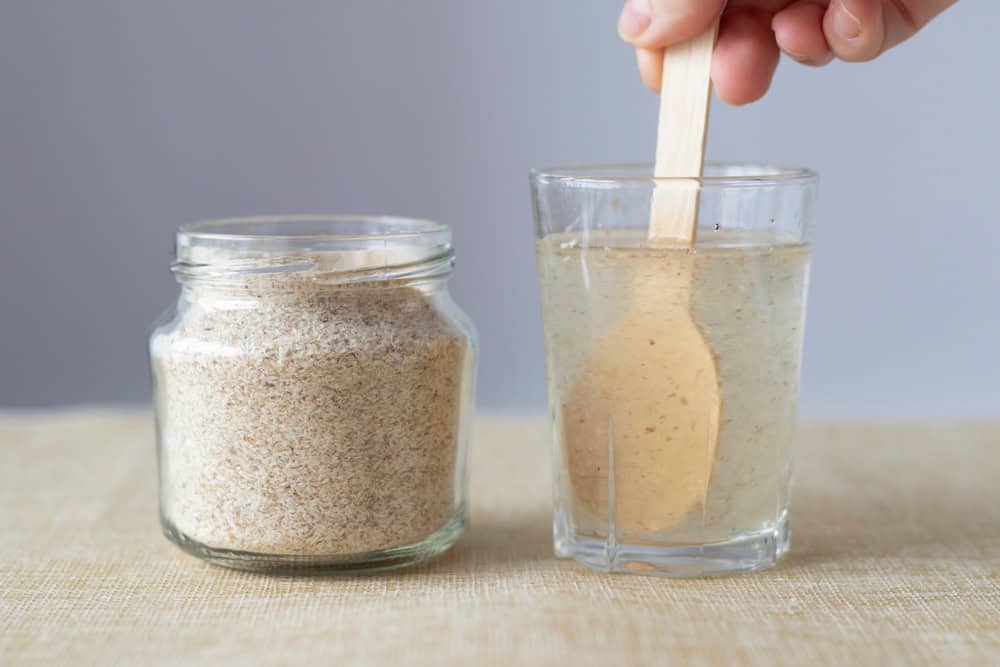
Psyllium husk comes from the seed coating of Plantago ovata, a plant grown widely across India. Once separated from the seed, the husk is dried and ground into a fine, pale powder. It’s almost entirely soluble fiber, and that single property explains most of what it does. Mix it into water, and it doesn’t just dissolve; it swells, turning into a thick, gel-like substance within minutes. That gel moves through your intestines mostly intact, absorbing extra water along the way and softening whatever it comes into contact with. The result is stool that’s bulkier, softer, and easier to pass, which is why psyllium is classified as a bulk-forming laxative rather than a stimulant one [3].
The Health Benefits Of Psyllium Husk
This gel-forming fibre does more than keep bowel movements regular. Its best known use is easing constipation, both the occasional kind and the chronic kind. As it softens stool and adds bulk, it nudges the bowel walls into contracting, which moves waste along without the cramping that comes with harsher synthetic laxatives.
The same bulking action works the other way too. For mild diarrhea, the dry fibre soaks up extra water in the gut, which firms up loose stools and slows their transit time. Psyllium also does work for your heart and metabolism. As the thick gel travels through your system, it binds to fat and bile acids, and that helps bring cholesterol levels down over time.
Taking it before meals can help with blood sugar too. The gel slows how fast food digests, which softens the glucose spike you’d otherwise get after eating. There’s a weight management angle as well. The gel expands in your stomach and delays how quickly it empties, so you end up feeling full for longer, a small but useful edge for anyone watching their weight [3].
Dosage & How To Take It

When starting with psyllium husk, the golden rule is to go slow. Your digestive system needs time to adjust to the sudden increase in fibre. Begin with just half a teaspoon mixed into a large glass of water once a day. For the best results, take your dose about thirty minutes before a meal to help manage blood sugar and naturally control your appetite. Because psyllium absorbs liquid so quickly, you must drink it immediately after stirring before it thickens. You can gradually increase your intake over a few weeks. Most importantly, taking this supplement without drinking plenty of extra water can actually cause constipation instead of curing it.
Who Should Be Careful Before Taking It
While psyllium is generally safe for daily use, a few specific groups need to exercise caution. If you have a history of bowel obstructions or structural issues with your digestive tract, you should avoid this supplement entirely. Anyone who struggles with swallowing must also be careful because the rapidly expanding gel can pose a choking hazard. Finally, psyllium can trap oral medications and delay their absorption. Always take your daily prescriptions at least two hours before or after drinking your fibre mixture to ensure they work properly.
FAQs
What is psyllium husk used for?
Psyllium husk is mainly used to relieve constipation, but it may also support cholesterol, blood sugar, and weight management.
Can you take psyllium husk every day?
Yes, most people can take psyllium daily when used as directed and with enough fluids.
Can psyllium husk actually help with weight loss?
It expands in your stomach and promotes a feeling of fullness which naturally reduces overall calorie intake.
What happens if I take psyllium without enough water?
Without enough liquid, the fiber can harden in your throat or cause severe constipation and uncomfortable stomach cramps.
Can psyllium husk help control blood sugar?
Its soluble fibre can slow carbohydrate absorption, potentially helping support blood sugar control alongside a balanced diet.
References
1- Lattimer JM, Haub MD. Effects of dietary fiber and its components on metabolic health. Nutrients. 2010;2(12):1266-1289.
2-National Center for Biotechnology Information. Dietary fiber and gut health. PubMed Central.
3- Gibb RD, Sloan KJ, McRorie JW Jr. Psyllium is a natural nonfermented gel-forming fiber that is effective for weight loss: a comprehensive review and meta-analysis. J Am Assoc Nurse Pract. 2023;35(8):468-476.
(The article is written by Ehsan Siddiqui, Team Lead, Clinical Health & Content, and reviewed by Monalisa Deka, Senior Health Content Editor)
Recommended Reads:
Eat to Ease Pain: 5 Anti–Inflammatory Foods to Reduce Joint Pain
Joint Pain In Winter: Essential Steps To Follow Before The Cold Sets In