
Coffee has always been a morning ritual, but lately, there is a new ingredient making its way into the cup: mushrooms. From lion’s mane and reishi to chaga and cordyceps, mushroom coffee has quickly gone from a niche wellness drink to something you can find all over social media and supermarket shelves. The pitch is tempting: better focus, more energy, less stress and plenty of health benefits, all while keeping your daily coffee habit intact. But before you swap your usual brew for a packet of mushroom powder, it’s worth asking a few questions. What are you actually getting in a cup? Do these mushrooms really deliver once they’re roasted and blended into coffee? And what does the research say about all those health claims?
What Is Mushroom Coffee and How Is It Made?
Mushroom coffee is not quite as unusual as it sounds. You are not putting fresh mushrooms into your morning brew. Instead, it is usually made by combining regular coffee with powdered extracts from medicinal mushrooms. The mushrooms commonly used include lion’s mane, reishi, chaga, cordyceps and turkey tail, although the exact blend varies between products.
The mushrooms are generally dried and processed to extract their bioactive compounds before being turned into a fine powder. This powder is then mixed with ground coffee, often in roughly equal proportions, although there is no standard formula that every brand follows. You can find these blends as instant coffee sachets, ground coffee or pods, and they can be prepared much like regular coffee.
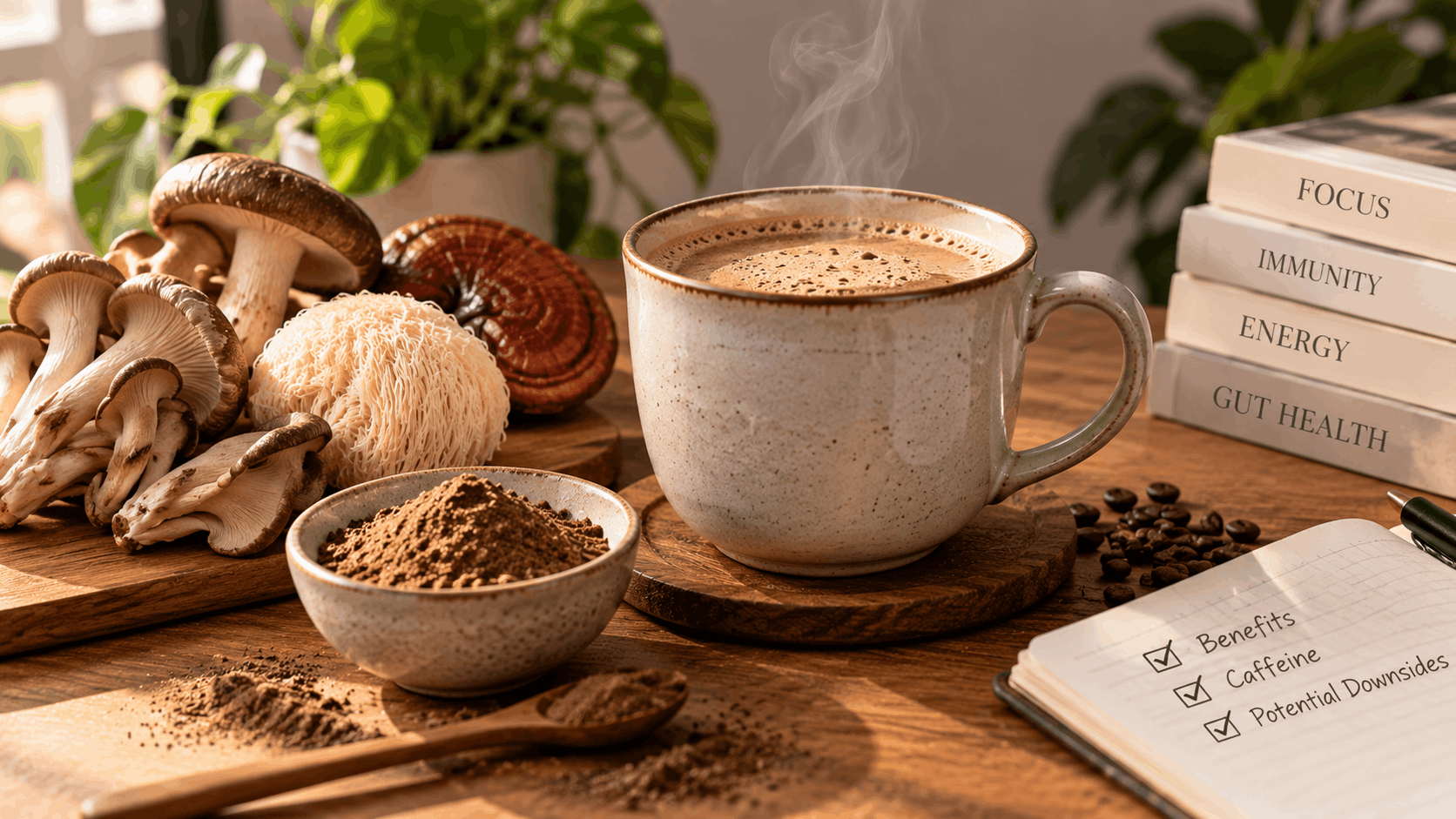
The taste is usually not dramatically different either. Depending on the mushrooms used, you may notice a slightly earthy or nutty flavour, but the coffee itself remains the dominant taste. The important thing is that mushroom coffee is still primarily a coffee drink, with mushroom extracts added to it.
How Much Caffeine Are You Actually Getting?
One of the biggest misconceptions about mushroom coffee is that it is completely caffeine-free. It isn’t. Since the base is still regular coffee beans, you are still getting a caffeinated beverage. However, because the grounds are cut roughly 50/50 with mushroom powder, your morning cup naturally has about half the caffeine of a standard brew.
While a regular mug might pack over 100 milligrams of caffeine, most mushroom blends hover right around 50 milligrams. For people who love the ritual of a hot morning drink but hate the racing heart, midday jitters, or afternoon crash, this lower dose is usually the perfect sweet spot. Just keep in mind that the supplement industry is loosely regulated, so many brands don’t actually list the exact milligram count on the box. If you are highly sensitive to caffeine, you will still want to check the label closely before brewing.
What Are the Potential Health Benefits of Mushroom Coffee?

The appeal of mushroom coffee comes from the compounds found in the mushrooms added to it. Depending on the blend, these can include beta-glucans, polyphenols, cordycepin, and other bioactive compounds that have been studied for their antioxidant and biological effects. But there is an important distinction here: finding these compounds in mushroom coffee does not automatically mean drinking it will improve your health. Human research on mushroom coffee itself is still limited [1,2].
One 2020 study developed a coffee using Cordyceps, Phellinus, and Chaga extracts and found that the finished drink contained polyphenols, beta-glucans, and cordycepin. It also showed antioxidant activity in laboratory testing, suggesting that mushroom extracts can add bioactive compounds to coffee [1]. Another study found that adding Cordyceps militaris and lion’s mane to coffee increased the levels of several compounds, including certain phenolic acids and minerals [2].
These findings are promising, but they are not the same as proving that mushroom coffee improves immunity, brain function, energy, or long-term health. Those claims are based largely on research into individual mushrooms or their extracts, rather than clinical trials of the coffee people actually drink [1,2]. For now, it is more accurate to describe mushroom coffee as a potential source of additional bioactive compounds rather than a proven health drink.
The Potential Downsides and Who Should Skip It
Mushroom coffee is generally well tolerated, but adding concentrated mushroom extracts to your diet is not completely risk-free. One concern is the type and amount of mushroom being used. Chaga, for example, can contain very high levels of oxalates. There have been published case reports of people developing serious kidney injury after consuming large amounts of Chaga powder regularly for several months or years. This does not mean that an occasional cup of Chaga-containing coffee will cause kidney problems, but it is a good reason for people with kidney disease or a history of kidney stones to be cautious.
The other consideration is caffeine. Mushroom coffee still contains caffeine, so it may not be a good fit if coffee already causes you problems such as poor sleep, anxiety, or palpitations. The amount can also vary considerably between products.
If you take regular medication or have an existing medical condition, it is sensible to check with your doctor before making mushroom extracts a daily habit. And if you do try it, start with a small serving rather than assuming more will provide more benefits.
Wrapping Up
Mushroom coffee sits somewhere between a wellness trend and genuine nutrition upgrade, depending on which claim you’re looking at. Lion’s mane and cordyceps have real, if early, research behind them. Chaga and reishi lean more on preclinical promise than proven results. What’s clear is that none of these mushrooms has been tested in coffee form specifically, so the benefits you’re chasing may not survive the brewing process intact. If you’re mainly after lower caffeine and a new flavor, it’s worth trying. If you’re expecting a cure, whole mushrooms remain the safer bet.
FAQs
Does mushroom coffee actually contain mushrooms?
Yes. Most blends contain powdered or extracted medicinal mushrooms such as lion’s mane, reishi, chaga, or cordyceps.
Is mushroom coffee caffeine-free?
No. Mushroom coffee usually contains caffeine because it is made by combining mushroom extracts with regular coffee.
Does mushroom coffee have less caffeine than regular coffee?
Often, yes. Many blends contain less caffeine, but the exact amount varies between products.
Can mushroom coffee cause kidney stones?
Yes, blends containing chaga are high in oxalates, which can increase kidney stone risks.
Who should avoid mushroom coffee?
People with kidney problems, kidney stone risks, allergies or certain medical conditions should check with their doctor first.
References
1-Song HN. Functional Cordyceps Coffee Containing Cordycepin and β-Glucan. Prev Nutr Food Sci. 2020;25(2):184-193. doi:10.3746/pnf.2020.25.2.184.
2- Kała K, Cicha-Jeleń M, Hnatyk K, et al. Coffee with Cordyceps militaris and Hericium erinaceus Fruiting Bodies as a Source of Essential Bioactive Substances. Pharmaceuticals (Basel). 2024;17(7):955. doi:10.3390/ph17070955.
(The article is written by Ehsan Siddiqui, Team Lead, Clinical Health & Content, and reviewed by Monalisa Deka, Senior Health Content Editor)