
Jamun, also called Indian blackberry or Java plum, is one of those fruits that has earned a strong reputation in Indian homes. You may have heard that eating jamun can help control blood sugar, especially if you have diabetes or prediabetes.
There is some science behind that belief, but the story isn’t as simple as “jamun lowers blood sugar.”
Research on jamun, scientifically known as Syzygium cumini, has looked at its fruit, seeds, leaves, and extracts. These parts contain plant compounds such as polyphenols and anthocyanins, which have been studied for their possible effects on glucose metabolism. But human studies are still limited, and jamun shouldn’t replace diabetes medicines or a balanced diet. [1,2]
So, what do we actually know?
Why is Jamun Being Studied for Blood Sugar?

Jamun is naturally rich in plant compounds, particularly anthocyanins and other polyphenols. These compounds are being studied for their antioxidant and metabolic effects.
Laboratory and animal research has suggested that compounds found in Syzygium cumini may affect processes involved in glucose regulation, including how the body handles glucose and insulin [1,2].
This is one reason jamun has been used traditionally in different forms for blood sugar management.
But there’s a catch. Results seen in a laboratory or animal study don’t automatically mean that eating a bowl of jamun will produce the same effect in humans.
That’s where clinical research becomes important.
What Does Human Research Say?
A 2026 systematic review and meta-analysis looked at 13 randomised controlled trials involving 802 people with type 2 diabetes or prediabetes. The researchers studied Syzygium cumini and related plants from the Myrtaceae family to see whether they affected blood sugar and other metabolic measures [1].
The results were interesting but far from conclusive.
The interventions were associated with a modest reduction in fasting blood glucose, averaging about 14.4 mg/dL. However, the studies were very different from one another, and the researchers found substantial variation between them.
More importantly, the review didn’t find a statistically significant overall improvement in HbA1c or post-meal blood glucose.
That matters because HbA1c gives you a picture of your average blood sugar over roughly the previous two to three months. A food or supplement that produces a small short-term change in fasting glucose isn’t necessarily going to improve long-term diabetes control.
The researchers therefore described these interventions as promising but unproven additions to standard diabetes care [1,2].
Can You Eat Jamun If You Have Diabetes?
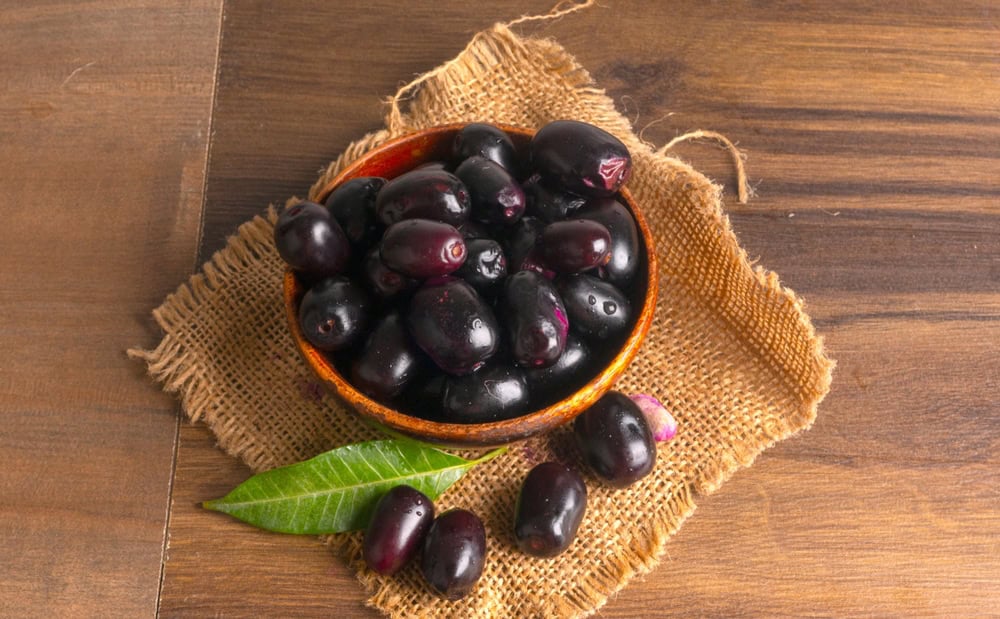
Yes, you can generally include whole jamun in a diabetes-friendly eating pattern.
The key word is whole.
A serving of whole fruit gives you fibre and takes longer to eat than juice. You also avoid the added sugar that can turn a naturally nutritious fruit into a much less helpful drink.
You don’t need to avoid jamun simply because it tastes sweet.
Instead, pay attention to your overall portion and what else you’re eating with it. Your total carbohydrate intake, physical activity, medications, sleep and overall diet have a much bigger role in blood sugar control than one fruit eaten occasionally.
If you’re monitoring your glucose at home, you can also see how your own blood sugar responds after eating a normal serving. Individual responses can vary.
What About Jamun Seed Powder?
This is where you should be more careful.
Jamun seeds are often dried and sold as powders or traditional preparations for blood sugar. Some studies have investigated jamun seed extracts, but that doesn’t mean commercially available seed powder has been proven to treat diabetes.
The recent systematic review also found that results varied depending on which part of the plant was used, the formulation, treatment duration, and other factors. The authors noted that the evidence was of low to very low certainty for several outcomes [2].
So, don’t assume that taking more jamun seed powder will give you better blood sugar control.
If you’re already taking diabetes medication, adding a concentrated herbal preparation without discussing it with your doctor isn’t a good idea. Your treatment plan may need monitoring when you introduce any supplement that could affect glucose levels.
Jamun Fruit is Different From Jamun Juice
There’s a simple way to think about this.
Whole jamun is a fruit. Jamun juice can be a concentrated drink, and packaged versions may contain added sugar.
If blood sugar is your concern, whole fruit is usually the more sensible choice.
This is similar to other everyday food choices. A plain food often has a very different nutritional profile from the sweetened drink or processed version made from it.
For example, when choosing coffee, an unsweetened black coffee avoids the sugar and calories added by syrups, whipped cream and sweetened sauces. The same basic principle applies here: what you add to a food can matter as much as the food itself.
How Much Jamun Should You Eat?
There’s no scientifically established “diabetes dose” of fresh jamun.
Rather than treating jamun like medicine, think of it as one fruit option within your diet.
A small serving of whole jamun can fit into a balanced snack or meal. You could pair fruit with a source of protein or healthy fat, depending on your overall diet and calorie needs.
And don’t feel that you need to eat jamun every day to get its potential benefits. Variety matters. Rotate it with other whole fruits so your diet isn’t dependent on one food.
Can Jamun Cure Diabetes?
No.
There’s currently no good evidence that eating jamun, drinking jamun juice, or taking jamun seed powder can cure diabetes.
The latest review found a possible modest effect on fasting glucose but not consistent improvements in HbA1c or post-meal glucose. The researchers also pointed out the short follow-up periods and high variation between studies [2].
If you have diabetes, prescribed medicines, regular glucose monitoring, a suitable eating pattern, physical activity and follow-up with your healthcare professional remain the foundation of treatment.
Think of jamun as food, not medicine.
The Bottom Line On Jamun and Blood Sugar
Jamun has a reasonable scientific basis for further research. Its plant compounds have attracted attention, and human studies suggest it may have a modest effect on fasting blood glucose.
But the evidence isn’t strong enough to call jamun a blood-sugar treatment.
Enjoy fresh jamun when it’s in season. Choose the whole fruit over sugary juice. Be cautious with concentrated seed powders and supplements. And if you’re managing diabetes, don’t replace your prescribed treatment with jamun.
Sometimes the healthiest way to enjoy a traditional food is to let it be exactly that: a food.
FAQs
1. Is jamun beneficial for people with diabetes?
Whole jamun can be included in a balanced diet for people with diabetes. Research suggests possible modest effects on fasting blood glucose, but there’s not enough evidence to use jamun as a diabetes treatment.
2. Does jamun lower blood sugar immediately?
There’s no strong evidence that eating jamun causes a predictable, immediate drop in blood sugar. Studies have reported modest changes in fasting glucose, but results vary [1].
3. Can jamun cure diabetes?
No. Current research doesn’t show that jamun can cure diabetes or replace diabetes medication.
4. Is jamun juice good for diabetes?
Whole jamun is generally a better choice than sweetened jamun juice because you can avoid added sugar and retain the fruit’s natural fibre. Check the label if you’re buying packaged juice.
5. Is jamun seed powder safe for diabetes?
Evidence for jamun seed preparations is still limited. Because concentrated preparations may affect blood sugar, people taking diabetes medicines should discuss them with their doctor before using them regularly [2].
6. Does jamun have sugar?
Yes. Jamun is a fruit and naturally contains carbohydrates and sugars. Having natural sugar doesn’t automatically make a fruit unsuitable for people with diabetes. Portion size and your overall diet matter.
7. Can I eat jamun every day?
You can include jamun as part of a varied diet, but there isn’t enough evidence to say that eating it every day provides a specific diabetes benefit. You don’t need to treat it like a medicine.
8. What does research say about jamun and HbA1c?
The latest systematic review found that Myrtaceae interventions, including Syzygium cumini, did not produce a statistically significant overall improvement in HbA1c. The evidence was also highly variable between studies [2].
9. Should I stop my diabetes medicine if I start eating jamun?
No. Don’t stop or change prescribed diabetes medication based on eating jamun. If you’re adding jamun or a jamun-based supplement to your routine, discuss it with your healthcare professional.
10. What’s the healthiest way to eat jamun?
Choose fresh, whole jamun and keep your portion sensible. Avoid turning it into a sugary juice or dessert. If you’re managing diabetes, include it within your overall carbohydrate intake rather than treating it as a blood-sugar remedy.
The article is written by Mantasha, Sr. Executive, Clinical Health & Content, and reviewed by Monalisa Deka, Deputy Manager, Clinical Health & Content, Medical Affairs.)
Recommended Reads:
Simple Habits to Boost Vitamin D and Lower Cortisol Levels Naturally
Clinically Explained Vitamin D Supplements: Benefits, Dosage & Timing
References
1. Duangchan, T., Kuakul, K., Saipin, C., Pongyeela, H., Sarana, H., Wangriatisak, K., Chatatikun, M., & Phongphithakchai, A. (2026). Efficacy and Safety of Syzygium cumini and Related Myrtaceae Interventions for Dysglycemia: A Systematic Review and Meta-Analysis of Randomized Controlled Trials. Foods (Basel, Switzerland), 15(13), 2332. https://doi.org/10.3390/foods15132332
2. Duangchan, T., Kuakul, K., Saipin, C., Pongyeela, H., Sarana, H., Wangriatisak, K., Chatatikun, M., & Phongphithakchai, A. (2026). Efficacy and Safety of Syzygium cumini and Related Myrtaceae Interventions for Dysglycemia: A Systematic Review and Meta-Analysis of Randomized Controlled Trials. Foods (Basel, Switzerland), 15(13), 2332. https://doi.org/10.3390/foods15132332