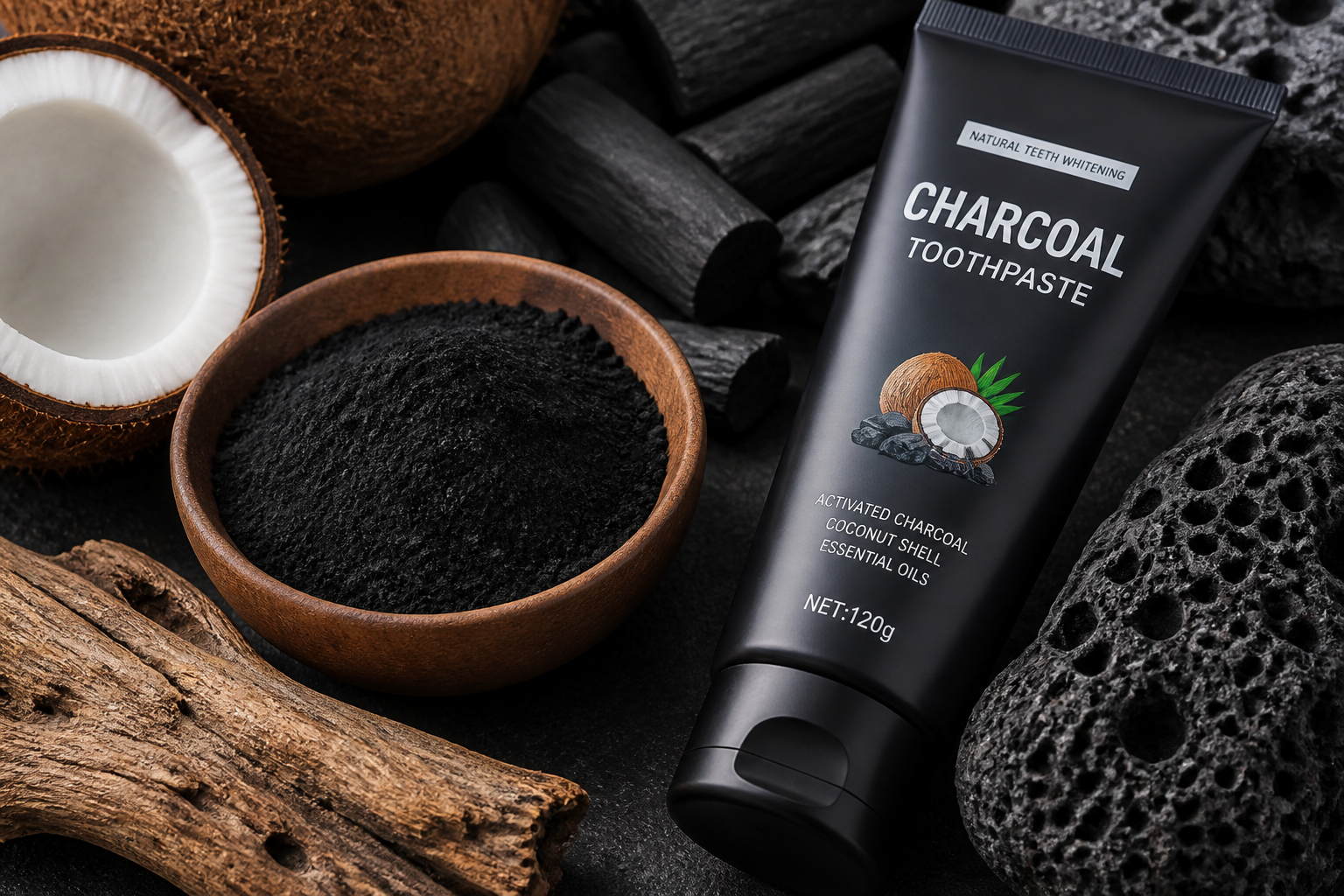
Scroll through any Instagram reel about teeth whitening, and you’ll spot a jet-black paste going onto a toothbrush within seconds. That’s charcoal toothpaste, and it’s everywhere right now — from salon shelves to the grooming rack at your local kirana store. But does charcoal toothpaste teeth whitening actually deliver, or is it just grinding your enamel down while you film yourself for social media?
That’s the real question. And the honest answer isn’t as simple as just “yes” or “no.” Let’s break down what dentists and researchers actually found when they tested this trend under a microscope.
What Is Charcoal Toothpaste, Really?
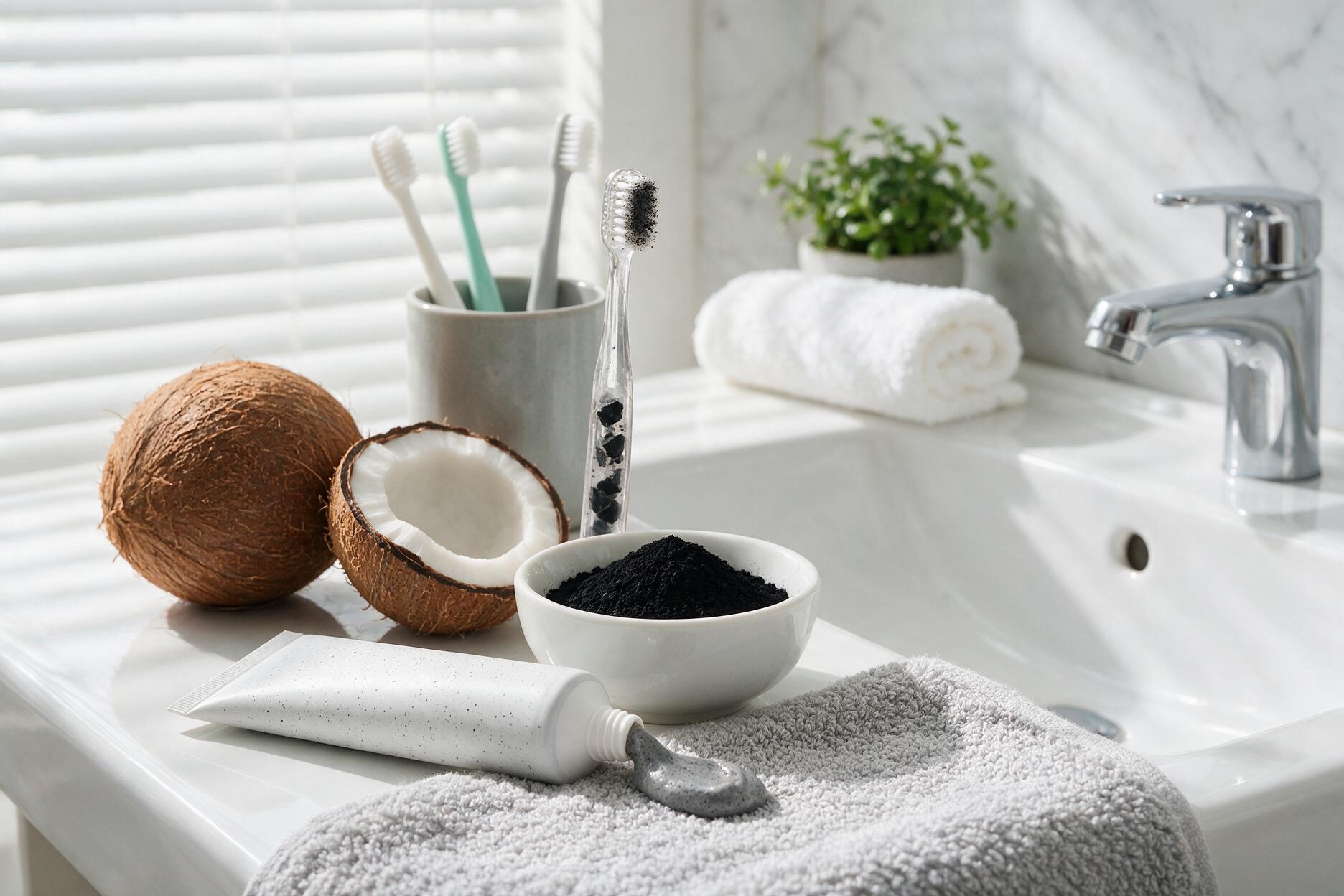
Charcoal toothpaste contains activated charcoal — a fine black powder made by heating materials like coconut shells or wood at very high temperatures. This process creates a porous surface with millions of tiny pores.
However, that porous structure is precisely why brands market it as a stain remover. The idea is that charcoal’s pores trap and “adsorb” pigments sitting on your tooth surface, similar to how it’s used medically to absorb toxins after poisoning. In theory, the method could help with teeth whitening by pulling out coffee, tea, and tobacco stains.
That said, dental researchers have pointed out something important: most of the actual whitening you see doesn’t come from adsorption at all. It comes from plain physical scrubbing.
Does Charcoal Toothpaste Actually Whiten Teeth?
Here’s where things get interesting. Scientists tested the product by staining real teeth (pulled teeth, used only for lab testing) with coffee, then brushing them with charcoal toothpaste. And yes, the teeth did get lighter — most of the change happened in the first two weeks, then it stopped improving after that [1].
Sounds promising, right? But here’s the catch:
- When researchers compared charcoal toothpaste against other whitening products, charcoal came out worse. It didn’t whiten as well, and it was rougher on teeth [2].
- Almost none of this research has been done on real people brushing their real teeth every day. It’s all been tested on teeth in a lab. So we still don’t really know how it behaves in your mouth after months of normal brushing.
- When experts pulled together everything published on charcoal toothpaste so far, their conclusion was blunt: there just isn’t enough solid proof that it’s safe or that it truly works [3].
In short, yes, it can make teeth look a bit lighter. But nobody’s proven it’s a sensible long-term habit yet.
Why Charcoal Can Only Fix Half the Stain Problem

Here’s something most charcoal toothpaste ads don’t mention: not all tooth stains are the same.
Surface stains (extrinsic) sit on top of your enamel
These are the ones you get from coffee, tea, red wine, or smoking. They sit right on the outer surface. Charcoal can scrub away some of these, at least a little.
Stains inside your teeth (intrinsic) sit below the enamel)
These come from things like certain medications, too much fluoride exposure as a child, or underlying health conditions.
Charcoal toothpaste only works on the surface layer. It has no proven effect on the deeper, intrinsic stains — no toothpaste applied from the outside can reach that far in. So if your teeth look yellow or grey from the inside, charcoal won’t help with that.
The Abrasion Problem Nobody Talks About On Instagram
So is the whitening gentle? Not really. Here’s what the research shows:
- Charcoal toothpaste mostly whitens by scraping away the stained top layer of your tooth — not by gently lifting stains out [4].
- One study tracked enamel over 90 days of brushing. It found charcoal can lighten teeth, but it may also roughen up the enamel, so it’s best used carefully and with a dentist’s advice [5].
- Even fillings and bonding aren’t safe from this treatment. A study found charcoal toothpaste roughened the surface of composite resin, the material used in many dental fillings [6].
Dentists measure how rough a toothpaste is using a scale called RDA (Relative Dentin Abrasivity). According to the American Dental Association (ADA), toothpastes with an RDA value of 250 or below are generally considered safe for daily use [10]. However, charcoal toothpastes show widely varying RDA values, and none have received the ADA’s seal of approval.
Toothpaste Safety: What About Fluoride?
Here’s a detail that often gets buried under the whitening hype. Many charcoal toothpastes skip fluoride entirely, positioning themselves as “natural” alternatives. But fluoride isn’t a marketing add-on — it’s the single most proven ingredient for preventing cavities and strengthening enamel against everyday acid attacks from food and bacteria.
So when you swap your regular fluoride toothpaste for a charcoal-only one, here’s what you’re really trading:
What you lose: daily cavity protection from fluoride.
What you gain instead: a scrubbier, more abrasive paste on your enamel.That’s a trade-off worth thinking about, especially if you already deal with sensitive teeth or have a history of cavities.
Researchers who looked at how charcoal behaves in the mouth also pointed out that skipping fluoride may mean losing some of that protection — which adds to the uncertainty around toothpaste safety [7].
Who Should Skip Charcoal Toothpaste Altogether
That said, some people should be extra careful or skip it completely [4], [5], [6]:
- Kids and teens – their tooth enamel is still forming and is softer, so it’s more easily worn down by scrubbing.
- Anyone with sensitive teeth – abrasion can expose the layer under the enamel, which often causes pain with hot, cold, or sweet food.
- People with fillings, crowns, or veneers – as the research above shows, charcoal can roughen up these materials over time. What happens to them over months or years of daily use still isn’t well studied.
- Anyone dealing with gum recession – a gritty, abrasive toothpaste can irritate already-sensitive gum tissue further.
Quick Pros and Cons at a Glance
What charcoal toothpaste may offer:
Some help removing coffee, tea, or tobacco stains sitting on the surface of your teeth [1-2]
What charcoal toothpaste can’t offer:
- No effect on deeper stains that sit inside the tooth, not just on top of it [8]
- No fluoride in most brands, so no daily cavity protection
- Regular use can wear down enamel and make teeth more sensitive [4], [5]
- Some brands claim it freshens breath too, but there’s no strong research backing that up yet — treat it as a marketing claim, not a proven benefit
Safer Ways To Get Whiter Teeth
Even better, you don’t need charcoal to deal with stains. Here’s what actually has more research behind it:
1. ADA-Approved Whitening Toothpaste
Look for the ADA Seal of Acceptance and ingredients such as hydrogen peroxide. Available laboratory evidence suggests that hydrogen peroxide toothpastes are effective at removing stains, while the evidence supporting charcoal toothpastes remains limited and less consistent [9].
2. Whitening Strips
An easy at-home option that’s been studied more than charcoal for lifting surface stains.
3. Professional in-Clinic Whitening
Performed by a dentist, this is still the most reliable way to get a noticeably whiter smile.
4. Dentist-Supervised at-home Kits
Custom trays with a dentist-recommended gel, giving you more control than a store-bought product.
In contrast, simple daily habits can also be effective — rinsing your mouth after tea or coffee, cutting back on tobacco, and getting a professional cleaning every six months all help reduce surface staining naturally, without affecting your enamel’s structure.
The Bottom Line On Charcoal Toothpaste Teeth Whitening
So does charcoal toothpaste actually whiten teeth safely? The evidence says it can lighten surface stains somewhat, but mostly through abrasion rather than any special “detox” effect — and that abrasion is precisely what makes dentists cautious. If you do want to try it, use it occasionally rather than daily, pick a fluoride-containing option if you can find one, and pair it with a soft brush and gentle pressure.
Your enamel doesn’t grow back once it wears down. So when it comes to charcoal whitening, a little patience with proven methods will serve your smile far better than a trending black paste ever will.
FAQs
Does charcoal toothpaste damage your teeth?
It can, mainly through abrasion. Studies show charcoal particles wear down enamel over time, especially with daily, aggressive brushing.
How often should you use charcoal toothpaste?
Most dentists suggest limiting it to two to three times a week at most, rather than as your everyday toothpaste, to reduce abrasive wear.
Is charcoal toothpaste better than regular whitening toothpaste?
Not based on current evidence. Regular ADA-approved whitening toothpastes tend to offer more predictable, safer results with less abrasion risk.
Can charcoal toothpaste cause sensitivity?
Yes. As it wears down enamel, the dentin layer underneath can become exposed, which often leads to sensitivity to hot, cold, or sweet foods.
Does charcoal toothpaste have fluoride?
Most don’t. Always check the label, since skipping fluoride means losing an important layer of cavity protection.
Is charcoal toothpaste safe for daily use?
Most dental researchers don’t recommend daily use, given its abrasive nature and the lack of long-term human safety data.
Can charcoal toothpaste whiten teeth permanently?
No. Any whitening effect is temporary and mainly addresses surface stains, not the natural color of your teeth.
References:
1. Effectiveness of Activated Charcoal Toothpaste vs. 6% Hydrogen Peroxide Whitening Pen—An In Vitro Study. PMC. Available from: https://pmc.ncbi.nlm.nih.gov/articles/PMC12109725/
2. Effectiveness and abrasiveness of activated charcoal as a whitening agent: A systematic review of in vitro studies. PubMed. Available from: https://pubmed.ncbi.nlm.nih.gov/36183933/
3. Charcoal and charcoal-based dentifrices: A literature review. Journal of the American Dental Association. Available from: https://jada.ada.org/article/s0002-8177(17)30412-9/fulltext
4. Ghajari MF, Shamsaei M, Basandeh K, Galouyak MS. Abrasiveness and whitening effect of charcoal-containing whitening toothpastes in permanent teeth. Dent Res J. 2021;18:51. Available from: https://pmc.ncbi.nlm.nih.gov/articles/PMC8404563/
5. Dionysopoulos D, Papageorgiou S, Malletzidou L, Gerasimidou O, Tolidis K. Effect of novel charcoal-containing whitening toothpaste and mouthwash on color change and surface morphology of enamel. J Conserv Dent. 2021;23(6):624-631. Available from: https://pmc.ncbi.nlm.nih.gov/articles/PMC8095700/
6. Effects of different charcoal-containing whitening toothpastes on color and surface roughness of a supra-nanofilled composite resin. PMC. Available from: https://pmc.ncbi.nlm.nih.gov/articles/PMC12231723/
7. Optical, Mechanical, and Chemical Impact of Brushing with Activated Charcoal Toothpowder and Toothpaste on Dental Enamel: An In Vitro Evaluation. PMC. Available from: https://www.ncbi.nlm.nih.gov/pmc/articles/PMC11676321/
8. Internal Tooth Whitening. StatPearls, NCBI Bookshelf. Available from: https://www.ncbi.nlm.nih.gov/books/NBK603756/
9. Whitening toothpaste containing activated charcoal, blue covarine, hydrogen peroxide or microbeads: which one is the most effective? PMC. Available from: https://www.ncbi.nlm.nih.gov/pmc/articles/PMC6438662/
10. Fragapane F, Pulfer AM, Hamza B, Attin T, Wegehaupt FJ. Cleaning Efficacy of Toothpastes With Varying Abrasiveness- 2025 May;23(2). Available from: https://pmc.ncbi.nlm.nih.gov/articles/PMC11982591/
(The article is written by Nancy Dixit, Associate Manager, Clinical Health & Content, Medical Affairs, and reviewed by Monalisa Deka, Deputy Manager, Clinical Health & Content, Medical Affairs.)
Recommended Reads:
6 Dentist-Approved Foods for Healthy Teeth and a Million-Dollar Smile
Stained Teeth? Try These Natural Ways To Remove Tooth Stains