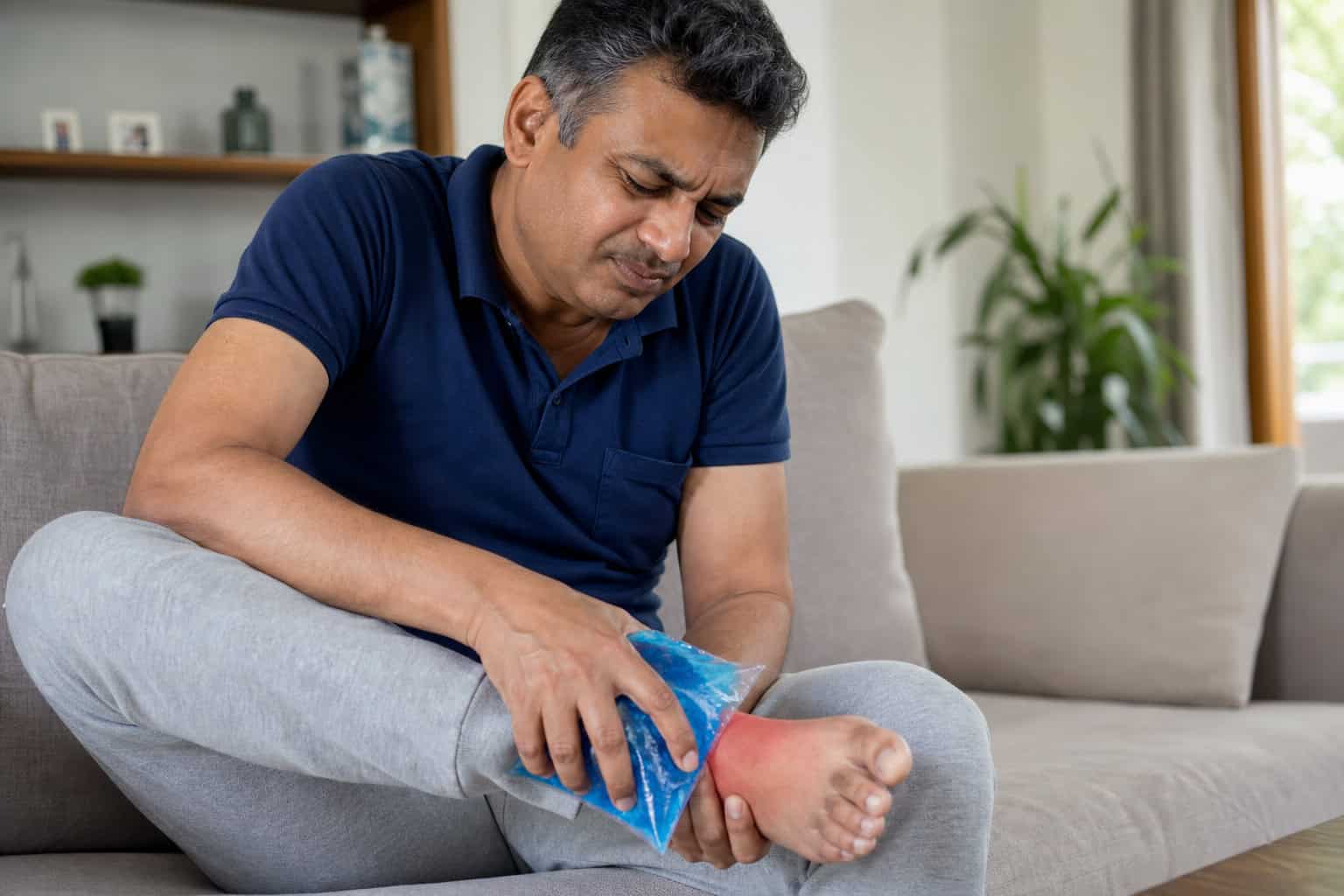
It’s 2 a.m. Your big toe throbs like it’s on fire, and even the bedsheet hurts. That’s how a gout attack often feels, and it can hit hard and suddenly. What you do next matters. Starting treatment in the first 24 hours can shorten the attack and ease its punch [1,2]. This guide walks you through acute gout attack relief- step by step, so you know what to take, what to skip, and when to call your doctor.
Did you know?
Gout is more common in men than in women. It usually starts in middle age. Women usually don’t get gout before menopause, so they tend to develop it later in life than men [3].
Know your uric acid levels. A blood test can show whether uric acid may add to your gout risk. Ask your doctor whether it makes sense for you.
Why do Acute Gout Attacks Happen?
Gout is a painful form of arthritis. When your body has extra uric acid, sharp crystals can form in your joints, usually in the big toe. Symptoms like pain and swelling come and go in periods called gout attacks. Treatment usually combines symptom relief with changes to your diet and habits.
| Interesting Fact:
Gout is common worldwide. About 55.8 million people had it in 2020, and experts expect that number to reach 95.8 million by 2050. Globally, it’s about three times more common in men than in women [4]. |
Here’s how the terms fit together
- Purines are natural chemicals in your body and in many foods. When purines break down, they become urate (uric acid). Normally, you pass urate out in your urine.
- If you make too much or clear too little, it builds up in your blood, which doctors call hyperuricemia.
- Needle-shaped crystals can then form in a joint, and your body’s inflammatory response causes the pain, heat, and swelling.
Here’s a twist: many people with high urate never get gout [3].
Gout Attack Symptoms: How Will You Know?
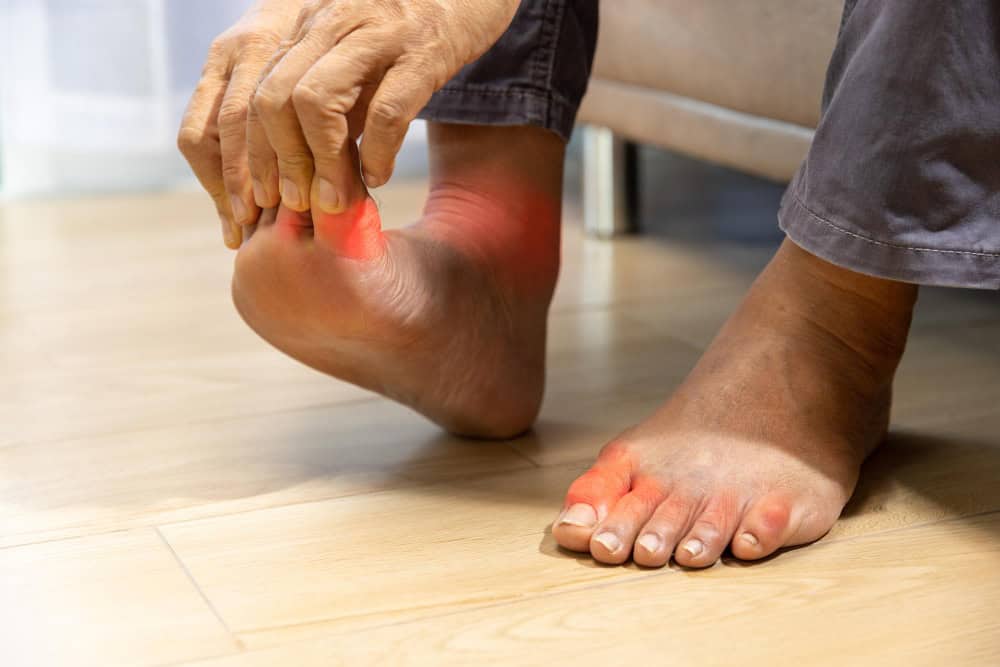
Gout often strikes at night. The pain can be strong enough to wake you up. Look for these signs [3]:
- Sudden, intense pain, often in the big toe (other joints can flare too)
- A joint that looks red and swollen
- Warmth when you touch it
- Symptoms that usually start in just one joint
Certain foods, alcohol, some medicines, an injury, or an illness can trigger a flare. Most flares ease within a week or two, and you usually feel fine in between. But if you leave gout untreated, flares can come more often and last longer [3].
How Doctors Confirm an Acute Gout Attack
Gout is usually simple to diagnose, but a few conditions can mimic it. Here’s what your doctor may do [5]:
- Ask about your symptoms and medicines
- Examine the affected joint
- Order a blood test to check urate levels in the blood
- Take a sample of joint fluid to look for crystals under a microscope
- Order an ultrasound or special CT scan to look for urate crystal buildup in the affected joint and to check for other conditions that could cause your symptoms.
Also read: Uric Acid Levels Chart: Normal Range by Age & Gender
Acute Gout Attack Relief: Your Gout Treatment Plan for the First 24 Hours

There’s no magic switch, but these steps work best together. Start at the first twinge.
Step 1: Start Gout Treatment Medicine Early
Medicine is the core of acute gout attack relief. Doctors use three main types [1,5,6]:
- Anti-inflammatory pills (NSAIDs): Ibuprofen and naproxen are common ones. You can buy them without a prescription. Take one at the first sign of pain.
- Colchicine: Your doctor prescribes this pill. It works best when you take it as soon as symptoms start.
- Corticosteroids: These come as steroid pills or a shot right into the sore joint. Your doctor uses the lowest dose that works.
Keep these tips in mind:
- Skip aspirin for flare pain. It can make a flare worse [1]. If you take low-dose aspirin for your heart, don’t stop it unless your doctor says so [6].
- Already take allopurinol or febuxostat? Keep taking it during the attack.
- Call your doctor the same day. Store-bought doses often fall short, and most people need a prescription-strength drug.
- Check first if you have other health problems. NSAIDs aren’t safe for everyone. Ask your doctor or pharmacist if you have kidney, stomach, or heart problems, or if you take blood thinners.
Step 2: Use Ice, Rest, and Elevation for Gout Relief
Ice, elevation, and rest all help cut swelling and pain. Simple home steps provide real gout relief in addition to medicine.
- Ice it. Wrap an ice pack in a thin cloth. Hold it on the joint for 15 to 20 minutes, and repeat hourly as needed.
- Rest it. Keep the joint still and prop it on a pillow. Raise a foot or toe above chest level to cut swelling.
- Take the pressure off. A cane helps if you must walk. Cutting the toe off an old sock keeps your foot warm without pressing on the sore toe.
Step 3: Drink Water and Skip Trigger Foods
Water helps your body flush out uric acid. The Arthritis Foundation suggests 8 to 16 cups of fluids a day, with at least half as water. Ask your doctor first if you have heart or kidney problems that limit your fluids.
Skip these until the attack ends:
- Alcohol, including nonalcoholic beer
- Sugary drinks like soda
- Red meat and organ meats, such as liver, kidney, tongue, and sweetbreads
- Shellfish (like shrimp and lobster), sardines, and anchovies
Step 4: Call Your Doctor in the Gout First 24 Hours
Getting treated within the first 24 hours can shorten an attack and make it less severe.
What your doctor may do:
- Test a sample of joint fluid to confirm gout
- Prescribe stronger medicine
- Inject a steroid into the joint for fast relief
Who can help:
- Most people with gout see their primary care doctor (general physician)
- A rheumatologist (an arthritis specialist), a dietitian, or a pharmacist can help too.
Get urgent care if:
- You have a fever or chills along with a hot, swollen joint, since an infection can look like gout
Also seek help if:
- You can’t move the joint
- The pain doesn’t ease after a couple of days of treatment
FAQs
How long does a gout attack last?
A flare usually eases within a week or two, and you often feel fine in between [3]. Treatment in the first 24 hours tends to shorten it [1]. Without treatment, flares can come more often and last longer [3].
What’s the fastest way to stop a gout attack?
No home trick beats medicine. An NSAID, colchicine, or a corticosteroid works best when you start early [5][6]. A steroid shot from your doctor can calm pain quickly [1]. Ice, rest, and elevation help along the way [5].
Is ice or heat better for a gout attack?
Go with ice. It helps reduce swelling and pain [5], and guidelines list it as a helpful add-on to medicine [6]. A joint that’s already hot and swollen rarely feels better with more heat.
Can alcohol trigger a gout flare?
No. It can raise your risk. In one study, more than one or two drinks in a day went with about a 40% higher flare risk [6].
Should I stop allopurinol during a gout attack?
No, unless your doctor tells you to. Keep taking uric acid-lowering drugs like allopurinol or febuxostat during an attack [1]. Ask your doctor before you change any dose.
Does drinking water help a gout attack?
Yes. Water helps flush out uric acid [1], and dehydration pushes uric acid up [2]. Sip steadily through the day instead of gulping it all at once.
Does cherry juice help gout?
There’s not enough proof yet. The 2020 American College of Rheumatology panel found only low-quality evidence on cherries, so it made no recommendation [6]. Treat cherry juice as a snack, not a treatment.
Can women get gout?
Yes, but usually later. Women typically don’t develop gout before menopause, so they tend to get it at an older age than men [3]. Younger people who do get gout tend to have a more severe form [3].
What raises my risk of a gout attack?
Several things can [3]:
- Your body: family history, being male, menopause, older age
- Health conditions: overweight, metabolic syndrome, high blood pressure, kidney disease
- Food, drink, and some medicines
Can my medicines cause gout attacks?
Some can raise your risk. These include water pills (diuretics), low-dose aspirin, high-dose niacin, and cyclosporine [3]. Guidelines advise against stopping low-dose aspirin that you take for a good medical reason [6]. Never stop a prescribed medicine on your own. Ask your doctor first.
Which foods and drinks raise gout risk?
Alcohol, sugary drinks like soda, and foods high in purines can raise gout risk. Most purine-rich foods come from animal sources [3].
References:
1. Arthritis Foundation. Managing a Gout Flare. Available from: https://www.arthritis.org/diseases/more-about/managing-a-gout-attack
2. Harvard Health Publishing. Treatments for Gout. Available from: https://www.health.harvard.edu/diseases-and-conditions/treatments-for-gout
3. National Institute of Arthritis and Musculoskeletal and Skin Diseases (NIAMS), NIH. Gout. Available from: https://www.niams.nih.gov/health-topics/gout
4. GBD 2021 Gout Collaborators. Global, regional, and national burden of gout, 1990–2020, and projections to 2050. Lancet Rheumatology. 2024. Available from: https://pmc.ncbi.nlm.nih.gov/articles/PMC11263476/
5. NIAMS, NIH. Gout: Diagnosis, Treatment, and Steps to Take. Available from: https://www.niams.nih.gov/health-topics/gout/diagnosis-treatment-and-steps-to-take
6. FitzGerald JD, et al. 2020 American College of Rheumatology Guideline for the Management of Gout. Arthritis Care & Research. 2020;72(6):744–760. https://assets.contentstack.io/v3/assets/bltee37abb6b278ab2c/blt04d52e3b6ff5112f/632cab5b258fb55f6b2186af/gout-guideline-2020.pdf
(The article is written by Nancy Dixit, Associate Manager, Clinical Health & Content, Medical Affairs, and reviewed by Monalisa Deka, Deputy Manager, Clinical Health & Content, Medical Affairs.)
Recommended Reads:
High Uric Acid Relief: Top Drinks & Sips to Avoid