
Walk into any juice bar and you’ll spot that deep-red glass. Beet juice has become a popular drink for good reason. It’s sweet, earthy and loaded with plant compounds your body can use. Researchers have studied it for blood pressure, workouts and general health. But it doesn’t suit everyone, and timing can matter. Here’s a simple guide to the benefits of beet juice, the best time to drink it, and who should skip it. Let’s go through what the research says, in plain words.
Also read: The Crimson Marvel: 6 Health Benefits Of Beetroot
Benefits of Beet Juice: What the Research Shows
Here are six ways beet juice may support your health.
1. Blood Pressure
Beets are rich in nitrate. Your body turns nitrate into nitric oxide, a gas that relaxes your blood vessels. Relaxed vessels let blood flow more easily [1].
In a review of 7 trials (218 adults with high blood pressure), daily beet juice for 3 to 60 days dropped the top number (systolic) by about 5 mmHg. The top number shows the pressure when your heart beats. The bottom number didn’t change much [2]. It’s not clear yet whether this lowers the risk of heart attack or stroke. So beet juice can help a little, but it won’t replace your medicine.
Quick Byte: Beet juice may lower the top blood pressure number by about 5 mmHg in adults with high blood pressure over 3 to 60 days [2]. It’s a helper, not a replacement for your medicine.
Want to know what your blood pressure numbers mean?
Read this: Blood Pressure Chart by Age: Normal to High Ranges
2. Stamina and Workouts
Nitric oxide may help your muscles use oxygen more efficiently. Beet juice has been linked to improved endurance in a few studies [3]. Results vary by sport and by person.
3. Rich in Antioxidants
The red colour of beets comes from betalains. These work as antioxidants, which protect your cells from damage. Most of this research comes from lab and animal studies, so it’s not clear yet how much it helps people [1].
4. Vitamins and Minerals in Beet Juice
Beets contain small amounts of vitamin C, vitamin B6, folate, iron, potassium and magnesium. Your body needs them for energy, nerves and normal body functions [4].
5. Fibre for Smooth Digestion
Whole beetroot has about 2.8 g of fibre per 100 g, but fresh juice has almost none [4]. Fibre helps prevent constipation [5]. Juicing removes most of the fibre, so eat whole beets too.
6. Beet Juice for Muscle Soreness
In a few studies, beet juice eased muscle soreness after certain types of exercise [1]. It’s not clear yet whether this helps later performance, and more research is needed.
Who Should Use Caution With Beet Juice
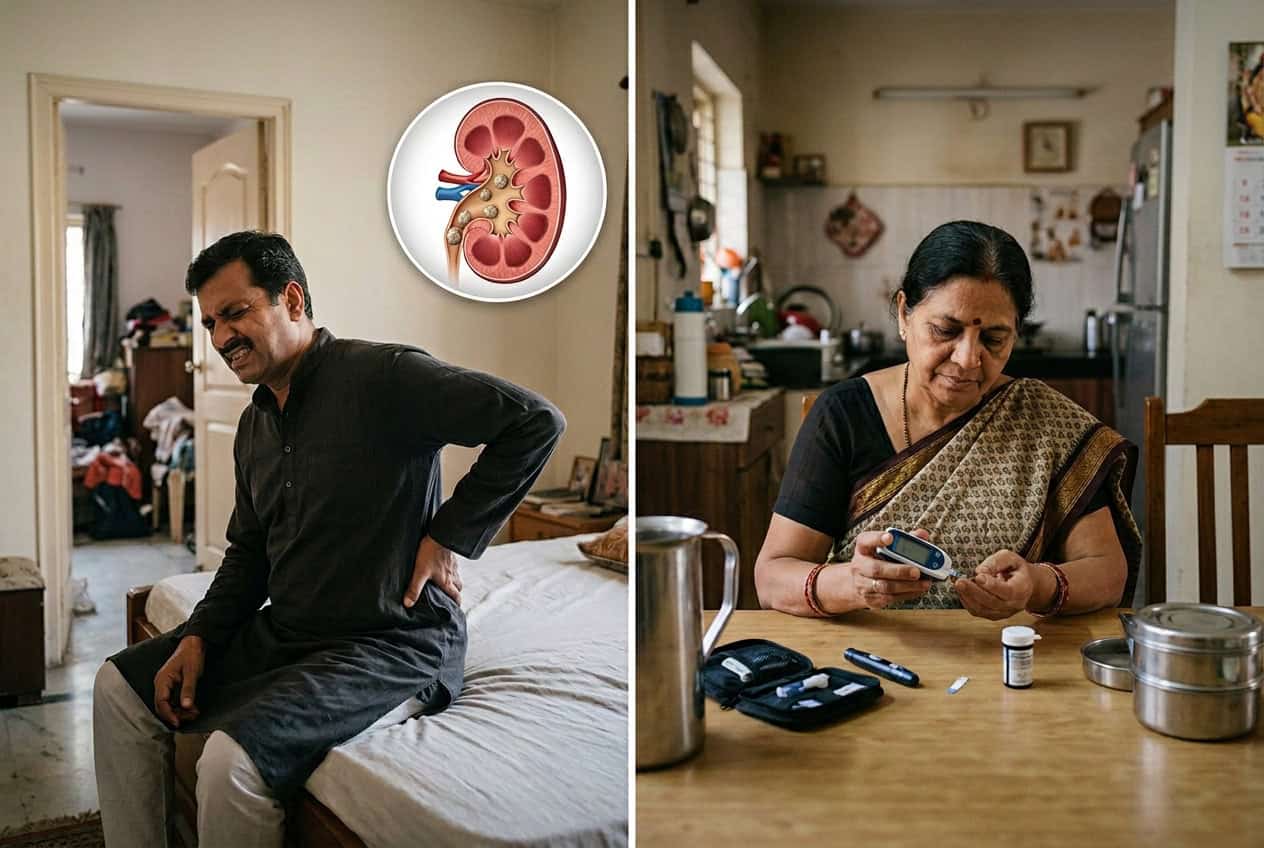
Beet juice suits most healthy adults. But these people should avoid it or check with a doctor first:
- People who develop kidney stones. Beets are high in oxalate. And beet juice is one of the highest-oxalate juices tested, at about 60–70 mg per 100 mL [6]. However, the amount can vary depending on the preparation method and serving size. Oxalate can bind with calcium and form stones. About 75–85% of kidney stones are calcium oxalate stones, most of them calcium oxalate [7]. If you have stones or kidney disease, ask your doctor first before starting beetroot juice.
- Individuals with diabetes. Beetroot juice contains natural sugar, mostly sucrose, which is a concern for people with diabetes [4]. Ask your doctor or dietitian how much is acceptable.
- People with low blood pressure or taking blood pressure medicine should be careful. If you have low blood pressure or take blood pressure-lowering medicines, speak with your doctor before drinking beet juice regularly, as it may further lower your blood pressure. Beet juice lowered the top number by about 5 mmHg in adults with high blood pressure [2]. That could add to your medicine’s effect, and it’s not clear how the two mix. If you feel dizzy or faint, stop drinking it and talk to your doctor. If you faint or feel very unwell, get medical help right away.
- Anyone who wants to drink a lot every day. Very high intake needs more safety research [1,3]. Stick to a small glass.
Note: Pregnant women should be careful and ask your doctor or midwife before you drink beet juice. Beet juice can lower blood pressure, and there isn’t much research in pregnancy.
How to Drink Beet Juice: Best Time and Easy Tips
In one trial of healthy adults, blood pressure hit its lowest point about 2.5–3 hours after a single drink of beet juice [8]. So that’s when its effect on blood pressure is strongest. There’s no proven best time. The best time is the one you can stick to every day.
How Much Beet Juice to Drink
Start with a small glass. Studies in people with high blood pressure used 70–250 mL a day [2]. Here are a few simple tips:
- Choose fresh or unsweetened juice.
- Mix it with water if the taste feels strong.
- Be mindful of antibacterial mouthwash: It may reduce the oral bacteria needed to convert dietary nitrate into nitrite, potentially limiting beet juice’s blood-pressure-lowering effects [8]
- Drink it with a meal if it upsets your stomach.
- Eat whole beets too, so you get the fibre.
FAQs
Is it safe to drink beet juice every day?
Studies used 70–250 mL a day for 3 to 60 days [2]. Long-term and very high intake haven’t been well studied [3]. Ask your doctor first if you have a health condition.
How long does beet juice take to work?
A single drink lowered blood pressure in healthy adults, with the lowest point at 2.5–3 hours [6]. In adults with high blood pressure, trials gave daily juice for 3 to 60 days [2].
Can beet juice replace blood pressure medicine?
No. The top number dropped by about 5 mmHg, and the bottom number didn’t change much [2]. That’s a small change. Never stop or cut your medicine on your own. Keep taking your medicine, and talk to your doctor before changing anything.
Does mouthwash affect beet juice?
Yes, antibacterial mouthwash can weaken its effect. It kills the mouth bacteria that turn nitrate into nitrite, the first step toward nitric oxide [6]. Skip it around the time you drink beet juice.
Is beet juice better than eating beets?
Neither is clearly better. Juice is easy to sip, but whole beets keep their fibre [4]. Both can fit in your diet.
Can people with diabetes drink beet juice?
It depends on the amount. Beet juice has natural sugars, mostly sucrose [4]. Check the right amount with your doctor or dietitian.
Can beet juice cause kidney stones?
It may raise the risk in people prone to stones. Beet juice is one of the highest-oxalate juices tested, at about 60–70 mg per 100 mL [6]. About 75–85% of kidney stones are calcium stones, most of them calcium oxalate [7]. If you’ve had stones, ask your doctor first. Get urgent medical care for severe side or back pain, blood in your urine, or fever with pain.
Disclaimer: This article shares general health information. It doesn’t replace advice from your doctor. Talk to your doctor before you change your diet or medicines.
References:
1. Chen L, Zhu Y, Hu Z, Wu S, Jin C. Beetroot as a functional food with huge health benefits: antioxidant, antitumor, physical function, and chronic metabolomics activity. Food Sci Nutr. 2021 Sep 9;9(11):6406-20. doi:10.1002/fsn3.2577. PMID: 34760270. PMCID: PMC8565237 [cited 2026 Oct 27]. Available from: https://pmc.ncbi.nlm.nih.gov/articles/PMC8565237/
2. Benjamim CJR, Porto AA, Valenti VE, Sobrinho ACDS, Garner DM, Gualano B, et al. Nitrate derived from beetroot juice lowers blood pressure in patients with arterial hypertension: a systematic review and meta-analysis. Front Nutr. 2022 Mar 15;9:823039. doi:10.3389/fnut.2022.823039. PMCID: PMC8965354 [cited 2026 Oct 27]. Available from: https://pmc.ncbi.nlm.nih.gov/articles/PMC8965354/
3. Zamani H, de Joode MEJR, Hossein IJ, Henckens NFT, Guggeis MA, Berends JE, et al. The benefits and risks of beetroot juice consumption: a systematic review. Crit Rev Food Sci Nutr. 2021;61(5):788-804. Epub 2020 Apr 15. doi:10.1080/10408398.2020.1746629. PMID: 32292042 [cited 2026 Oct 27]. Available from: https://www.tandfonline.com/doi/full/10.1080/10408398.2020.1746629
4. Mirmiran P, Houshialsadat Z, Gaeini Z, Bahadoran Z, Azizi F. Functional properties of beetroot (Beta vulgaris) in management of cardio-metabolic diseases [Internet]. Nutr Metab (Lond). 2020 Jan 7;17:3. doi:10.1186/s12986-019-0421-0. PMID: 31921325. PMCID: PMC6947971 [cited 2026 Oct 27]. Available from: https://pmc.ncbi.nlm.nih.gov/articles/PMC6947971/
5. NHS Tayside. Fibre [Internet]. Dundee: NHS Tayside; [date not shown] [cited 2026 Oct 27]. Available from: https://www.nhstayside.scot.nhs.uk/OurServicesA-Z/PublicHealth/PROD_381949
6. Siener R, Seidler A, Voss S, Hesse A. The oxalate content of fruit and vegetable juices, nectars and drinks [Internet]. J Food Compos Anal. 2016;45:108-12. doi:10.1016/j.jfca.2015.10.004 [cited 2026 Oct 27]. Available from: https://doi.org/10.1016/j.jfca.2015.10.004
7. Leslie SW, Sajjad H, Murphy PB. Renal Calculi, Nephrolithiasis. [Updated 2024 Apr 20]. In: StatPearls [Internet]. Treasure Island (FL): StatPearls Publishing; 2024 Jan-. Available from: https://www.ncbi.nlm.nih.gov/books/NBK442014/
8. Webb AJ, Patel N, Loukogeorgakis S, Okorie M, Aboud Z, Misra S, et al. Acute blood pressure lowering, vasoprotective, and antiplatelet properties of dietary nitrate via bioconversion to nitrite. Hypertension. 2008 Mar;51(3):784-90. doi:10.1161/HYPERTENSIONAHA.107.103523. PMID: 18250365 [cited 2026 Oct 27]. Available from: https://pubmed.ncbi.nlm.nih.gov/18250365/
(The article is written by Nancy Dixit, Associate Manager, Clinical Health & Content, Medical Affairs, and reviewed by Monalisa Deka, Deputy Manager, Clinical Health & Content, Medical Affairs.)
Recommended Reads:
7 Benefits of Drinking Amla, Beetroot, and Carrot Juice in the Morning
Are Tomatoes High in Oxalates? Low-Oxalate Food List to Consider