
Ever left a doctor’s appointment holding a slip of paper with two numbers on it, nodding like you understood, but secretly Googling it in the parking lot? You’re not alone. A blood pressure chart by age is one of the easiest ways to actually make sense of those numbers instead of just guessing.
However, blood pressure isn’t one-size-fits-all. It shifts as you grow, and knowing where you stand on a blood pressure chart by age can help you catch problems early, before they turn into something bigger, like a heart attack or stroke [1].
That said, this guide breaks it down in plain language. No jargon, no scary lectures. Just the numbers, what they mean, and what you can actually do about them.
What Do Blood Pressure Numbers Actually Mean?
Blood pressure comes as two numbers, like 120/80. Here’s an easy way to picture it: your heart works like a pump, and your arteries are the hoses carrying everything through.
1. Systolic
The top number, systolic, is the pressure at the exact moment your heart squeezes and pushes blood out.
2. Diastolic
The bottom number, diastolic, is the pressure in between beats, while your heart’s taking a breather before the next squeeze [1].
| So, a reading of 120/80 just means your systolic number is 120 and your diastolic number is 80. |
Meanwhile, doctors don’t just look at one reading. They look at your age, your health history, and how your numbers trend over time. That’s exactly why a blood pressure chart by age exists: it gives you context instead of just a random number.
Blood Pressure Chart by Age: Normal, Elevated, and High
A normal blood pressure varies a bit from person to person, so your doctor will always be your best guide. That said, here’s the general blood pressure chart by age that most people use for comparison [7]:
| Blood Pressure | Systolic (top number) mm Hg | Diastolic (bottom number) mm Hg |
| Normal | <120 | and <80 |
| Elevated | 120–129 | and <80 |
| Stage 1
Hypertension |
130–139 | or 80-89 |
| Stage 2
Hypertension |
≥140 | or ≥90 |
| Hypertensive crisis | >180 | >120 |
A target of under 120/80 mm Hg is what doctors consider the healthy zone at any age, unless your doctor gives you a different personal goal [3,7]. Additionally, this scale applies to adults. Kids and teens are judged differently, which we’ll get to shortly.
Did you know?
It is estimated that at least 1 in 4 adults in India has hypertension [8]. Measuring your blood pressure is the only way to know whether you have high blood pressure.
Stay one step ahead of your symptoms with our widest range of BP monitors.
Why Age Actually Changes Your Numbers
Here’s the twist: the “optimal” zone doesn’t move as you age, but your average reading often does. As you get older, your arteries naturally get stiffer, and that tends to push numbers up over time [5].
That’s part of why researchers still debate exactly how a blood pressure chart by age should be applied to older adults versus younger ones. Some experts argue an 80-year-old shouldn’t be held to the exact same target as a 25-year-old, while others say the healthy zone stays the same no matter your age [5].
Even so, aiming for under 120/80 mm Hg is a safe general target at any age, unless your doctor gives you a different personal goal [3].
Average Blood Pressure by Age Group
For context, here’s what typical (not necessarily “optimal”) readings look like across different adult age groups [3]:
| Age | Women | Men |
| 18–39 years | 110/68 mm Hg | 119/70 mm Hg |
| 40–59 years | 122/74 mm Hg | 124/77 mm Hg |
| 60+ years | 139/68 mm Hg | 133/69 mm Hg |
Note: “Average” doesn’t always mean healthy. Some average readings may already fall into the elevated or high blood pressure range. These numbers show what is commonly seen at different ages, not what is considered ideal.
For adults 65 and older, the treatment target is generally below 130/80 mm Hg [10].
Blood Pressure Chart by Age for Kids and Teens

Now, here’s something a lot of parents don’t realize: kids don’t have one fixed “normal” number the way adults do. Instead, doctors often compare a child’s reading to charts based on age, since a healthy range keeps changing as they grow.
Here’s the average blood pressure for children and teens [3]:
| Age | Systolic (top number) mm Hg | Diastolic (bottom number) mm Hg |
| Newborns up to 1 month | 60–90 | 20–60 |
| Infants | 87–105 | 53–66 |
| Toddlers | 95–105 | 53–66 |
| Preschoolers | 95–110 | 56–70 |
| School-aged children | 97–112 | 57–71 |
| Adolescents | 112–128 | 66–80 |
However, don’t try to eyeball this one at home. Pediatricians use specific tools, like calculators built on national growth data, to figure out if a child’s reading is actually a concern [4].
Quick Fact Bite:
Blood Pressure in PregnancyPregnancy has its own rules. A reading of 140/90 mm Hg or higher counts as high, especially after 20 weeks, since it can be an early sign of pre-eclampsia [11]. That’s exactly why doctors check it at every prenatal visit, no matter how a woman feels. Blood Pressure and DiabetesIf you have diabetes, your “safe zone” is a bit stricter. This matters a lot in India, where diabetes and high blood pressure often show up together. The American Diabetes Association recommends a blood pressure target under 130/80 mmHg for most adults with diabetes, a benchmark doctors here widely follow too, since high blood pressure and high blood sugar together raise the risk of heart and kidney problems even more [6]. |
What Happens If Your Numbers Are High?
So, why does any of this information actually matter? Because high blood pressure usually doesn’t feel like anything. Here’s what’s actually happening.
It’s Called the “Silent Killer” for a Reason
Most patients have no obvious symptoms and, hence, do not even know that they have hypertension. As a result, a large number of hypertension cases go undetected. That’s exactly why doctors nickname it the “silent killer” [3].
What Long-Term High Blood Pressure Can Lead To
- Heart attack
- Stroke
- Heart failure
- Kidney disease [3]
Meanwhile, readings that climb especially high, above 180/120 mm Hg, need urgent medical attention rather than a wait-and-see approach [1].
Don’t Ignore Low Blood Pressure Either
- Low blood pressure can be a problem too, especially if it affects the way you feel.
- For example, it can make you feel dizzy or faint [3].
That said, none of this is meant to scare you. It’s meant to nudge you toward checking your numbers regularly instead of assuming you’re fine just because you feel fine.
Quick Byte: High BP vs. Low BP – How to Tell the DifferenceHigh blood pressure usually has no symptoms at all, which is why it can go unnoticed. Low blood pressure, on the other hand, tends to announce itself, think dizziness, blurred vision, fainting, or feeling unusually tired or cold and clammy. If you’re feeling “off,” it’s low BP that’s more likely to be the cause, but the only way to know for sure is to check your numbers [3]. |
How to Keep Your Blood Pressure in a Healthy Range
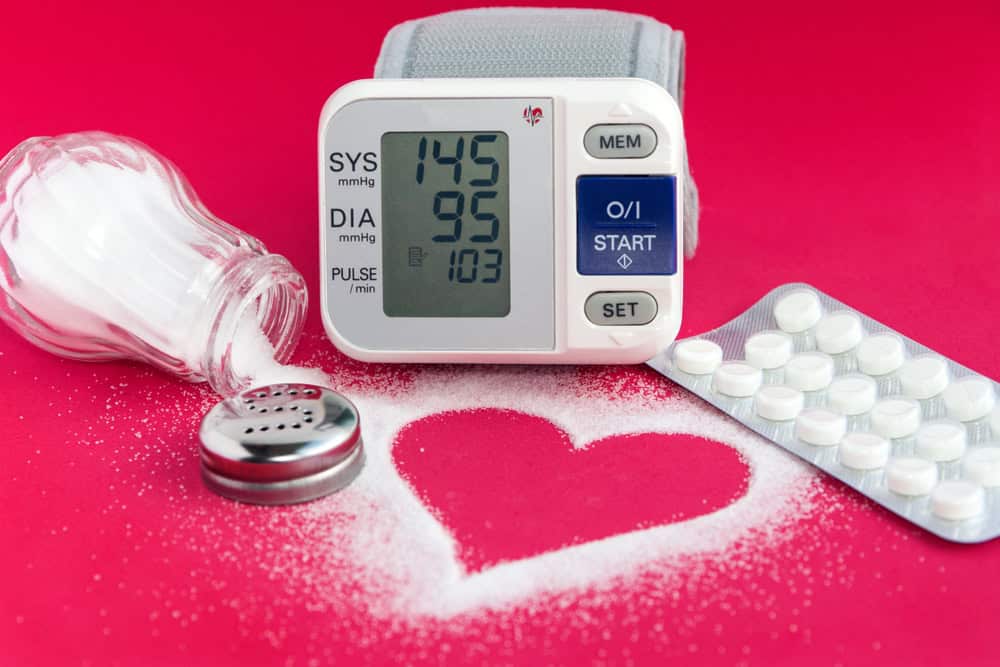
Good news: you don’t need a total life overhaul to make a difference. Small, steady changes go a long way.
- Watch your salt. Cutting back on sodium is one of the fastest ways to see your numbers drop.
- Move your body. Even a daily walk counts. You don’t need a gym membership.
- Keep a healthy weight. Extra weight makes your heart work harder than it needs to.
- Limit alcohol. Heavy drinking is directly linked to higher blood pressure.
- Skip the cigarettes. Smoking damages artery walls and pushes numbers up.
- Manage stress. Chronic stress keeps your body in a low-grade “fight or flight” mode, which isn’t great for your arteries.
Important Tip: Additionally, get checked regularly. If you’re 18 or older, aim for a check every couple of years. Once you reach 45, make it a habit to get checked every year [3].
Even better, keeping a blood pressure chart by age nearby—whether it’s a printout on your fridge or a note on your phone makes it much easier to know if your number is actually something to worry about or just a normal blip.
FAQs
Does blood pressure naturally get higher as you age?
It tends to, yes. As the years go by, your arteries lose a bit of their flexibility and get stiffer, which nudges your numbers upward. That said, this figure isn’t set in stone. Staying active and eating well can slow that climb quite a bit.
Does drinking water lower blood pressure?
Staying hydrated helps your blood flow more smoothly, so it can support healthy numbers, but it’s not a fix on its own for high blood pressure.
Can drinking too much tea or coffee raise blood pressure?
Caffeine can cause a short-term spike, especially if you’re not a regular drinker, but for most people who drink it daily, the body adjusts, and the effect is minor.
Which arm should I use to check blood pressure?
Doctors usually recommend checking both arms once to see if there’s a difference, then sticking with the arm that gave the higher reading going forward.
Can blood pressure be high in one arm and normal in the other?
Yes, a small difference between arms is common, but a big gap can be worth flagging to your doctor, since it’s occasionally linked to blood vessel issues.
Does sleeping position affect blood pressure?
Lying on your left side is sometimes recommended, as it may ease pressure on major blood vessels, but the effect is generally small compared to things like diet and activity.
Is 140/90 always considered high blood pressure?
Not necessarily by itself, but it’s firmly in high territory. A single reading isn’t usually enough for a diagnosis, doctors look for a consistent pattern over multiple visits.
Can dehydration cause high blood pressure?
It’s more commonly linked to low blood pressure, since less fluid in your body means less volume for your heart to pump, though severe dehydration can sometimes trigger stress responses that temporarily raise it.
Does blood pressure change after eating?
Yes, it often dips slightly after a meal as blood flow shifts toward digestion, which is completely normal and usually nothing to worry about.
Can holding your breath affect a blood pressure reading?
Yes, and so can talking, crossing your legs, or having a full bladder during the test, small things that can throw off an accurate reading.
What time of day is blood pressure usually highest?
It tends to be lowest during sleep, rise sharply in the early morning, and stay fairly steady through the day, then dip again in the evening.
Can you have high blood pressure and feel completely fine?
Yes, and that’s actually the most common scenario. Most people with high blood pressure have zero symptoms, which is exactly why regular checks matter so much [2].
How often should I get my blood pressure checked?
It depends on your last reading. Optimal to normal range? Once every five years is fine. Normal to high? Make it annual. Already high? Your doctor may want to see you every few weeks at first, then every six months once it’s under control [9].
Disclaimer: This article is for general health awareness only and isn’t a substitute for professional medical advice. If you’re concerned about your blood pressure, please talk to your doctor.
References:
1. Centers for Disease Control and Prevention. About High Blood Pressure. Available from: https://www.cdc.gov/high-blood-pressure/about/index.html
2. Centers for Disease Control and Prevention. High Blood Pressure Facts. Available from: https://www.cdc.gov/high-blood-pressure/data-research/facts-stats/index.html
3. Heart Research Institute Australia. What Is Normal Blood Pressure by Age? Available from: https://www.hri.org.au/health/learn/risk-factors/what-is-normal-blood-pressure-by-age
4. Baylor College of Medicine. Blood Pressure vs. Age Tool. Available from: https://www.bcm.edu/bodycomplab/BPappZjs/BPvAgeAPPz.html
5. Messerli FH, Bangalore S, Messerli AW. Age, Blood Pressure Targets, and Guidelines. Circulation. 2018;138:128–130. Available from: https://www.ahajournals.org/doi/10.1161/circulationaha.118.034390
6. American Diabetes Association. Cardiovascular Disease and Risk Management: Standards of Care in Diabetes. Diabetes Care. Available from: https://diabetesjournals.org/care/article/49/Supplement_1/S216/163933/10-Cardiovascular-Disease-and-Risk-Management
7. National Heart, Lung, and Blood Institute. High blood pressure: diagnosis [Internet]. Bethesda (MD): National Heart, Lung, and Blood Institute; 2025 Jun 26 [cited 2026 Aug 18]. Available from: https://www.nhlbi.nih.gov/health/high-blood-pressure/diagnosis.
8. World Health Organization. India Hypertension Control Initiative, a high impact and low-cost solution [Internet]. New Delhi: WHO; 2022 Jun 2 [cited 2026 Aug 17]. Available from: https://www.who.int/india/news-room/detail/02-06-2022-india-hypertension
9. Blood Pressure UK. Who should have a blood pressure check? [Internet]. London: Blood Pressure UK; [cited 2026 Aug 17]. Available from: https://www.bloodpressureuk.org/your-blood-pressure/getting-diagnosed/who-should-have-a-blood-pressure-check/
10. Iqbal AM, Jamal SF. Essential Hypertension. In: StatPearls [Internet]. Treasure Island (FL): StatPearls Publishing; [cited 2026 Aug 18]. Available from: https://www.ncbi.nlm.nih.gov/books/NBK537297/
11. Luger RK, Kight BP. Hypertension in Pregnancy. In: StatPearls [Internet]. Treasure Island (FL): StatPearls Publishing; [cited 2026 Aug 18]. Available from: https://www.ncbi.nlm.nih.gov/books/NBK430839/
(The article is written by Nancy Dixit, Associate Manager, Clinical Health & Content, Medical Affairs, and reviewed by Monalisa Deka, Deputy Manager, Clinical Health & Content, Medical Affairs.)
Recommended Reads:
What Happens When People With High Blood Pressure Eat Bananas Every Day?
High Blood Pressure and Sleep: 7 Night Habits Doctors Actually Recommend