
The practice of walking 10,000 steps each day has become one of the most well-known health targets worldwide. Fitness monitors, phones, and smartwatches usually encourage people to accomplish this magical number by the end of the day.
Ever wonder why 10,000 is the number and not 8,000 or 7,500 or even 12,000?
Here’s the answer, and it might surprise you: the 10,000-step goal was never really set as a medical recommendation. Its history is rooted in the Japanese marketing campaign of the 1960s with the rise in popularity of pedometers.
Recent studies have helped researchers understand the correlation between steps and health. Scientists found that it is not necessary to reach 10,000 steps every day to have a positive effect.
The Goal Of Taking 10,000 Steps Began In Japan

The notion of 10,000 steps originated in Japan in the 1960s. Even before this number became an international benchmark in fitness, some Japanese firms had already been advocating walking as an easy way to increase physical activity.
In fact, at the time of the 1964 Tokyo Olympics, there was a rising awareness about health, fitness, and physical activity. A Japanese firm invented a device called Manpo-kei, which means “10,000-steps meter.”
Note that the number 10,000 was not chosen because scientists say it is the right number to represent the recommended amount of physical activity per day. Rather, this was simply a figure that looked good and was likely to encourage people.
The idea caught on. With the rise in popularity of pedometers and later digital trackers, the goal of 10,000 steps crossed the boundaries of Japan and became a measure known worldwide.
Was 10,000 Ever A Scientific Number?

Originally, it was not. It is one of the biggest misconceptions about the target. The idea of 10,000 steps was not developed by extensive scientific research showing how many steps are needed for health. In fact, it was a marketing aim that was easy to remember and motivating.
However, walking more is certainly beneficial. There is indeed some evidence that connects the number of walkers to health, but it doesn’t mean that some magic health switch is flipped once people take their 10,000th step.
In other words, we can’t say people who walk 9,500 steps are totally powerless while those who take 10,000 steps are fine.
So, How Many Steps Do You Actually Need?

Well, the answer may vary from person to person and could be decided based on factors such as age, fitness level, health, and lifestyle.
Studies have investigated the effects of step counts on our health, and some recent findings indicate that the positive effects may become evident at step counts even lower than 10,000.
In most cases, for many adults, increasing their activity levels from a low to a moderate level may be sufficient to gain some important health benefits.
Let’s say, for instance, that a person usually walks 3,000-4,000 steps every day; in this case, increasing that number gradually will bear more benefits than trying to get to 10,000 steps right away. The main point is that moving more is better than not moving at all.
The Benefits Of Walking Go Beyond The Step Count

Walking is the most popular means of adding physical activity to our daily routines. Regular walking has benefits for many other health aspects, such as cardiovascular fitness, muscle performance and mobility, as well as mind health.
In addition, when complemented with a healthy diet and active lifestyle, walking can help one keep weight in check. Another important point is that the steps taken differ in terms of the effort involved.
Brisk walking can stimulate a pounding heart more than just walking around the house slowly. Hence, looking at the digits of a fitness tracker does not give one the entire picture of a person’s physical activity.
Does Walking 10,000 Steps Help With Weight Loss?

Although walking plays a role in controlling weight, the achievement of 10,000 steps does not guarantee weight loss.
Weight fluctuation hinges on various factors, including caloric intake, energy consumption, metabolism, sleeping patterns, stress levels, and other forms of exercise.
For example, even if an individual completes 10,000 steps, if he/she consumes more energy than is expended, no weight loss will occur.
The opposite stands for someone who does increase their number of steps taken but at the same time sticks to a healthy diet.
Thus, instead of treating the 10,000 step target as a foolproof solution for weight loss, it would be more beneficial to see walks as one of the components of a logical healthy lifestyle.
What Happens If You Cannot Reach 10,000 Steps?

For those with jobs that require sitting for long hours, physical disabilities, hectic lifestyles, or minimal fitness, the target of 10,000 steps appears challenging.
However, it does not mean that any attempt to be physically active is useless. The right approach is to start with more achievable targets. For instance, someone who walks 3,000 steps daily can try to aim for 4,000 or 5,000 steps.
One can also benefit from making small changes in the course of the day.
For example, one can try to use the stairs instead of the elevator from time to time, walk while talking on the phone, take little breaks, or take a short walk after having a meal.
Is 10,000 Steps Better Than 30 Minutes Of Exercise?
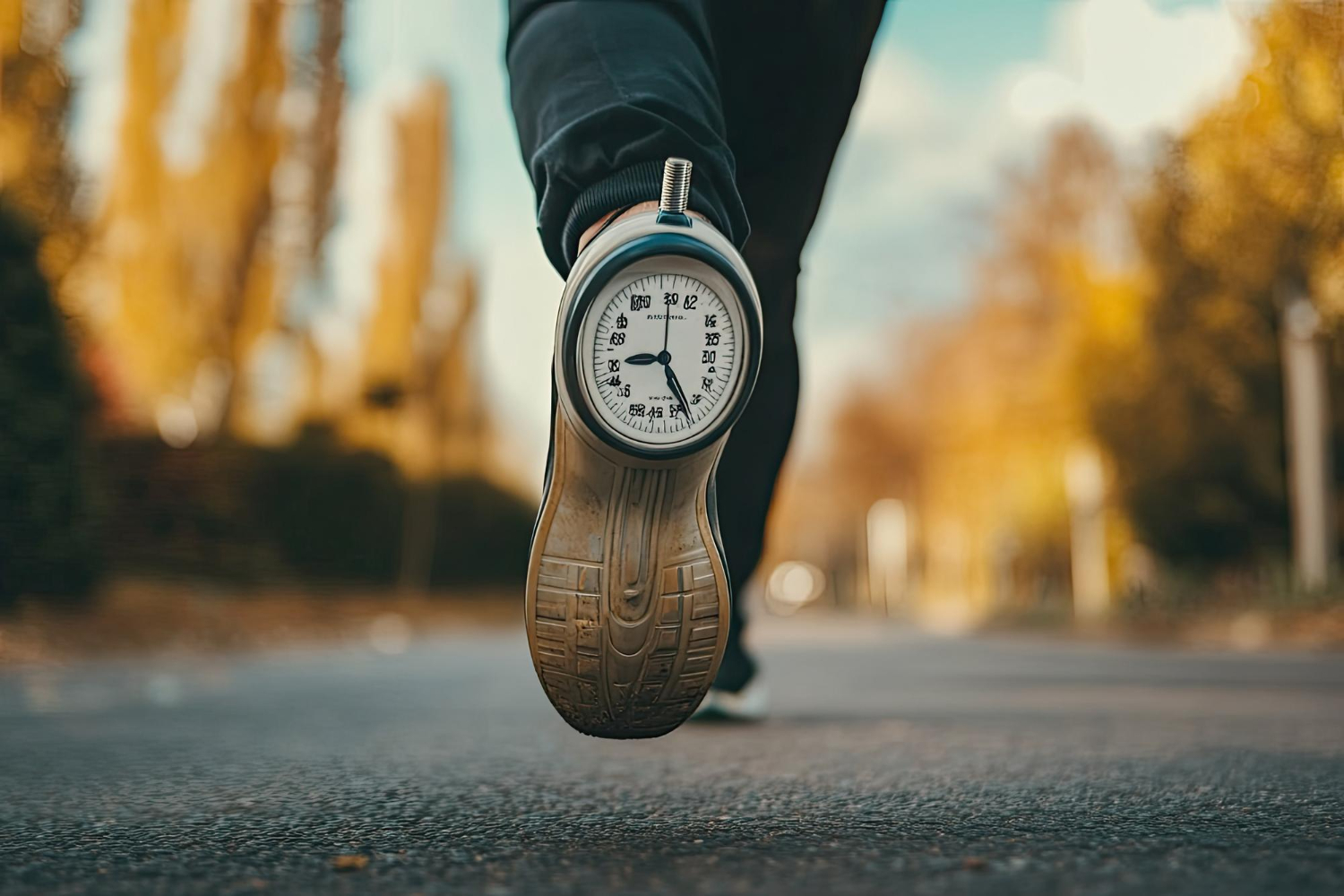
Not really, since one should understand that the concept of “steps” involves the idea of moving, while exercise recommendations focus on the time and intensity of physical activity.
Someone may achieve 10,000 steps by moving very little, while another person can cover the same distance during 30 minutes walking at a fast pace.
Both can be valuable. For overall health, adults are generally encouraged to combine aerobic activity with muscle-strengthening exercises rather than relying on a single metric.
Therefore, reaching a step target should complement—not replace—other forms of physical activity.
Your Ideal Step Count May Be Personal

The main reason for the popularity of the 10,000-step target can be found in its simplicity. However, health is seldom a generic issue that can be dealt with in a set manner. While a younger active person could find walking for more than 10,000 steps a piece of cake, an elderly person or someone returning to walking may find it useful to increase the number of steps from something less than that.
It is your baseline that can make all the difference here.
Rather than saying, “Do I have 10,000 steps today?”, it may be wiser to ask yourself, “Am I moving more than I used to?”
This will change the perception of your walking from being a test taken on a daily basis to being a habit that is easy to stick to.
How To Increase Your Daily Steps Naturally?

Performing physical activities daily does not require taking long walks every day. Try incorporating movement into activities you already do:
- You can move around a little during the breaks from work.
- Walk while talking on the phone instead of sitting still.
- When possible, choose stairs over elevators.
- Try to park your car further than necessary from your destination.
- Take a short after-meal walk.
- Take walks to shop rather than driving.
- Don’t forget to set reminders for moving if you are sitting for an extended time.
The main aim is to make physical activity a natural part of your day rather than something that requires extra motivation.
The Bottom Line: 10,000 Is A Target, Not A Magic Number

The history of the origin of the 10,000-step benchmark demonstrates that this figure was not established based on scientific findings.
This number appeared thanks to a campaign in Japan in the 1960s and later became popularized on a global level.
Research studies conducted in our times have revealed the complexity of this issue. It is possible to reap the benefits from being physically active without necessarily having to count 10,000 steps each day.
For one person, the benchmark of 10,000 steps could be inspiring and motivating, whereas for another individual, it could be an unrealistic goal. The main thing is that the crucial step is the one that helps you start moving.
FAQs
Q. Where did the idea of 10,000 steps originate from?
The 10,000-step goal was born from a marketing campaign in Japan in the 1960s, not a scientific study.
Q. Is it really necessary to walk 10,000 steps a day?
No, it isn’t necessary since lower numbers of steps offer their benefits too.
Q. Can walking 10,000 steps contribute to weight loss?
Walking may help to lose some weight, but it shouldn’t be considered the only factor that matters in the process of weight loss.
Q. Is it enough to walk 10,000 steps to follow a healthy lifestyle?
Walking is a good exercise, but overall fitness also requires sufficient intensity and strength training.
Q. But what if I can only walk 5,000 steps a day?
You will still be considered physically active, and it is a good start to increasing your level of activity gradually.
Q. Is every 10,000 steps equally good for the body?
Not necessarily because it is not only the number of steps that matters; the manner of walking is also important
Q. Can walking after meals count toward 10,000 steps?
Yes, as very short walks contribute greatly to the number of steps taken during the day.
Q. Is 10,000 steps advisable for all?
Not necessarily. Individualized training goals may be needed for those with medical problems, limited mobility, or poor physical ability.
(The article is written by Deepa Sarkar, Senior Medical Writer, and reviewed by Monalisa Deka, Deputy Manager, Clinical Health & Content, Medical Affairs)