







LDL Cholesterol - Direct
Also referred as
Direct LDL Cholesterol Test
+2
LDL-C Direct
Low-Density Lipoprotein Direct Assay

405+ booked recently

For men & women
Earliest reports in

12 hours

Contains

1 test

More offers available

Know more about this test

The LDL Cholesterol - Direct test is a blood test that measures the level of low-density lipoprotein (LDL) cholesterol, commonly known as “bad” cholesterol. This test helps assess the risk of heart disease and stroke by providing an accurate measurement of LDL levels in the blood.


Samples required
Blood

Find out
Why is this test booked?

Preparation for this test

Sample Collection
Who will collect your samples?
Conducted by
Tata 1mg Labs


Accredited
labs
Highly skilled
Phlebos
Verified
reports
Who will collect your samples?
Tata 1mg certified phlebotomists
Test Information is reviewed by: Dr. Swati Gupta (Anand), MD Lab Medicine, MBBS and written by Dr. Nitika Vashisht, MD Pathology, MBBS . The test details are for information purpose only. Consult a doctor before taking any test. Last updated on: 7th Oct 2026
Did you find information useful ?
 YES
YES  NO
NO 
Book a LDL Cholesterol - Direct test at home near me
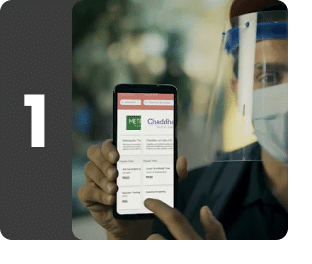
Easy online booking
Search for tests and packages, book your preferred time slot and enter your address for seamless at-home lab tests.
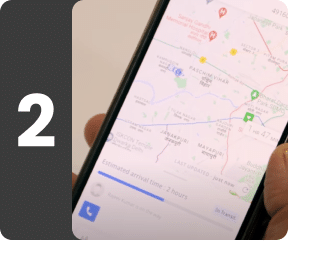
Live tracking of phlebotomist
Track our trained phlebotomist's real time location for seamless sample collection.
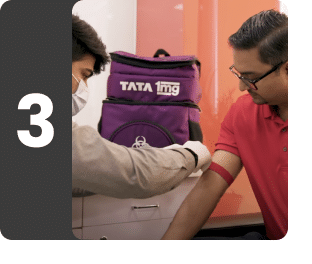
Safe Sample Collection
Our phlebotomists follow strict safety protocols to collect samples safely at home and on time.
Sample received at lab
Samples are transported securely to our accredited labs with world-class machines for testing by qualified experts.
Quick, Doctor-Verified Reports
Get doctor-approved reports via email and WhatsApp, with options for doctor follow-ups and AI insights.



References
- Pirahanchi Y, Sinawe H, Dimri M. Biochemistry, LDL Cholesterol. [Updated 2023 Aug 8]. In: StatPearls [Internet]. Treasure Island (FL): StatPearls Publishing; 2026 Jan. Available from:

- Langlois MR, Chapman MJ, Cobbaert C, Mora S, Remaley AT, Ros E, Watts GF, Borén J, Baum H, Bruckert E, Catapano A, Descamps OS, von Eckardstein A, Kamstrup PR, Kolovou G, Kronenberg F, Langsted A, Pulkki K, Rifai N, Sypniewska G, Wiklund O, Nordestgaard BG; European Atherosclerosis Society (EAS) and the European Federation of Clinical Chemistry and Laboratory Medicine (EFLM) Joint Consensus Initiative. Quantifying Atherogenic Lipoproteins: Current and Future Challenges in the Era of Personalized Medicine and Very Low Concentrations of LDL Cholesterol. A Consensus Statement from EAS and EFLM. Clin Chem. 2018 Jul;64(7):1006-1033. [Accessed 24 Mar. 2026].
- Wolska A, Remaley AT. Measuring LDL-cholesterol: what is the best way to do it? Curr Opin Cardiol. 2020 Jul;35(4):405-411. [Accessed 11 Mar. 2026].
Contains 1 test
Samples required
Preparations
Why is this test booked?
Available Offers