







C - Peptide, Postprandial
Also referred as
C-Peptide Test
+4
Postprandial C-Peptide Test
Insulin C-Peptide Test
Proinsulin C-Peptide Test
Connecting Peptide Insulin Test

357+ booked recently

For men & women
Earliest reports in

18 hours

Contains

1 test
Test price:
₹1079
Get it at ₹971 with coupon
Apply coupon 1MGNEWG during checkout


More offers available

Know more about this test

The C - Peptide, Postprandial is a blood test that measures the concentration of C-peptide (a byproduct released by the pancreas) after consuming a meal. This test helps assess how well your body produces insulin, crucial for diagnosing diabetes and monitoring insulin-related conditions.


Samples required
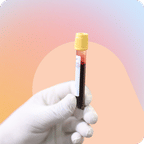
Blood

Find out
Why is this test booked?

Preparation for this test

Sample Collection
Who will collect your samples?
Conducted by

Tata 1mg Labs


Accredited
labs
Highly skilled
Phlebos
Verified
reports
Who will collect your samples?
Tata 1mg certified phlebotomists
Frequently booked together





Test Information is reviewed by: Dr. Swati Gupta (Anand), MBBS, MD Lab Medicine and written by Dr. Lipika Khurana, BDS, PGDHHM . The test details are for information purpose only. Consult a doctor before taking any test. Last updated on: 23rd Oct 2026
Did you find information useful ?
 YES (1)
 NO
NO 
Book a Stone Analysis, Kidney calculus test at home near me

Easy online booking
Search for tests and packages, book your preferred time slot and enter your address for seamless at-home lab tests.

Live tracking of phlebotomist
Track our trained phlebotomist's real time location for seamless sample collection.

Safe Sample Collection
Our phlebotomists follow strict safety protocols to collect samples safely at home and on time.

Sample received at lab
Samples are transported securely to our accredited labs with world-class machines for testing by qualified experts.
Quick, Doctor-Verified Reports
Get doctor-approved reports via email and WhatsApp, with options for doctor follow-ups and AI insights.



References
- C-peptide (Blood) [Internet]. USA: NIDDK; Apr.2023 [Accessed 28 Aug. 2024]. Available from:

- Leighton E, Sainsbury CA, Jones GC. A Practical Review of C-Peptide Testing in Diabetes. Diabetes Ther. 2017 Jun;8(3):475-487. [Accessed 28 Aug. 2024]. Available from:
- Venugopal SK, Mowery ML, Jialal I. Biochemistry, C Peptide. [Updated 2023 Aug 1]. In: StatPearls [Internet]. Treasure Island (FL): StatPearls Publishing; 2024 Jan-. Available from:
- C-peptide test [Internet]. Diabetes.co.uk; 29 Oct. 2023 [Accessed 28 Aug. 2024]. Available from:
- Maddaloni E, Bolli GB, Frier BM, Little RR, Leslie RD, Pozzilli P, Buzzetti R. C-peptide determination in the diagnosis of type of diabetes and its management: A clinical perspective. Diabetes Obes Metab. 2022 Oct;24(10):1912-1926. [Accessed 28 Aug. 2024]. Available from:
- Vollenbrock CE, Mul D, Dekker P, Birnie E, de Vries-Velraeds MMC, Boesten L, Groen J, Geelhoed-Duijvestijn PHLM, Aanstoot HJ, Wolffenbuttel BHR. Fasting and meal-stimulated serum C-peptide in long-standing type 1 diabetes mellitus. Diabet Med. 2023 Feb;40(2):e15012. [Accessed 28 Aug. 2024]. Available from:
- Sokooti S, Kieneker LM, Borst MH, Muller Kobold A, Kootstra-Ros JE, Gloerich J, van Gool AJ, Heerspink HJL, T Gansevoort R, Dullaart RPF, Bakker SJL. Plasma C-Peptide and Risk of Developing Type 2 Diabetes in the General Population. J Clin Med. 2020 Sep 17;9(9):3001. [Accessed 28 Aug. 2024]. Available from:
Contains 1 test
Samples required
Preparations
Why is this test booked?
Coupon details
Available Offers