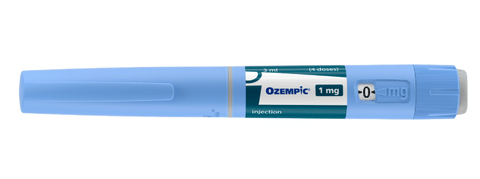
Ozempic 1mg Injection
Semaglutide (1mg)


Ozempic 1mg Injection is used to manage type 2 diabetes and reduce the risk of major cardiovascular events. It helps improve blood sugar levels, reduce the risk of heart attack, stroke, or cardiovascular death, and lower the risk of kidney disease progression in those with T2DM and chronic kidney disease.
Written By Dr. Swati Mishra, BDS,
Reviewed By Dr. Rajeev Sharma, MBA, MBBS,
Last updated on 18 Sep 2026 | 01:04 AM (IST)
Written By Dr. Swati Mishra, BDS,
Reviewed By Dr. Rajeev Sharma, MBA, MBBS,
Last updated on 18 Sep 2026 | 01:04 AM (IST)
₹2784
/ month (3 months)
with EMI on select credit cards
All EMI Plans
Price without EMI
₹8190
MRP ₹9100
10% off
(Inclusive of applicable taxes)
3 ml Injection


Payment, Returns & Expiry

Cash on delivery available
Get your product first, then pay us once you're sure about your order

We don’t take this product back
Products such as this are non-returnable to make sure that the next person doesn’t get a used item

Product expires after Sep, 2028
Expiry date may vary by batch. All batches have a 3-month shelf life from the date of dispatch.
Price Info
MRP may vary by batch. Any additional charges, including packaging, handling, shipping or delivery charges, will be clearly disclosed before purchase.
Save more with additional offers
10% cashback up to 200 on Min Transaction of Rs.1000, for first time users of Airtel Payments Bank.
10% cashback up to 200 on Min Transaction of Rs.1000, for first time users of Airtel Payments Bank.


Get up to ₹75 cashback on a minimum order value (MOV) of ₹499 and above, valid once per customer.
Get up to ₹75 cashback on a minimum order value (MOV) of ₹499 and above, valid once per customer.
Get up to ₹75 cashback on a minimum order value (MOV) of ₹499 and above, valid once per customer.
Get up to ₹75 cashback on a minimum order value (MOV) of ₹499 and above, valid once per customer.
10% cashback up to 200 on Min Transaction of Rs.1000, for first time users of Airtel Payments Bank.
10% cashback up to 200 on Min Transaction of Rs.1000, for first time users of Airtel Payments Bank.
Get up to ₹75 cashback on a minimum order value (MOV) of ₹499 and above, valid once per customer.
Get up to ₹75 cashback on a minimum order value (MOV) of ₹499 and above, valid once per customer.
Get up to ₹75 cashback on a minimum order value (MOV) of ₹499 and above, valid once per customer.
Get up to ₹75 cashback on a minimum order value (MOV) of ₹499 and above, valid once per customer.

Assured cashback up to ₹300*. T&C Apply*
Assured cashback up to ₹300*. T&C Apply*
General Information
Contains
Semaglutide (1mg)
Marketer
Novo Nordisk India Pvt Ltd
Storage
Store in a refrigerator (2 - 8°C). Do not freeze.
The content is shown in English



Safety advice

Alcohol
CONSULT YOUR DOCTOR
It is not known whether it is safe to consume alcohol with Ozempic 1mg Injection. Please consult your doctor.

Pregnancy
CONSULT YOUR DOCTOR
Ozempic 1mg Injection is not recommended during pregnancy as there is positive evidence of fetal risk based on animal studies. However, it may still be prescribed by a doctor in situations where the benefits outweigh the risks.

Breast feeding
UNSAFE
Ozempic 1mg Injection is unsafe to use during breastfeeding. Data suggests that the drug may cause toxicity to the baby.

Driving
CAUTION
Ozempic 1mg Injection may affect your driving ability if your blood sugar becomes too low or too high. Monitor your blood glucose and avoid driving if affected.
However, some people may experience dizziness during dose escalation. Do not drive if you experience dizziness.
However, some people may experience dizziness during dose escalation. Do not drive if you experience dizziness.
Kidney
SAFE IF PRESCRIBED
Ozempic 1mg Injection is safe to use in patients with kidney disease. No dose adjustment is recommended.
However, this medicine is not recommended in patients with severe renal impairment or end-stage renal disease due to limited clinical experience.
However, this medicine is not recommended in patients with severe renal impairment or end-stage renal disease due to limited clinical experience.

Liver
CAUTION
Ozempic 1mg Injection should be used with caution in patients with liver disease. Dose adjustment may be needed.
It is not recommended for patients with severe hepatic impairment.
It is not recommended for patients with severe hepatic impairment.
References
- Semaglutide [Prescribing Information]. Plainsboro, NJ: Novo Nordisk Inc.; 2025. [Accessed 11 Dec. 2025] (online) Available from:

- Semaglutide [Prescribing Information]. Bagsvaerd, Denmark: Novo Nordisk A/S; 2025. [Accessed 11 Dec. 2025 (online). Available from:
- European Medicines Agency: EPAR summary for the public. Semaglutide; 2018. [Accessed 03/12/2024] (online) Available from:
Related products
Products related to Ozempic 1mg Injection







100% genuine products

Safe & secure payments
No contact delivery
Fully sanitized facilities

Want to know more
We provide you with authentic, trustworthy and relevant information
Have issue with the content
Why we need a prescription?