






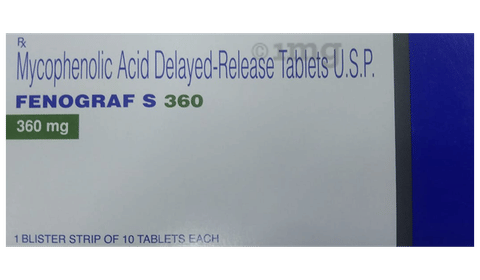
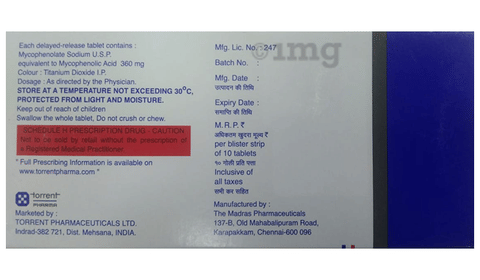

Fenograf S 360mg Tablet
Mycophenolate sodium (360mg)
 Genuine
Authenticity Assured
 Prescription
required
Fenograf S 360mg Tablet belongs to a group of medicines called immunosuppressants. It is used with other medicines to prevent your body from rejecting an organ (such as a kidney, heart, or liver) after a transplant. It works by weakening your body’s immune system, so it does not attack the transplanted organ.
Written By Dr. Lipika Khurana, PGDHHM, BDS,
Reviewed By Dr. Mekhala Chandra, MD, MBBS,
Last updated on 02 Oct 2026 | 01:01 AM (IST)
Written By Dr. Lipika Khurana, PGDHHM, BDS,
Reviewed By Dr. Mekhala Chandra, MD, MBBS,
Last updated on 02 Oct 2026 | 01:01 AM (IST)
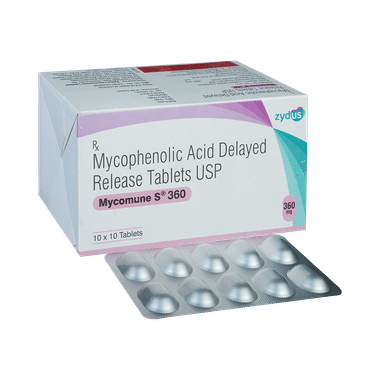
Available alternative from Zydus Cadila
Sold out
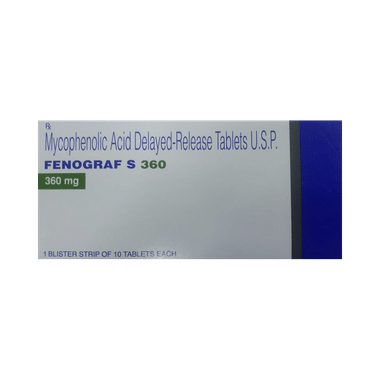
Fenograf S 360mg Tablet
strip of 10 tablets
₹912

Same composition
Mycomune-S 360 Tablet
strip of 10 tablets
by Zydus Cadila
Get by 7pm
₹1023
₹87.0 per tablet
₹870
order for
₹1200
Save more with additional offers

Get upto Rs.150 Cashback on minimum transaction of Rs.599/- with Mobikwik UPI (@ikwik).
Get upto Rs.150 Cashback on minimum transaction of Rs.599/- with Mobikwik UPI (@ikwik).


Get up to ₹75 cashback on a minimum order value (MOV) of ₹499 and above, valid once per customer.
Get up to ₹75 cashback on a minimum order value (MOV) of ₹499 and above, valid once per customer.
Get up to ₹75 cashback on a minimum order value (MOV) of ₹499 and above, valid once per customer.
Get up to ₹75 cashback on a minimum order value (MOV) of ₹499 and above, valid once per customer.
Get upto Rs.150 Cashback on minimum transaction of Rs.599/- with Mobikwik UPI (@ikwik).
Get upto Rs.150 Cashback on minimum transaction of Rs.599/- with Mobikwik UPI (@ikwik).
Get up to ₹75 cashback on a minimum order value (MOV) of ₹499 and above, valid once per customer.
Get up to ₹75 cashback on a minimum order value (MOV) of ₹499 and above, valid once per customer.
Get up to ₹75 cashback on a minimum order value (MOV) of ₹499 and above, valid once per customer.
Get up to ₹75 cashback on a minimum order value (MOV) of ₹499 and above, valid once per customer.

Assured cashback up to ₹300*. T&C Apply*
Assured cashback up to ₹300*. T&C Apply*
General Information

The content is shown in English



All substitutes for Fenograf S 360mg Tablet
For information purposes only. Consult a doctor before taking any medicine.
Mycept-S 360 Tablet
by Mankind Pharma Ltd
₹58.5/tablet
36% cheaper
Mycomune-S 360 Tablet
by Zydus Cadila
₹102.3/tablet
12% costlier
Mofilet -S 360 Tablet
by Emcure Pharmaceuticals Ltd
₹86.9/tablet
5% cheaper
Renodapt S 360 Tablet
by Eris Lifesciences Ltd
₹129.3/tablet
42% costlier
Mofetyl-S 360 Tablet
by RPG Life Sciences Ltd
₹112.5/tablet
23% costlier
Safety advice

Alcohol
CONSULT YOUR DOCTOR
It is not known whether it is safe to consume alcohol with Fenograf S 360mg Tablet. Please consult your doctor.

Pregnancy
UNSAFE
Fenograf S 360mg Tablet is highly unsafe during pregnancy. It can cause serious harm to the unborn baby, including birth defects and pregnancy loss. Do not use this medicine if you are pregnant or planning to become pregnant.

Breast feeding
UNSAFE
Fenograf S 360mg Tablet is unsafe to use during breastfeeding. Data suggests that the drug may cause toxicity to the baby.

Driving
UNSAFE
Fenograf S 360mg Tablet may cause side effects that could affect your ability to drive.
Kidney
CAUTION
Fenograf S 360mg Tablet should be used with caution in patients with severe kidney disease. Dose adjustment may be needed.

Liver
CAUTION
Fenograf S 360mg Tablet should be used with caution in patients with severe liver disease. Dose adjustment may be needed.

References
- Mycophenolic acid [Product Information]. East Hanover, New Jersey: Novartis Pharmaceuticals Corporation; 2026. [Accessed 13 Aug. 2026] (online) Available from:

- Mycophenolic acid [Package Insert]. Chennai, Tamil Nadu: The Madras Pharmaceuticals; 2021. [Accessed 25 Jul. 2023] (online) Available from:
- Mycophenolic acid [Product Monograph]. Dorval, Quebec: Novartis Pharmaceuticals Canada Inc.; 2018. [Accessed 13 Aug. 2026] (online) Available from: [Accessed 13 Aug. 2026] (online) Available from:
- Central Drugs Standard Control Organisation (CDSCO). Mycophenolic acid. [Accessed 06 Apr. 2019] (online) Available from:
Related products
Products related to Fenograf S 360mg Tablet
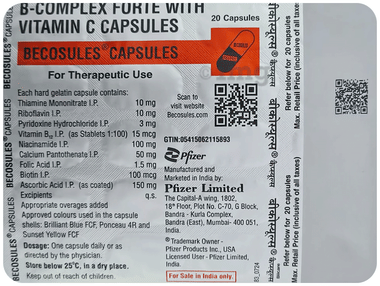


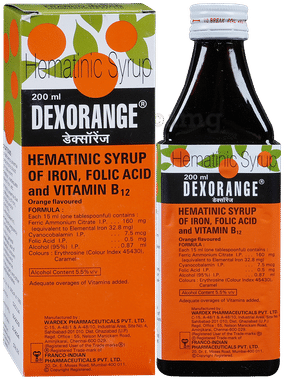


100% genuine products

Safe & secure payments

No contact delivery

Fully sanitized facilities

Want to know more
We provide you with authentic, trustworthy and relevant information
Have issue with the content
Why we need a prescription?

