








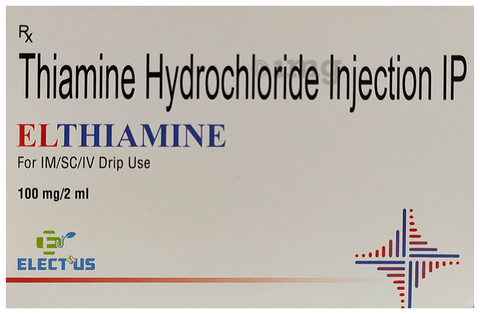
एलथायमिन इंजेक्शन
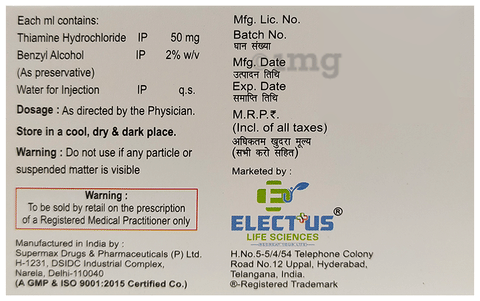
Thiamine (Vitamin B1) (50mg/ml)
 असली
असलीप्रामाणिकता सुनिश्चित
 डॉक्टर की पर्ची
ज़रूरी है
एलथायमिन इंजेक्शन विटामिन बी1 का सप्लीमेंट है. इसका उपयोग विटामिन बी1 की कमी के इलाज में किया जाता है. यह एक महत्वपूर्ण पोषक तत्व है जो शरीर को विभिन्न कार्य करने में मदद करता है. यह खराब भूख, अल्सरेटिव कोलाइटिस और चल रहे डायरिया सहित पाचन संबंधी समस्याओं में भी मददगार हो सकता है.
लेखक डॉ. सायेडा आफिया, एमबीए, बीडीएस,
समीक्षक डॉ. मेखला चंद्रा, एमडी, एमबीबीएस,
लास्ट अपडेटेड on 23 जन 2026 | 01:04 AM (Ist)
लेखक डॉ. सायेडा आफिया, एमबीए, बीडीएस,
समीक्षक डॉ. मेखला चंद्रा, एमडी, एमबीबीएस,
लास्ट अपडेटेड on 23 जन 2026 | 01:04 AM (Ist)
अतिरिक्त ऑफ़र के साथ अधिक बचत करें

एयरटेल पेमेंट्स बैंक के पहली बार उपयोग करने वाले यूज़र के लिए न्यूनतम ₹1000 के ट्रांज़ैक्शन पर 200 तक का 10% कैशबैक.
एयरटेल पेमेंट्स बैंक के पहली बार उपयोग करने वाले यूज़र के लिए न्यूनतम ₹1000 के ट्रांज़ैक्शन पर 200 तक का 10% कैशबैक.


₹499 और उससे अधिक की न्यूनतम ऑर्डर वैल्यू (MOV) पर ₹75 तक का कैशबैक पाएं, प्रति कस्टमर एक बार मान्य.
₹499 और उससे अधिक की न्यूनतम ऑर्डर वैल्यू (MOV) पर ₹75 तक का कैशबैक पाएं, प्रति कस्टमर एक बार मान्य.
₹499 और उससे अधिक की न्यूनतम ऑर्डर वैल्यू (MOV) पर ₹75 तक का कैशबैक पाएं, प्रति कस्टमर एक बार मान्य.
₹499 और उससे अधिक की न्यूनतम ऑर्डर वैल्यू (MOV) पर ₹75 तक का कैशबैक पाएं, प्रति कस्टमर एक बार मान्य.
एयरटेल पेमेंट्स बैंक के पहली बार उपयोग करने वाले यूज़र के लिए न्यूनतम ₹1000 के ट्रांज़ैक्शन पर 200 तक का 10% कैशबैक.
एयरटेल पेमेंट्स बैंक के पहली बार उपयोग करने वाले यूज़र के लिए न्यूनतम ₹1000 के ट्रांज़ैक्शन पर 200 तक का 10% कैशबैक.
₹499 और उससे अधिक की न्यूनतम ऑर्डर वैल्यू (MOV) पर ₹75 तक का कैशबैक पाएं, प्रति कस्टमर एक बार मान्य.
₹499 और उससे अधिक की न्यूनतम ऑर्डर वैल्यू (MOV) पर ₹75 तक का कैशबैक पाएं, प्रति कस्टमर एक बार मान्य.
₹499 और उससे अधिक की न्यूनतम ऑर्डर वैल्यू (MOV) पर ₹75 तक का कैशबैक पाएं, प्रति कस्टमर एक बार मान्य.
₹499 और उससे अधिक की न्यूनतम ऑर्डर वैल्यू (MOV) पर ₹75 तक का कैशबैक पाएं, प्रति कस्टमर एक बार मान्य.

₹300 तक का सुनिश्चित कैशबैक. शर्तें लागू*
₹300 तक का सुनिश्चित कैशबैक. शर्तें लागू*
सामान्य जानकारी
शामिल है
Thiamine (Vitamin B1) (50mg/ml)
मार्केटर
Elect-Us Life Sciences
स्टोरेज के निर्देश
25°c से कम तापमान पर स्टोर करें
प्रिजरवेटिव
Benzyl Alcohol
अपनी भाषा चुनें हिंदी



All substitutes for Elthiamine Injection
For information purposes only. Consult a doctor before taking any medicine.
सुरक्षा संबंधी सलाह

अल्कोहल
डॉक्टर की सलाह लें
इसकी जानकारी नहीं है कि एलथायमिन इंजेक्शन के साथ एल्कोहल का सेवन करना सुरक्षित है या नहीं. कृपया अपने डॉक्टर से सलाह लें.

गर्भावस्था
डॉक्टर की सलाह पर सुरक्षित
एलथायमिन इंजेक्शन को आमतौर पर गर्भावस्था के दौरान इस्तेमाल करने लिए सुरक्षित माना जाता है. जानवरों पर किए गए अध्ययनों में कोई हानिकारक प्रभाव नहीं देखा गया है. हालांकि, इंसानों पर इससे जुड़े सीमित अध्ययन उपलब्ध हैं.

स्तनपान
डॉक्टर की सलाह पर सुरक्षित
अब तक इंसानों पर हुए अध्ययनों के अनुसार, यह दवा माँ के दूध में बहुत कम मात्रा में पहुँचती है, इसलिए बच्चे पर इसके नुकसानदायक असर होने की संभावना काफी कम मानी जाती है.

ड्राइविंग
सेफ
एलथायमिन इंजेक्शन के सेवन से आपकी गाड़ी चलाने की क्षमता पर कोई असर नहीं पड़ता है.
किडनी
डॉक्टर की सलाह लें
किडनी की बीमारी से पीड़ित मरीजों में एलथायमिन इंजेक्शन के इस्तेमाल पर सीमित डेटा उपलब्ध है. कृपया अपने डॉक्टर से सलाह लें.

लिवर
डॉक्टर की सलाह लें
लीवर की बीमारी से पीड़ित मरीजों में एलथायमिन इंजेक्शन के इस्तेमाल पर सीमित डेटा उपलब्ध है.

संबंधित लैब टेस्ट
संदर्भ
- Briggs GG, Freeman RK, editors. A Reference Guide to Fetal and Neonatal Risk: Drugs in Pregnancy and Lactation. 10th ed. Philadelphia, PA: Wolters Kluwer Health; 2015. pp. 1352-53.
- ScienceDirect. Thiamine Nitrate. [Accessed 05 Apr. 2019] (online) Available from:

Related products
Products related to Elthiamine Injection




100% असली प्रोडक्ट

सुरक्षित भुगतान

संपर्क रहित डिलीवरी

पूरी तरह से सैनिटाइज्ड सुविधाएं

और अधिक जानना चाहते हैं
हम आपको प्रमाणिक, भरोसेमंद और प्रासंगिक जानकारी प्रदान करते हैं
क्या आपको यहां दी गई जानकारी से कोई समस्या है?
हमें डॉक्टर के पर्चे की आवश्यकता क्यों है?

