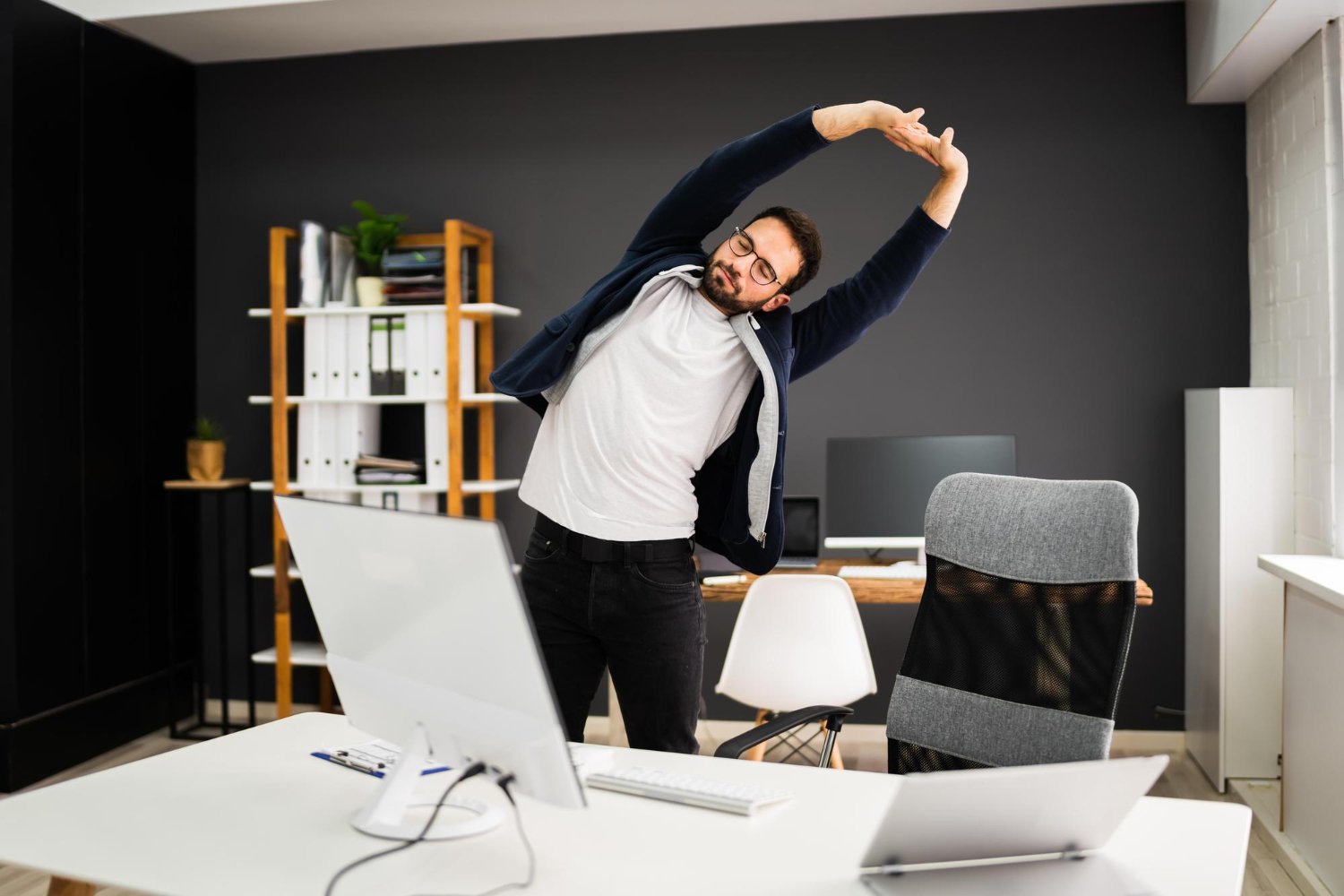
If you spend your day glued to an office chair staring at a screen, you already know the physical toll it takes. It usually starts as a slight tightness between the shoulders or a dull ache in the lower back that you brush off and promise to deal with later. By mid-afternoon, your shoulders creep up toward your ears, your neck feels impossibly stiff, and that familiar dull ache settles deep into your lower back. By the end of the day, even standing up from your chair feels like more effort than it should. Human bodies were simply not designed to sit in a rigid forward slump for eight hours a day. While you cannot exactly abandon your desk job, you do not have to accept chronic pain as a normal part of your routine. The good news is that ten minutes and a bit of floor space are enough to undo a lot of what a full workday does to your back with easy stretching exercises.
What Sitting All Day Actually Does to Your Spine
Most people assume back pain comes from lifting something heavy or making one wrong move. In reality, for desk workers, the problem is often the opposite: not moving enough. Staying seated for hours keeps several muscles in the same position for far longer than they were designed to be. The hip flexors gradually tighten, the chest starts rounding forward, and the muscles that support the back become less active.
Over time, this can change the way you naturally sit and stand, placing extra stress on the neck, shoulders, and lower back. It is why you may find yourself rubbing your stiff shoulders after a long meeting or struggling to straighten up after an afternoon at the computer. The discomfort usually builds slowly rather than appearing overnight, which is exactly what makes it so easy to ignore. Regular movement and stretching exercises can help interrupt that cycle before it becomes a bigger problem.
Easy Stretching Exercises For Desk Workers
Neck Stretch
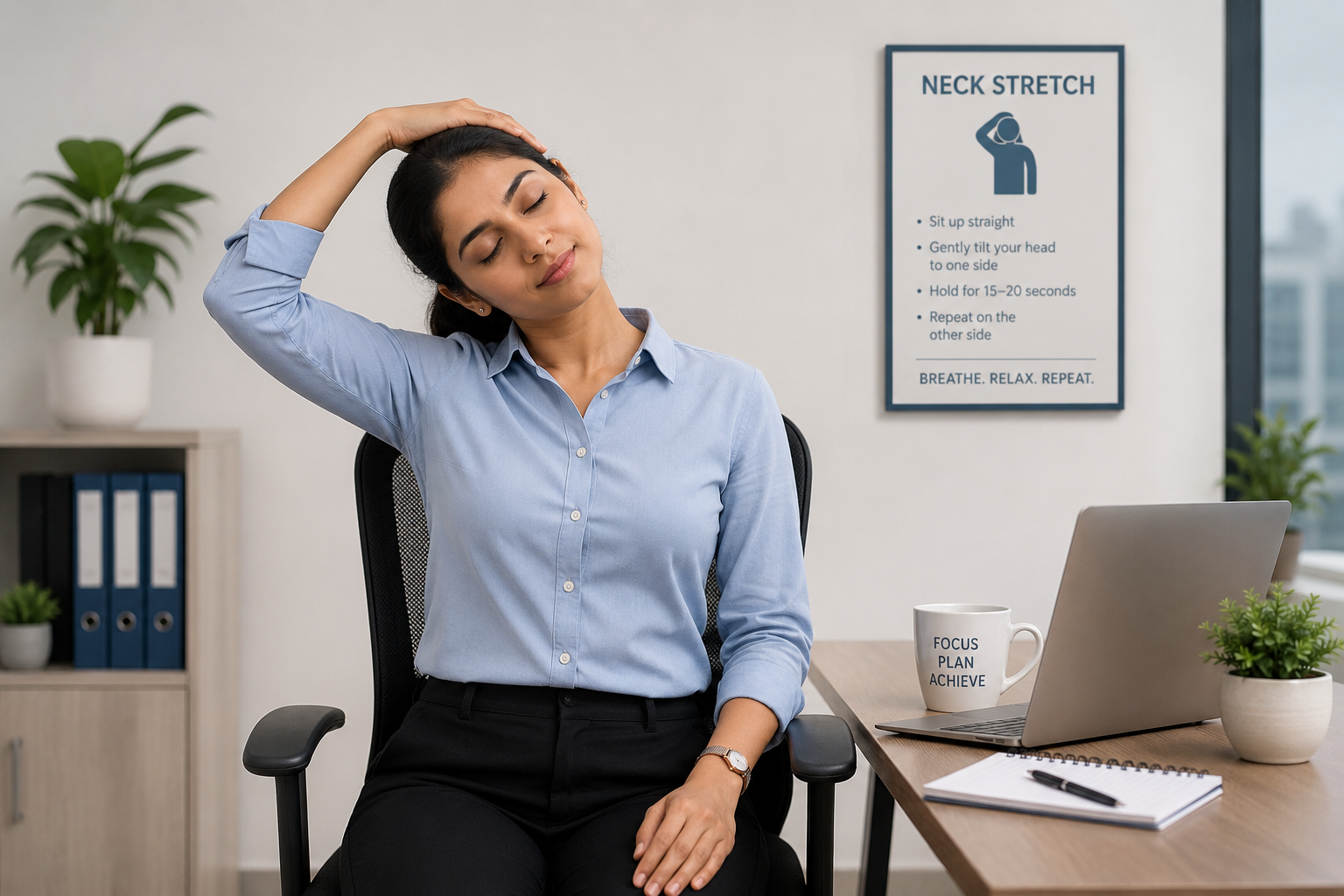
Hours spent looking at a laptop or desktop screen can leave your neck feeling surprisingly stiff. To ease that tension, sit upright and slowly tilt your head toward one shoulder until you feel a gentle stretch along the opposite side of your neck. Hold for 15 to 20 seconds without forcing the movement, then repeat on the other side. Avoid rolling your neck in full circles, as that may strain the joints. This simple stretch can be done several times throughout the workday.
Seated Spinal Twist
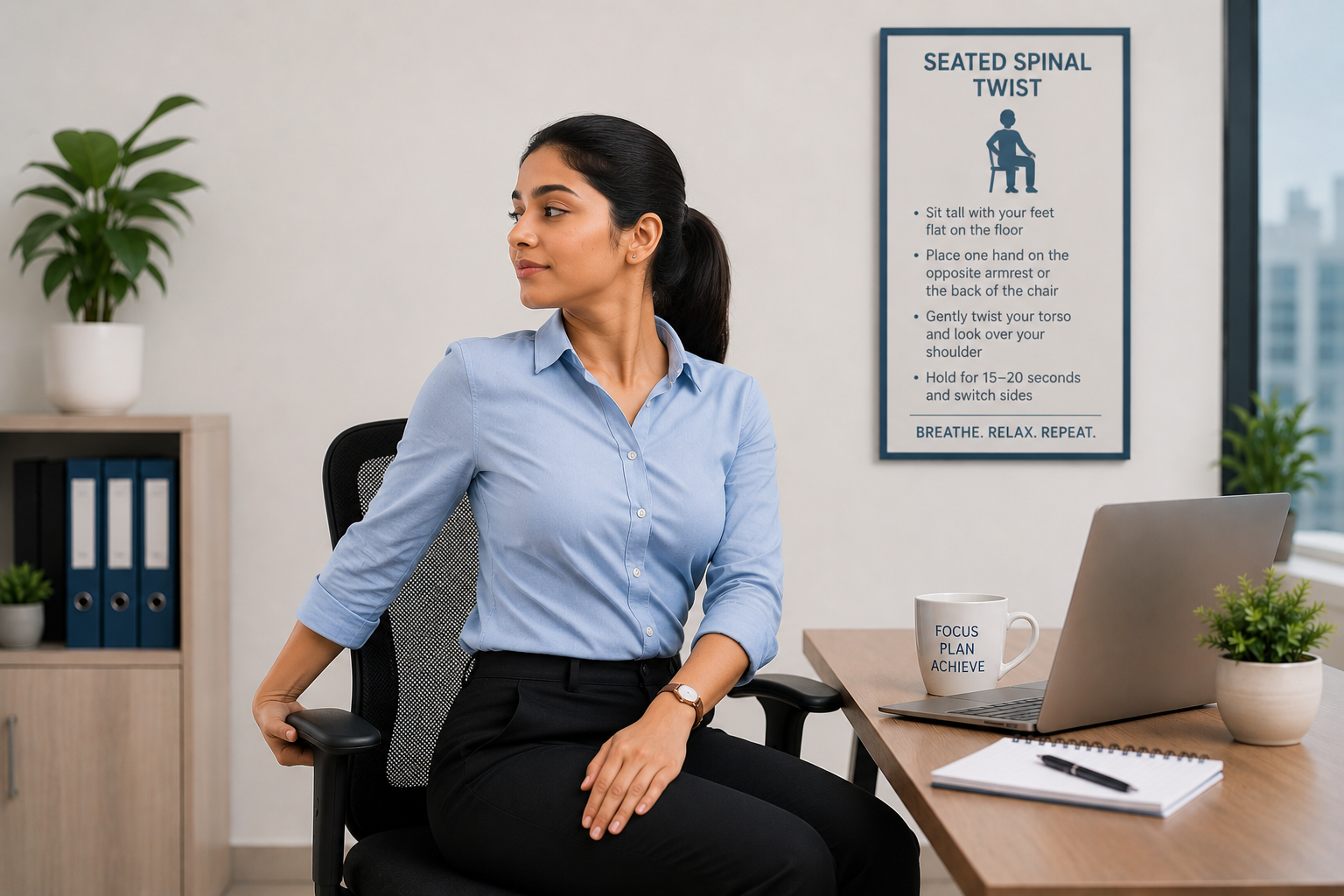
This one targets the lower back directly, which is usually where desk workers feel the most tension. Sit upright in your chair with both feet flat on the floor. Place your right hand on the outside of your left knee and gently rotate your torso to the left. Let your gaze follow the twist. Hold for 20 to 30 seconds, then switch sides. You should feel a gentle release along the side of your spine. Do not force the rotation further than it naturally goes.
Seated Chest Opener
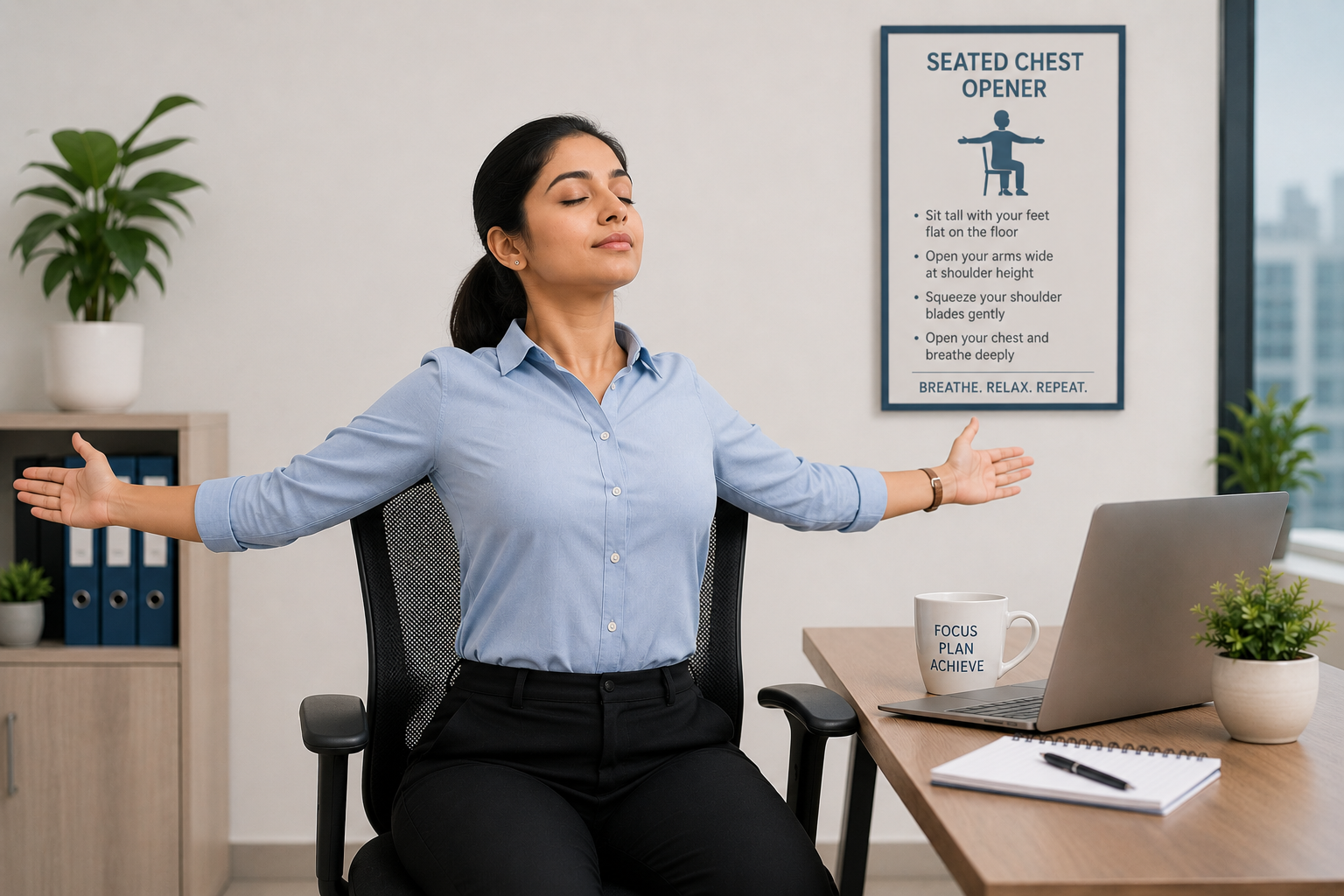
Slouching forward all day severely tightens your chest, making it nearly impossible to sit up straight. To fix this, slide forward to the edge of your chair and interlock your fingers right behind your lower back. Gently straighten your arms and push your chest outward while tilting your chin slightly upward toward the ceiling. You will feel an immediate opening across your collarbones and front shoulders. Hold this position for twenty to thirty seconds while taking deep breaths. This simple stretching exercise directly reverses the hunched posture we adopt while typing.
Cat-Cow Stretch
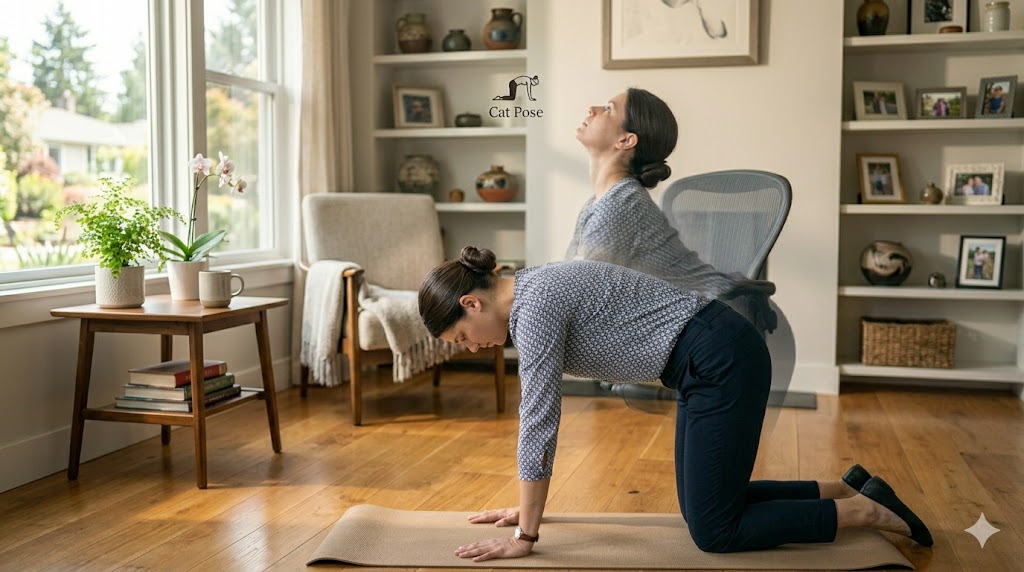
Borrowed from yoga, this one mobilises the entire spine and works well after long hours of staying still. Sit at the edge of your chair with your feet flat. Place both hands on your knees. As you inhale, arch your back and lift your chest upward, letting your belly drop. As you exhale, round your spine and tuck your chin toward your chest. Move slowly between the two positions for about 45 to 60 seconds. It sounds simple but the spinal movement here is genuinely therapeutic.
Seated Forward Fold
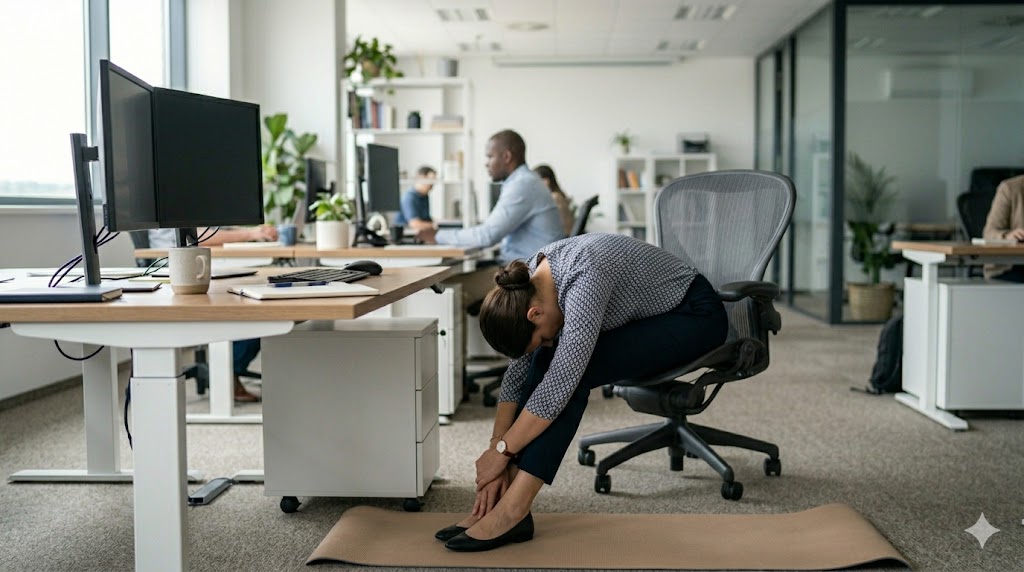
This one stretches the lower back and hamstrings together, both of which get stiff from prolonged sitting. Push your chair slightly back from your desk. With your feet flat on the floor, slowly hinge forward from the hips and let your upper body drop toward your thighs. Let your arms hang down or rest on your shins. Breathe slowly and hold for 30 seconds. Do not round aggressively or force yourself down. The goal is a gentle sustained stretch, not depth. Come back up slowly to avoid any sudden dizziness.
Standing Hamstring Stretch
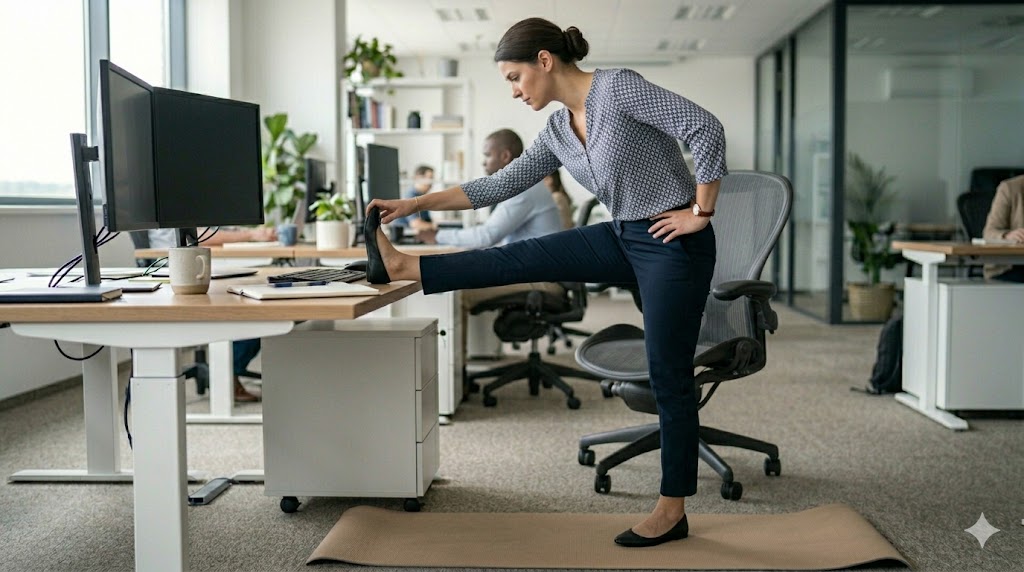
Tight hamstrings can sometimes pull on the pelvis and add extra strain to the lower back. To stretch them, place one heel on a low step or sturdy surface with the knee slightly bent. Keeping your back straight, lean forward from the hips until you feel a comfortable stretch along the back of your thigh. Hold for 20 to 30 seconds and repeat on the other side. Move slowly and avoid locking your knees during the exercise.
What to Keep in Mind Before You Start
You do not need any equipment for this routine, just enough floor space to lie down and do these stretching exercises. The best time to do it is either mid-afternoon when stiffness tends to peak, or right after your workday ends. If you are dealing with acute back pain, a recent spine injury, or have been advised rest by a doctor, skip this for now and check with a professional first. For everyone else, this is gentle enough to do daily.
Making Stretching Exercises a Habit To Last
The hardest part is not the stretching exercises, it is remembering to do it. Set a phone alarm for the same time every day, ideally mid-afternoon when your body is at peak stiffness. Pair it with something you already do, right after your lunch break or before you shut your laptop for the day. Ten minutes is genuinely not a lot to ask. Do it consistently for two weeks and your back will remind you on the days you skip it. That is usually when the habit sticks.
(The article is written by Ehsan Siddiqui, Team Lead and reviewed by Monalisa Deka, Deputy Manager, Clinical Health & Content, Medical Affairs)
Recommended Reads:
5 Common Causes Of Obesity You Should Be Aware Of!
6 Lesser-Known Evidence-Based Weight Loss Tips That Actually Work