
It’s 8 a.m. You’ve finished your paratha and chai, and you feel great. By 10:30, your stomach’s already growling. Sound familiar? The reason is often what’s on your plate. Protein and fiber both keep hunger in check, but they work in different ways. So which should you pick: a high-protein breakfast or a high-fiber breakfast? This protein vs fiber breakfast guide breaks down what each one does, what research says, and how to combine them so you stay fuller for longer. No fancy diet needed. Just a few smart swaps from your own kitchen. Let’s dig in.
Want more plate ideas for the older members at home?
Our guide on Nutritionist-Recommended Healthy Breakfast Ideas For Our Growing Parents shows you how to keep their mornings balanced and satisfying.
Why Breakfast Fullness Matters
Breakfast sets the tone for your day. When breakfast fullness is low, you reach for biscuits, namkeen, or a sugary chai before lunch. Those snacks add calories fast and leave you hungry again.
A filling breakfast helps you stay fuller, so you can focus on work, study, or chores. It also makes smarter food choices easier later in the day. Two nutrients do most of the work here: protein and fiber.
How a High-Protein Breakfast Helps You Stay Fuller
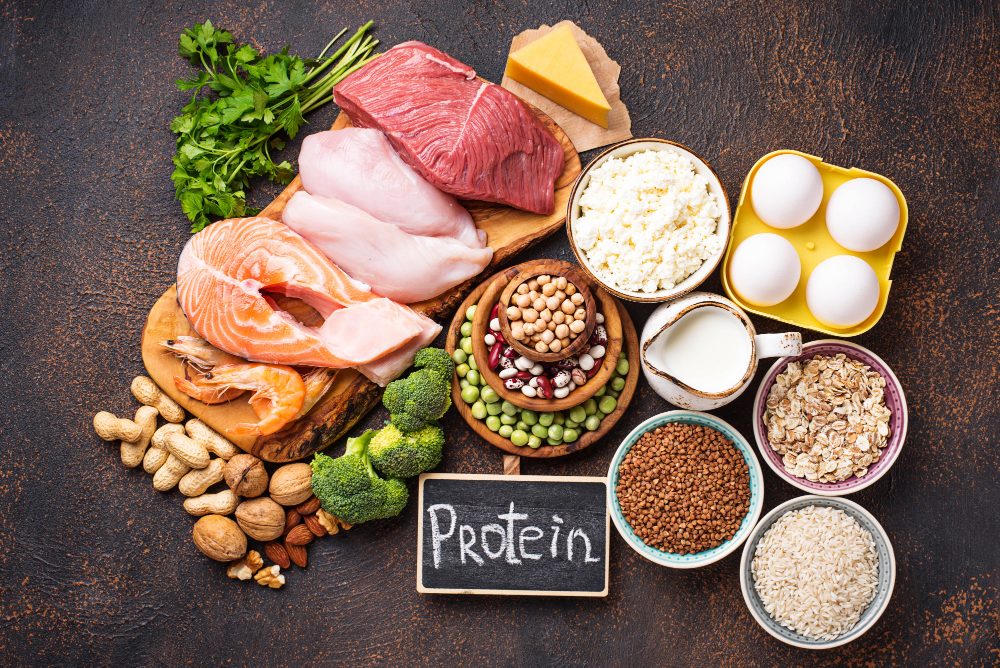
Protein digests slowly. It also nudges your gut to release hormones that tell your brain you’re full. A review of randomized trials found that protein cut hunger and raised fullness soon after eating. Ghrelin, the hunger hormone, dropped too [1].
In another trial, adults felt fuller after a high-protein egg breakfast than after a low-protein cereal breakfast [2].
That said, protein isn’t a magic fix. In one study, a high-protein meal raised fullness hormones, yet people ate about the same at their next meal [3]. Meal size and calories matter too.
How much protein do you need at your age?Adults aged 18 and above need 0.8 g of protein per kg of body weight each day [4]. So if you weigh 60 kg, that’s about 48 g a day. Growing children and pregnant or breastfeeding women need a little more per kg, because their bodies need extra protein for growth, pregnancy, or milk production. In calorie terms, protein should make up about 10% to 35% of your daily calories [4]. Why it’s worth it: Protein repairs and builds muscle, and it keeps hunger low between meals. |
Wondering how much protein you need at breakfast to stay fuller for longer?
Read this: Protein at Breakfast: How Much Do You Actually Need to Stay Full?
How a High-Fiber Breakfast Helps You Stay Full

Fiber works like a slow-release sponge. Soluble fiber, found in oats, barley, beans, and fruit, turns thick and gel-like in your stomach. That slows stomach emptying, so food stays put longer [5].
Oats show this well. Their beta-glucan fiber gets thick during digestion, which slows nutrient absorption and triggers fullness signals [6]. Insoluble fiber from whole wheat and vegetables adds bulk and keeps your gut moving.
So a high-fiber breakfast adds bulk and helps you stay fuller for longer. Whole grains, fruits, and vegetables also bring vitamins and minerals along.
How much fiber do you need every day?The target changes by country and age group. Still, 25–30 g or more a day is widely recommended for adults [7]. Why it’s worth it: Fiber supports digestion, adds bulk so you stay fuller, and helps release energy steadily [8]. |
Want to add more fiber to your morning meal?
Read: 6 Easy Ways to Get 10 Grams of Fiber at Breakfast
Important Note: Keep in mind that your protein and fiber needs can differ from person to person and from one health condition to another. Your doctor or dietitian can tell you what suits you best.
Protein vs Fiber Breakfast: What Do the Studies Say?
Researchers have tested breakfast fullness head-on, and the results lean slightly toward protein. In one trial, protein-rich egg breakfasts, with or without added fiber, left people eating less at lunch than a low-protein cereal did [2]. Researchers also say the combined effect of protein and fiber still needs more study [9]. So in a protein vs fiber breakfast showdown, neither wins every time.
Protein vs. Fiber: What’s Best for Breakfast?
So, which one should you pick? The honest answer is both. A protein vs fiber breakfast isn’t a fight. These two nutrients work as a team. Protein helps build muscle and keeps hunger low. Fiber supports digestion and gives you steady energy.
The simplest approach is to pair them. Add fiber-rich foods like fruit, vegetables, and whole grains to protein-rich foods like eggs, curd, or paneer. That gives you a high-protein breakfast and a high-fiber breakfast on one plate, plus vitamins and minerals. Together, they improve your breakfast fullness, and help you stay fuller for longer.
For more ideas, check out these healthy breakfast options.
Read Here: 10 Steamed Healthy Breakfast Recipes for a Nourishing Start to the Day
Final Takeaway: Put Both on Your Plate
Protein and fiber both help you stay fuller, just in different ways. Protein keeps hunger low, while fiber adds bulk and slows digestion. So skip the protein vs fiber breakfast debate and pair them in one meal. Start small: add an egg, a bowl of curd, or a fruit to your usual breakfast, and notice how long you stay full.
FAQs
Is it better to have a high-fiber or high-protein breakfast?
Neither wins alone. A high-protein breakfast often gives a stronger fullness boost, while a high-fiber breakfast adds bulk and slows digestion. For the best breakfast fullness, combine both.
Which keeps you fuller longer, fiber or protein?
Protein often keeps you fuller longer in short-term studies [1][2]. Soluble fiber also slows stomach emptying [4]. For a breakfast that keeps you full for longer, combine protein and fibre. Together, they can help you feel satisfied and curb hunger between meals.
Are 2 eggs enough protein for breakfast?
Two large eggs give about 12 grams of protein. That’s a decent start. Add curd, paneer, or dal chilla, plus fruit or veggies, to make the meal more filling.
Is it better to eat fiber first or protein?
Studies on food order mostly track blood sugar, not fullness. The evidence for fullness is limited. Having both in the same meal matters more than the order.
Does fiber flatten your stomach?
Not directly. Fiber doesn’t burn belly fat. A high-fiber breakfast can ease constipation and curb overeating, which may help your stomach feel less bloated. Add it slowly, because too much too fast can cause gas and bloating.
What are 5 signs you need more protein?
Constant hunger soon after meals, tiredness, muscle weakness, brittle hair or nails, and slow healing can hint at low protein. These signs also fit other health problems, so talk to a doctor before you change your diet.
Is 1 banana a day enough fiber?
One medium banana gives roughly 2–3 grams of fiber. That’s a good start, but not enough for the whole day. Pair it with oats, nuts, or seeds, and add dal, veggies, and whole grains through the day.
References:
1. Effect of short- and long-term protein consumption on appetite and appetite-regulating gastrointestinal hormones: a systematic review and meta-analysis of randomized controlled trials. Physiol Behav. 2020;226:113123. [cited 2026 Oct 5]. Available from: https://pubmed.ncbi.nlm.nih.gov/32768415/
2. The effects of the combination of egg and fiber on appetite, glycemic response and food intake in normal weight adults: a randomized, controlled, crossover trial. Int J Food Sci Nutr. 2016;67(6):723-31. Available from: [cited 2026 Oct 5]. https://pubmed.ncbi.nlm.nih.gov/27306734/
3. High protein intake stimulates postprandial GLP1 and PYY release. Obesity (Silver Spring). 2013;21(8):1602-7. [cited 2026 Oct 5]. Available from: https://pubmed.ncbi.nlm.nih.gov/23666746/
4. Protein RDA source. [cited 2026 Oct 5]. Available from: https://pubmed.ncbi.nlm.nih.gov/26797090/
5. Unravelling the effects of soluble dietary fibre supplementation on energy intake and perceived satiety in healthy adults: evidence from systematic review and meta-analysis of randomised-controlled trials. Nutrients. [cited 2026 Oct 5]. Available from: https://pmc.ncbi.nlm.nih.gov/articles/PMC6352252/
6. Dietary fiber and satiety: the effects of oats on satiety. Nutr Rev. [cited 2026 Oct 5]. Available from: https://pmc.ncbi.nlm.nih.gov/articles/PMC4757923/
7. Dietary fibre intake source. [cited 2026 Oct 5]. Available from: https://pmc.ncbi.nlm.nih.gov/articles/PMC9298262/
8. Dietary fiber benefits source. Nutrients. 2020;12(10):3209. [cited 2026 Oct 5]. Available from: https://pmc.ncbi.nlm.nih.gov/articles/PMC7589116/
9. Effects of dietary protein and fiber at breakfast on appetite, ad libitum energy intake at lunch, and neural responses to visual food stimuli in overweight adults. Nutrients. 2016;8(1):21. [cited 2026 Oct 5]. Available from: https://pmc.ncbi.nlm.nih.gov/articles/PMC4728635/
(The article is written by Nancy Dixit, Associate Manager, Clinical Health & Content, Medical Affairs, and reviewed by Monalisa Deka, Deputy Manager, Clinical Health & Content, Medical Affairs.)
Recommended Reads:
Protein-Rich Breakfast Recipes for Vegetarians That Take Under 15 Minutes
Science-Backed Benefits of Eating a High-Protein Breakfast Daily