
Be honest with yourself for a second.
How many times have you walked out of the house on a regular weekday without sunscreen because you thought you weren’t going to be in the sun long enough for it to matter? Or skipped it on a cloudy day because the sun wasn’t even out? Or applied it once in the morning and assumed you were covered for the rest of the day?
Most of us have done all three. And most of us don’t realise that sun damage is happening during all of those moments. The morning commute. The walk to get lunch. Sitting next to a window at work. These aren’t beach days, but the UV radiation doesn’t know that.
Sun damage is cumulative and silent. It doesn’t hurt when it’s happening. It shows up years later as dark spots, uneven skin tone, fine lines, and in serious cases, skin cancer. Nearly 90 % of all skin cancers are caused by UV exposure, and most of them are entirely preventable. [1]
The good news is that protecting your skin doesn’t require a complicated routine or expensive products. It requires a few consistent habits. Here’s what dermatologists actually recommend.
1. Wear Sunscreen Every Morning, Not Just On Beach Days
Let’s get this one out of the way first because everything else on this list builds on it.
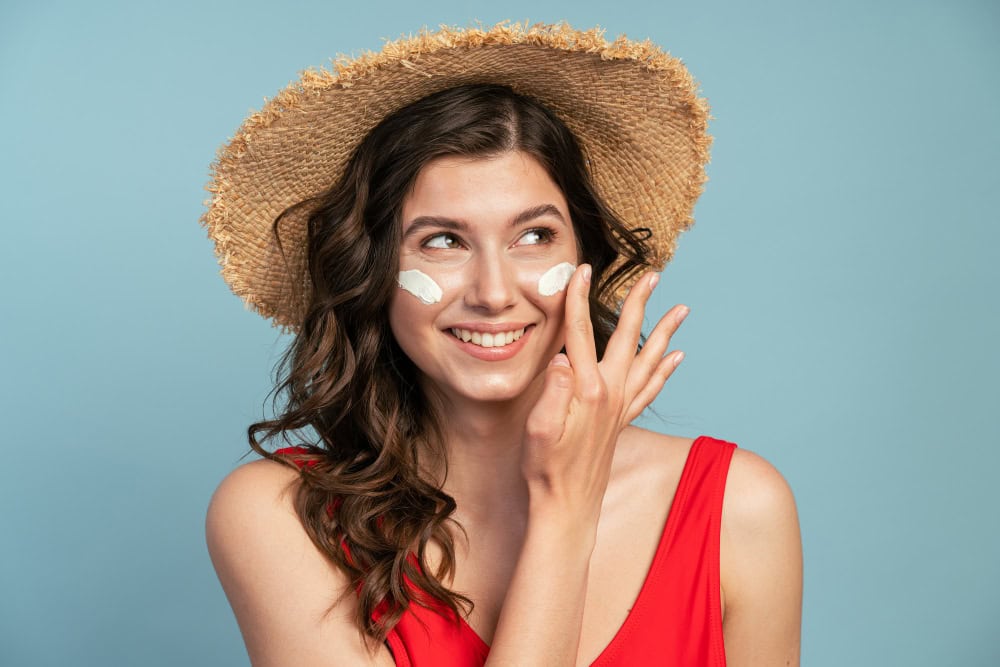
Sunscreen is your most important line of defence against UV damage. Not your vitamin C serum. Not your antioxidant moisturiser. Sunscreen. Applied every single morning, regardless of whether you think you’ll be outside, regardless of the weather, regardless of your skin tone.
The label needs to say broad-spectrum. That means it protects against both UVA and UVB rays. UVB rays cause the sunburn you can see and feel. UVA rays are sneakier. They penetrate deeper into the skin, break down collagen and elastin, and cause the kind of damage that shows up as premature ageing and dark spots years later. [2] A sunscreen that only protects against one type is doing half a job.
SPF 30 is the minimum. It blocks around 97 % of UVB rays, and that’s genuinely enough for most everyday situations. The jump from SPF 30 to SPF 50 only adds about one more % of protection. What matters significantly more than chasing a higher number is applying enough of it and reapplying it when it wears off.
Here’s the part most people get wrong. You need about half a teaspoon for your face alone and around two tablespoons for your full body. That’s considerably more than the thin layer most people apply. [3] And reapplication every two hours when you’re outdoors isn’t optional. One morning, the application wears off. It gets absorbed, rubbed off, and sweated through. A survey found that only one in three people who use sunscreen actually reapply it. [4] That’s a lot of unprotected afternoon skin.
One more thing. Cloudy days are not safe days. Up to 80 % of UV rays come through cloud cover. You absolutely can and do get sun damage when it’s overcast.
2. Stay Out Of The Sun Between 10 am And 4 pm When You Can

The sun doesn’t deliver the same intensity of UV radiation all day. It peaks between 10 am and 4 pm, and that’s when your skin is most vulnerable to any given amount of time outdoors. [5]
This isn’t about becoming nocturnal or never going outside. It’s about being a little strategic. If you can do your outdoor errands before 10 am or after 4 pm, do it. If you’re at the park or a market during peak hours, find shade when you can. A tree, an umbrella, an awning. It doesn’t eliminate UV exposure completely because reflected UV from concrete, sand, and water still reaches your skin, but it makes a meaningful difference in how much direct radiation you’re absorbing.
In Indian cities where summer temperatures regularly cross 40 degrees, avoiding peak sun hours is good advice for your skin and your overall well-being at the same time. Heat exhaustion and UV damage both peak during the same window of the day.
3. Think Of Protective Clothing As Sunscreen That Never Wears Off
Here’s something dermatologists say that surprises people. Clothing is actually more reliable sun protection than sunscreen.
It doesn’t wear off. It doesn’t need to be reapplied. It doesn’t depend on whether you applied enough. A dermatologist puts it plainly. Before reaching for sunscreen, the first step to protecting your skin from the sun is wearing protective clothing. [6]
A long-sleeved shirt made from a tightly woven fabric blocks UV effectively. A wide-brimmed hat that covers your face, ears, and the back of your neck protects areas that are genuinely difficult to apply sunscreen to consistently. Sunglasses with UV protection protect both your eyes and the thin, delicate skin around them.
In India, we’ve actually always had access to excellent natural sun protection in the form of dupattas, cotton stoles, and lightweight long-sleeved kurtas. They’ve been doing this job for generations. The key is the weave. Hold the fabric up to a light source. If light comes through easily, UV rays are too. A tighter weave blocks significantly more.
UPF-rated clothing takes the guesswork out entirely. UPF 50 clothing blocks 98 % of UV radiation and doesn’t require any reapplication. For anyone spending long periods outdoors, it’s worth investing in a few pieces.
4. Use A Vitamin C Serum In The Morning
Sunscreen blocks UV rays from reaching your skin. But some UV radiation still gets through. And beyond UV, everyday pollution, blue light from screens, and environmental stress also generate free radicals on your skin throughout the day. Free radicals damage skin cells, break down collagen, and accelerate ageing. Antioxidants are what your skin uses to neutralise them.
Vitamin C is the most studied and most effective topical antioxidant for this purpose. When applied in the morning before your sunscreen, it actively boosts your skin’s defence against UV-induced oxidative damage. Research has found that vitamin C combined with vitamin E and ferulic acid provides significantly stronger protection against UV damage than sunscreen alone. [7]
It also fades existing dark spots and stimulates collagen production. So it’s simultaneously protecting your skin from new damage while working to reverse what’s already there. That’s a lot of work from one product applied once a day.
Apply it after cleansing on slightly damp skin. Let it absorb for about thirty seconds before moving to moisturiser and sunscreen. Keep the bottle away from heat and direct light because vitamin C oxidises quickly, and a serum that’s turned orange or smells sharp has already lost most of its potency.
5. Stop Forgetting These Spots
Dermatologists consistently see sun damage concentrated in the same overlooked places. Not because these areas get more sun, but because people consistently forget to protect them.
The ears. Surprisingly common site for skin cancer and is almost universally forgotten when applying sunscreen. The back of the neck. Gets direct sun exposure every time you’re outside, and most people never think about it. The tops of the hands and feet. Thin skin, frequent sun exposure, and almost never protected. The lips. No melanin, very thin skin, and completely unprotected on most people’s faces every single day. An SPF 30 lip balm costs very little and takes three seconds to apply.
The left side of the face is one that surprises people. It gets significantly more UV exposure from driving because sidecar windows, unlike windshields, don’t filter UVA rays. Dermatologists see this pattern in patients regularly. More sun damage, more precancerous changes, consistently on the left side of the face. [6]
And if you part your hair in the same place every day, that parting line is getting direct UV exposure every time you step outside. A light dusting of SPF powder along the parting or simply wearing a hat addresses it completely.
6. Get A Skin Check With A Dermatologist Once A Year
Everything above is about preventing damage from happening. This one is about catching it early if it does.
Dermatologists recommend annual full-body skin checks to look for changes in moles, spots, or patches of skin that might indicate precancerous activity or early-stage skin cancer. When caught early, most skin cancers are highly treatable. When they’re caught late, the outcomes are considerably more serious and the treatment significantly more difficult.
This matters for Indian skin tones too. There’s a persistent misconception that darker skin doesn’t develop skin cancer. It does. And because it’s less expected, it often gets diagnosed later, which is exactly when it becomes more dangerous. [4]
A skin check also gives you a clear picture of existing sun damage, pigmentation, and how your skin is ageing, so you can make informed decisions about what to address and how. Dermatologists have access to treatments, including prescription retinoids, chemical peels, IPL, and laser therapies that can genuinely reverse visible sun damage that no skincare product at home can touch. [1]
If you’ve never had a full skin check, make an appointment this year. It takes about fifteen minutes, and the information you get from it is worth considerably more than that.
One Last Thing
None of these habits requires you to change your entire life. Sunscreen takes thirty seconds to apply. A vitamin C serum adds one extra step to your morning. Seeking shade is something you can do without changing your plans at all.
The cumulative effect of doing these things consistently over months and years is genuinely significant. Your skin will look better, age more slowly, and be meaningfully less at risk for serious conditions. That’s a worthwhile return on a very small daily investment.
Start with the sunscreen. Do that one consistently and build from there.
FAQs
Do I really need sunscreen if I’m indoors all day?
If you sit near a window, yes. UVA rays penetrate glass and cause cumulative skin damage even indoors. If your workspace gets direct sunlight through a window, sunscreen is worth applying.
Can I use makeup with SPF instead of a separate sunscreen?
No, not as a replacement. Most people don’t apply enough makeup to achieve the SPF stated on the label. Use a proper sunscreen as your base and treat the SPF in your makeup as a small bonus on top of that.
Is SPF 100 significantly better than SPF 50?
Not really. SPF 50 blocks around 98 % of UVB rays. SPF 100 blocks about 99 %. The difference is genuinely tiny. Consistent application and reapplication of SPF 30 or 50 outperforms a single morning application of SPF 100.
Can people with darker skin tones skip sunscreen?
No. Darker skin has more melanin which provides some natural protection but it doesn’t make anyone immune to UV damage, hyperpigmentation, or skin cancer. Every skin tone benefits from daily broad-spectrum sun protection.
How do I know if I already have sun damage?
Common signs are dark spots, uneven skin tone, rough or leathery texture, fine lines, and redness. A dermatologist can properly assess the extent of existing damage and recommend treatments appropriate for your specific skin.
Does wearing sunscreen block vitamin D absorption?
Sunscreen reduces but doesn’t completely block vitamin D synthesis. Most people get enough incidental UV exposure through everyday activities to maintain adequate levels. If you’re genuinely concerned about deficiency, a vitamin D supplement is a safer solution than skipping sun protection.
References
- Magovern A. How to treat sun damaged skin. Dermstore Medical Advisory Board. 2024.
- Skin Cancer Foundation. Sunscreen FAQs. Updated 2024.
- American Academy of Dermatology Association. How to apply sunscreen. Updated 2024.
- Vanchinathan V. Board-certified dermatologist shares 5 tips for Skin Cancer Awareness Month. American Academy of Dermatology. May 2024.
- Johns Hopkins University. How to protect yourself from the sun. Adapted from Hopkins Medicine. June 2021.
- Singer C. A dermatologist’s guide to sun protection. Craig Singer MD Dermatology. May 2024.
- Murray JC, Burch JA, Streilein RD, Iannieri MA, DeAngelis RA, Pinnell SR. A topical antioxidant solution containing vitamins C and E stabilized by ferulic acid provides protection for human skin against damage caused by ultraviolet irradiation. J Am Acad Dermatol. 2008;59(3):418-25.