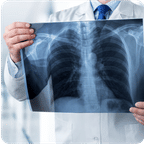
X - Ray Clavicle Right SIde


The X - Ray Clavicle Right SIde is a painless and non-invasive imaging procedure used to examine the right clavicle (collarbone) and surrounding structures. It helps identify fractures, dislocations, or other issues like pain, swelling, or limited mobility in the shoulder area.



Understanding X - Ray Clavicle Right SIde
The clavicle (collarbone) is a thin bone that helps keep your shoulder in the correct position as you move. The X - Ray Clavicle Right SIde utilizes electromagnetic waves and ionizing radiation to create images of the right collarbone. During the test, you will be asked to stand or sit comfortably while positioning your right shoulder near the X-ray machine.
The X - Ray Clavicle Right SIde test is recommended when you have severe pain or swelling in the shoulder and difficulty moving the arm or shoulder. It may also be done if your doctor suspects an injury related to the clavicle, deformity or abnormality, dislocation or fracture of the clavicle, degenerative joint disease or osteoarthritis, or hereditary or developmental conditions affecting the clavicle. The X - Ray Clavicle Right SIde test may also help monitor the healing process after a surgical procedure or treatment.
Wear loose and comfortable clothing for this test, and remove any metal objects, such as jewelry. Inform your doctor/technician if you have a pacemaker or are pregnant to discuss safety precautions and alternative imaging options.
Interpretation of the test results requires professional expertise. Do not self-medicate, and always consult your doctor to understand the implications of the test findings. The insights from the X - Ray Clavicle Right SIde test are crucial in identifying various abnormalities of the shoulder area and providing guidance on the right course of treatment.
Disclaimer: You must visit your nearest Tata 1mg partnered lab facility for radiology tests.
What does X - Ray Clavicle Right SIde measure?
The X - Ray Clavicle Right SIde measures various aspects of the right clavicle (collarbone) and its surrounding structures, including size, shape, alignment, and integrity. The imaging procedure involves positioning the body between the machine that produces the X-rays and a plate that creates the image digitally or with X-ray film. The test is performed to identify fractures, inflammation, or joint issues affecting the collarbone, which may have resulted from trauma or overuse.
The X - Ray Clavicle Right SIde can reveal fractures, dislocations, signs of infection, abnormal bone lesions in the clavicular area, or joint issues affecting the collarbone, which may have resulted from trauma or overuse. It allows doctors/radiologists to diagnose conditions affecting the clavicle and make informed decisions regarding treatment options and management of musculoskeletal conditions.
FAQs related to X - Ray Clavicle Right SIde
- X- Rays [Internet]. NIH; Jun. 2022. [Accessed 06 Nov. 2024]. Available from:
- Austin LS, O'Brien MJ, Zmistowski B, Ricchetti ET, Kraeutler MJ, Joshi A, Fenlin JM Jr. Additional x-ray views increase decision to treat clavicular fractures surgically. J Shoulder Elbow Surg. 2012 Oct;21(10):1263-8. [Accessed 06 Nov. 2024]. Available from:
- Hyland S, Charlick M, Varacallo M. Anatomy, Shoulder and Upper Limb, Clavicle. [Updated 2023 Jul 24]. In: StatPearls [Internet]. Treasure Island (FL): StatPearls Publishing; 2024 Jan-. Available from:
Other tests
- X - Ray Right Shoulder AP & LAT Views
- Ultrasound Right Shoulder
- X - Ray Left Shoulder Joint AP & LAT Views
- MRI Both Shoulder Joints
- MRI Right Shoulder with Contrast (MRI)
- X - Ray Left Shoulder AP & Axial Views
- X - Ray Shoulder Joint AP - Left SIde
- X - Ray Right Shoulder AP & Axial Views
- X - Ray Both Shoulders AP View
- Ultrasound Left Shoulder
- CBC (Complete Blood Count)
- FBS (Fasting Blood Sugar)
- Thyroid Profile Total (T3, T4 & TSH)
- HbA1c (Glycosylated Hemoglobin) Test
- PPBS (Postprandial Blood Sugar)
- Lipid Profile
- Vitamin D (25-Hydroxy)
- Urine R/M (Urine Routine & Microscopy)
- Coronavirus Covid -19 test- RT PCR
- LFT (Liver Function Test)
- KFT (Kidney Function Test)
- TSH (Thyroid Stimulating Hormone) Ultrasensitive
- ESR (Erythrocyte Sedimentation Rate)
- Uric Acid, Serum
- Vitamin B12
- CRP (C-Reactive Protein), Quantitative
- Urine C/S (Urine Culture and Sensitivity)
- Serum Electrolytes
- Serum Calcium test
- Serum Creatinine
- Diabetes Screening (HbA1C & Fasting Sugar)
- KFT with Electrolytes (Kidney Function Test with Electrolytes)
- Cholesterol - Total
- Hb (Hemoglobin)
- Complete Hemogram (CBC & ESR)