







Dehydroepiandrosterone Sulphate
Also referred as
DHEA-Sulphate

2,315+ booked recently

For men & women
Earliest reports in

18 hours

Contains

1 test
Test price:
₹989
Upto 15% extra discount with coupon
Min. order value: ₹5000 | Coupon: 1MGNEWG


More offers available

Know more about this test

A Dehydroepiandrosterone Sulphate test evaluates the level of dehydroepiandrosterone sulphate (DHEAS), a steroid hormone produced by the adrenal glands, two small glands located above your kidneys. This hormone plays a role in producing male and female sex hormones. This test is often done to assess adrenal function and diagnose certain conditions related to hormone imbalance.


Samples required
Blood

Find out
Why is this test booked?

Preparations
No special preparation is required.

Sample Collection
Who will collect your samples?
Conducted by
Tata 1mg Labs


Accredited
labs
Highly skilled
Phlebos
Verified
reports
Who will collect your samples?
Tata 1mg certified phlebotomists



Frequently booked together








Test Information is reviewed by: Dr. Hitesh Tiwari, MD Pathology, MBBS and written by Dr. Lipika Khurana, BDS, PGDHHM . The test details are for information purpose only. Consult a doctor before taking any test. Last updated on: 2nd Oct 2026
Did you find information useful ?
 YES (2)
 NO (1)
Book a Dehydroepiandrosterone Sulphate test at home near me

Easy online booking
Search for tests and packages, book your preferred time slot and enter your address for seamless at-home lab tests.

Live tracking of phlebotomist
Track our trained phlebotomist's real time location for seamless sample collection.
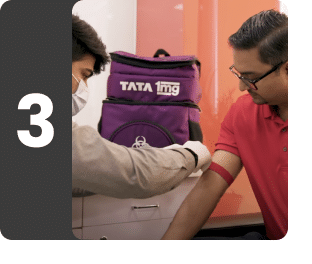
Safe Sample Collection
Our phlebotomists follow strict safety protocols to collect samples safely at home and on time.
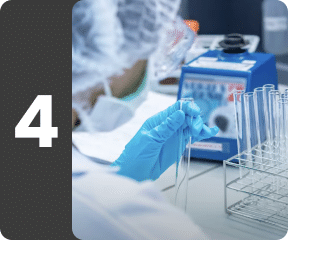
Sample received at lab
Samples are transported securely to our accredited labs with world-class machines for testing by qualified experts.

Quick, Doctor-Verified Reports
Get doctor-approved reports via email and WhatsApp, with options for doctor follow-ups and AI insights.



References
- Dehydroepiandrosterone and Dehydroepiandrosterone Sulfate [Internet]. Rochester, NY: University of Rochester Medical Center; [Accessed 13 Feb. 2024]. Available from:

- Neunzig J, Bernhardt R. Dehydroepiandrosterone sulfate (DHEAS) stimulates the first step in the biosynthesis of steroid hormones. PLoS One. 2014 Feb 21;9(2):e89727. [Accessed 13 Feb. 2024]. Available from:
- Li K, Liang S, Shi Y, Zhou Y, Xie L, Feng J, Chen Z, Li Q, Gan Z. The Relationships of Dehydroepiandrosterone Sulfate, Erectile Function and General Psychological Health. Sex Med. 2021 Aug;9(4):100386. [Accessed 13 Feb. 2024]. Available from:
- Tang J, Chen LR, Chen KH. The Utilization of Dehydroepiandrosterone as a Sexual Hormone Precursor in Premenopausal and Postmenopausal Women: An Overview. Pharmaceuticals (Basel). 2021 Dec 29;15(1):46. [Accessed 13 Feb. 2024]. Available from:
- Goldman N, Glei DA. Sex differences in the relationship between DHEAS and health. Exp Gerontol. 2007 Oct;42(10):979-87. [Accessed 13 Feb. 2024]. Available from:
- Iliev DI, Braun R, Sánchez-Guijo A, Hartmann M, Wudy SA, Heckmann D, Bruchelt G, Rösner A, Grosser G, Geyer J, Binder G. Very High Dehydroepiandrosterone Sulfate (DHEAS) in Serum of an Overweight Female Adolescent Without a Tumor. Front Endocrinol (Lausanne). 2020 May 6;11:240. [Accessed 13 Feb. 2024]. Available from:
- Leowattana W. DHEAS as a new diagnostic tool. Clin Chim Acta. 2004 Mar;341(1-2):1-15. [Accessed 13 Feb. 2024]. Available from:
Contains 1 test
Samples required
Preparations
Why is this test booked?
Coupon details
Available Offers