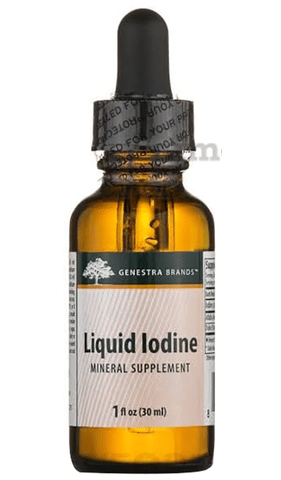

IODINE LIQUID is an antiseptic and disinfectant agent. It is used in the treatment and prevention of infection in minor wounds, cuts, small burns, abrasions and other infected skin conditions, and pre-/post-surgical skin preparation.
IODINE LIQUID is for external use only. You should always use it exactly as your doctor has told you. The affected area should be clean and dry before applying. Wash your hands thoroughly before and after applying. Use it regularly to get the most benefit from it. Do not use more than you need, as it will not clear your condition faster, and some side effects may be increased. You can help this medication work better by keeping the affected areas clean.
IODINE LIQUID is generally safe when used in the right dose and duration. Rarely, skin reactions may occur (e.g., which can appear in the form of pruritus, erythema, small blisters or similar manifestations). Consult your doctor if you experience any side effects that persist or worsen.
Avoid direct contact with your eyes. In case of direct contact, wash your eyes with plenty of water. If you have thyroid disease, kidney problems, are pregnant or breastfeeding, or need to treat a large area, talk to your doctor before use.
Uses of Iodine Liquid
Treatment and prevention of Wound infection
Benefits of Iodine Liquid
In Treatment and prevention of Wound infection
IODINE LIQUID is a versatile antiseptic that is used for the treatment and prevention of infection. IODINE LIQUID kills and prevents the growth of infection-causing microbes, thereby preventing abrasions, cuts, and wounds, or any break in the skin from getting infected. The antiseptic effect is caused due to the slow release of iodine. Keep the affected area clean and use the medicine as prescribed by your doctor.
Side effects of Iodine Liquid
Most side effects do not require any medical attention and disappear as your body adjusts to the medicine. Consult your doctor if they persist or if you’re worried about them
Common side effects of Iodine
No common side effects seen
How to use Iodine Liquid
Use this medicine in the dose and duration as advised by your doctor. Check the label for directions before use.
How Iodine Liquid works
IODINE LIQUID is an antiseptic applied on skin, which is infected or is likely to get infected. It works by slowly releasing iodine, which kills or prevents the growth of infectious microorganisms.
Safety advice
Alcohol
No interaction found/established

Pregnancy
CONSULT YOUR DOCTOR
The safety of IODINE LIQUID during pregnancy has not been established. There are no adequate and well-controlled studies in pregnant women, and animal data on reproductive toxicity are insufficient. Your doctor will weigh the benefits and any potential risks before prescribing.
Breast feeding
CONSULT YOUR DOCTOR
IODINE LIQUID may be unsafe to use during breastfeeding. Limited human data suggests that the drug may pass into the breastmilk and harm the baby. It should be used only if the expected benefit outweighs the potential risk. Please consult your doctor.
Driving
No interaction found/established

Kidney
No interaction found/established

Liver
No interaction found/established
What if you forget to take Iodine Liquid?
If you miss a dose of IODINE LIQUID, apply it as soon as you remember. However, if it is almost time for your next dose, skip the missed dose and resume your regular schedule. Do not apply extra to make up for a missed dose.
All substitutes
For informational purposes only. Consult a doctor before taking any medicines.
No substitutes found for this medicine
Quick tips
IODINE LIQUID can be used on minor cuts, small burns, abrasions and ulcers as advised.
Avoid using on very large or deep wounds or severe burns without medical supervision.
Do not use for longer than recommended.
Avoid contact with eyes and mouth.
Stop and seek help if you develop rash, swelling, breathing problems or signs of thyroid issues (weight change, sweating, lack of energy).
Fact Box
Chemical Class
Iodophor compounds
Habit Forming
No
Therapeutic Class
DERMA
Action Class
Antiseptics & Disinfectants
Patient concerns
he fell down while playing 1 week back and sustained a wound of size 7*5 cm on the knee it didnt heal completely and there is a yellowish colour in the middle he limps while walking due to pain. what should be done besides cleaning with povidone iodine
Dr. Pushkar Mani
Physician
Cant guide in injury without examinationConsult physician locally plz
My mom underwent Radio Active Iodine Therapy last Friday. Can she consume normal quantity of Salt ? We use Tata Salt at home. Also can she use Himalaya shampoo and Himalaya toothpaste
Dr. Pushkar Mani
Physician
That I can't answer u need to consult ur doctor for all that advise
I am suffering from hypothyroidism. I am taking thyronorm 50 mcg. Please suggest some good supplement tablet for zinc selenium copper iodine vitamins E ,A and C and B6, B12. I am trying to conceive . My tsh is 4.56
I had c section on 20 Feb 2017 and now since few days I see sticky discharge which usually use to be transparent previously is at times blood filled Why so? Shall I see my gyne for this?
Dr. Megha Tuli
Obstetrics and Gynaecology
Please visit your doctor for a check yp to rule out any infection of the wound site
i am suffering from pepliary carcinoma thyroid & got operated twice for the same. Last time when i operated in may 2015. I have been treated through nuclear medicine, iodine therapy. But by TG remains on higher side(like 200+), what could be the Reason.
After shaving armpits and bottom area, the skin pricks and burns and becomes red in that area. What ointment can we use as after shave? Any oral medicine?
Dr. Souvik Sardar
Dermatology
Use fusiwal cream twice daily for 7daysBefore shaving armpits wipe the area with spirit followed by povidone iodine 10% (betadine) and lastly spirit againLet it get dryUse a sharp new blade all the d time. dnt draw the razor more than 2 times alwyz shave along the direction of hair growth not against it
IODINE LIQUID can be used as an antiseptic to treat or prevent infections in wounds such as ulcers, small burns or cuts, and other minor injuries. However, take special care if you are applying IODINE LIQUID on open large wounds or where the skin is broken like burns. The reason being there may be a risk of excessive absorption of iodine in the blood which may increase to toxic levels.
Will IODINE LIQUID solution stain my skin or clothes?
IODINE LIQUID has a natural golden brown color which stains the area where you have applied it. It does not however, permanently stain your skin and fingernails. The stain can be easily removed from your clothes with soap and water.
Where can IODINE LIQUID be used?
IODINE LIQUID is used in the treatment and prevention of infection in wounds including cuts, small areas of burn, ulcers and minor injuries. Do not use this medicine on deep wounds and clean surgical wounds.
How should IODINE LIQUID solution be applied to an injury?
Clean the affected area and apply a small amount of the medicine to it. You can then cover it with a sterile bandage. You can apply this medicine 1 to 3 times daily. However, do not use it for longer than 1 week.
Can IODINE LIQUID affect thyroid function?
Using IODINE LIQUID over a large area or for a long time may sometimes cause problems with your thyroid. Symptoms of thyroid dysfunction include weight loss, increased appetite, sweating, lack of energy, and weight gain. If you notice such symptoms, contact your doctor who may advise you to stop using IODINE LIQUID.
Tata 1mg's sole intention is to ensure that its consumers get information that is expert-reviewed, accurate and trustworthy. However, the information contained herein should NOT be used as a substitute for the advice of a qualified physician. The information provided here is for informational purposes only. This may not cover everything about particular health conditions, lab tests, medicines, all possible side effects, drug interactions, warnings, alerts, etc. Please consult your doctor and discuss all your queries related to any disease or medicine. We intend to support, not replace, the doctor-patient relationship.
References
Briggs GG, Freeman RK, editors. A Reference Guide to Fetal and Neonatal Risk: Drugs in Pregnancy and Lactation. 10th ed. Philadelphia, PA: Wolters Kluwer Health; 2015. p. 1139.