








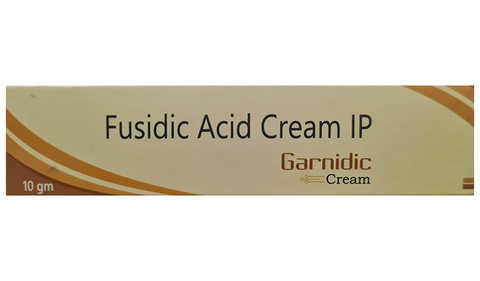
Garnidic Cream
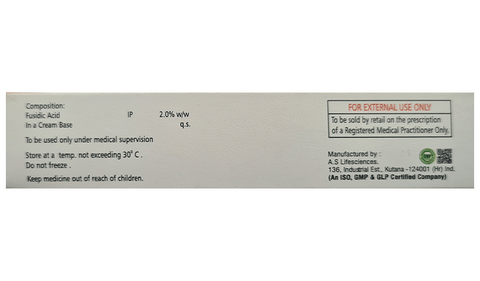
Fusidic Acid (2.0% w/w)


Garnidic Cream is a topical antibiotic used to treat bacterial skin infections, such as impetigo and infected dermatitis. It alleviates infection symptoms by preventing the further growth of the responsible microorganisms.
Written By Dr. Sakshi Jain, MS, BDS,
Reviewed By Dr. Rajeev Sharma, MBA, MBBS,
Last updated on 14 Apr 2026 | 04:20 PM (IST)
Written By Dr. Sakshi Jain, MS, BDS,
Reviewed By Dr. Rajeev Sharma, MBA, MBBS,
Last updated on 14 Apr 2026 | 04:20 PM (IST)
Save more with additional offers

Get up to ₹75 cashback on a minimum order value (MOV) of ₹499 and above, valid once per customer.
Get up to ₹75 cashback on a minimum order value (MOV) of ₹499 and above, valid once per customer.

Get up to ₹75 cashback on a minimum order value (MOV) of ₹499 and above, valid once per customer.
Get up to ₹75 cashback on a minimum order value (MOV) of ₹499 and above, valid once per customer.

Flat Rs.150 on a Min Transaction of Rs.1000.
Flat Rs.150 on a Min Transaction of Rs.1000.
Get up to ₹75 cashback on a minimum order value (MOV) of ₹499 and above, valid once per customer.
Get up to ₹75 cashback on a minimum order value (MOV) of ₹499 and above, valid once per customer.
Get up to ₹75 cashback on a minimum order value (MOV) of ₹499 and above, valid once per customer.
Get up to ₹75 cashback on a minimum order value (MOV) of ₹499 and above, valid once per customer.
Flat Rs.150 on a Min Transaction of Rs.1000.
Flat Rs.150 on a Min Transaction of Rs.1000.

Assured cashback up to ₹300*. T&C Apply*
Assured cashback up to ₹300*. T&C Apply*
General Information

The content is shown in English



Safety advice

Alcohol
No interaction found/established

Pregnancy
SAFE IF PRESCRIBED
Garnidic Cream is safe to use during pregnancy. Most studies have shown low or no risk to the developing baby.

Breast feeding
SAFE IF PRESCRIBED
Available human data suggest that the drug does not pass into breast milk in clinically significant amounts and is unlikely to harm the infant.

Driving
No interaction found/established

Kidney
No interaction found/established

Liver
No interaction found/established

Related lab tests
References
- Fusidic acid. Thornhill, Ontario: LEO Pharma Inc; 2008. [Accessed 28 Mar. 2019] (online) Available from:

- Fusidic acid [EMC Label]. Hurley, Berkshire: Leo Laboratories Limited; 1983 [revised 10 Aug. 2018] (online) Available from:
- Central Drugs Standard Control Organisation (CDSCO). [Accessed 28 Mar. 2019] (online) Available from:
- Fusidic acid [Product Monograph]. Thornhill, Ontario: LEO Pharma Inc.; 2017. [Accessed 26 Feb. 2025] (online) Available from:
Related products
Products related to Garnidic Cream





100% genuine products

Safe & secure payments

No contact delivery

Fully sanitized facilities

Want to know more
We provide you with authentic, trustworthy and relevant information
Have issue with the content
Why we need a prescription?
