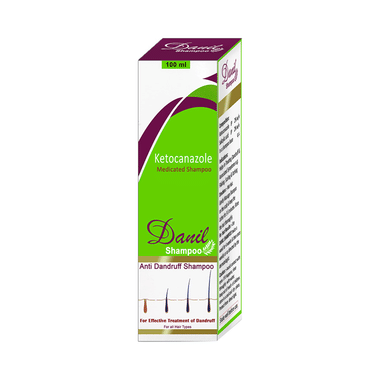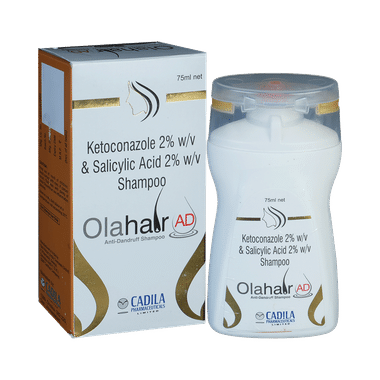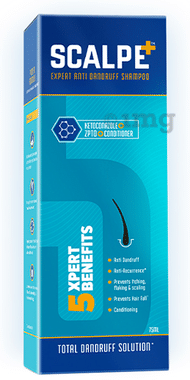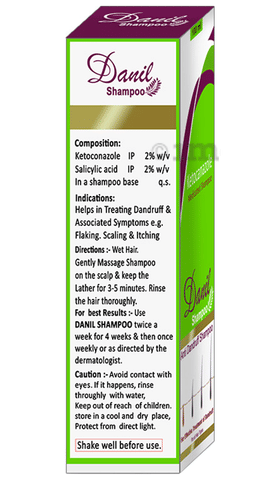

Danil Shampoo is a combination medicine used in the treatment of dandruff which also provides a shiny appearance to the hair. It works by killing the microorganisms that cause infection.
Danil Shampoo is only meant for external use and should be used as advised by your doctor. This medicine should be used regularly to get the most benefit from it. Do not use more than you need it will not clear your condition faster and may only increase the side effects. Make sure not to leave it on scalp for more than of 5 minutes. If it gets into your eyes, nose, or mouth rinse with water.
This medicine is usually safe, however, it may cause burning, irritation, itching, and redness at the application site. These side effects are usually mild and self-limiting. Serious side effects are rare.
It is not likely that other medicines you take by mouth or injection will affect the way this medicine works, but talk to your doctor before using it if you have recently used another medicine for the dandruff. The medicine is not recommended for pregnant women. Pregnant and breastfeeding mothers should consult their doctors before using this medicine.
Danil Shampoo is used to control dandruff and gives relief from scaly, flaky, and itchy scalp. It is an antifungal and works by killing and stopping the growth of fungus that causes dandruff. Massage it on your scalp and leave it on for a few minutes before rinsing it off. Make sure you complete the full course of treatment. This will ensure that the infection is completely cured and prevent it from returning.
Side effects of Danil Shampoo
Most side effects do not require any medical attention and disappear as your body adjusts to the medicine. Consult your doctor if they persist or if you’re worried about them
Common side effects of Danil
Application site reactions (burning, irritation, itching and redness)
How to use Danil Shampoo
Use it as advised by your doctor or check the label for directions before use.
How Danil Shampoo works
Danil Shampoo is a combination of two medicines: Ketoconazole and Salicylic Acid which treat dandruff. Ketoconazole is an antifungal. It works by stopping the growth of dandruff-causing fungi by preventing them from forming their own protective covering. Salicylic Acid is a keratolytic medicine which helps break down the skin clumps on scalp and relieves itching and flaking associated with dandruff.
Safety advice
Alcohol
No interaction found/established

Pregnancy
No interaction found/established
Breast feeding
No interaction found/established

Driving
No interaction found/established
Kidney
No interaction found/established

Liver
No interaction found/established
What if you forget to take Danil Shampoo?
If you miss a dose of Danil Shampoo, apply it as soon as possible. However, if it is almost time for your next dose, skip the missed dose and go back to your regular schedule. Do not double the dose.
All substitutes
For informational purposes only. Consult a doctor before taking any medicines.
I am having dandruff from last 10yrs and have started using dove shampoo from a year which have reduced my dandruff a lot . But it is not ending up and loosing hairs . Please stuggest me something to end this up.
Danil Shampoo is mainly used for dandruff, itchy scalp, and seborrheic dermatitis, helping with flaking, redness, and scalp irritation.
Can Danil Shampoo help reduce hair fall and encourage hair growth?
Danil Shampoo helps control dandruff and irritation, which can lower hair fall and set the foundation for healthy hair growth. However, if your hair fall is severe without any scalp issues, talk to a doctor, as you might need a specific treatment for hair growth.
Is Danil Shampoo suitable for daily use?
Danil Shampoo is usually recommended 2 to 3 times per week, but always follow your doctor’s or the product’s instructions for best results.
How soon will I see improvement with Danil Shampoo?
The exact time Danil Shampoo takes to show improvement is not known. However, the itching and flaking often start improving within a few days. Several weeks may be needed for full benefits and hair growth support.
Does Danil Shampoo help with oily scalp or greasy hair?
Yes, by controlling fungus and reducing excess oil (sebum), Danil Shampoo helps calm oily scalp and keeps hair fresher.
Is Danil Shampoo safe for colored or treated hair?
Most people can use Danil Shampoo even with color-treated hair. However, if you have concerns, ask your stylist or dermatologist first.
Will Danil Shampoo improve scalp itching and redness?
Yes, Danil Shampoo is designed to relieve both itching and redness by fighting irritation and fungal growth.
Can I use a regular conditioner after washing hair with Danil Shampoo?
Yes, a gentle conditioner is fine to use after washing your hair with Danil Shampoo. However, avoid harsh treatments on the same day.
What should I do if my dandruff keeps coming back after stopping Danil Shampoo?
If symptoms return, your doctor might recommend restarting or maintaining regular use of Danil Shampoo to prevent recurrence.
Does Danil Shampoo help with hair thinning from dandruff?
Danil Shampoo helps reduce dandruff-related hair thinning by keeping the scalp healthy. Some studies show it helps increase hair diameter and growth over time.
Tata 1mg's sole intention is to ensure that its consumers get information that is expert-reviewed, accurate and trustworthy. However, the information contained herein should NOT be used as a substitute for the advice of a qualified physician. The information provided here is for informational purposes only. This may not cover everything about particular health conditions, lab tests, medicines, all possible side effects, drug interactions, warnings, alerts, etc. Please consult your doctor and discuss all your queries related to any disease or medicine. We intend to support, not replace, the doctor-patient relationship.
References
Chambers HF. Aminoglycosides. In: Brunton LL, Chabner BA, Knollmann BC, editors. Goodman & Gilman’s: The Pharmacological Basis of Therapeutics. 11th ed. New York, New York: McGraw-Hill Medical; 2011. pp. 1155-1171.
Chrousos GP. Adrenocorticosteroids & Adrenocortical Antagonists. In: Katzung BG, Masters SB, Trevor AJ (Editors). Basic and Clinical Pharmacology. 11th ed. New Delhi, India: Tata McGraw Hill Education Private Limited; 2009. pp. 681-697.
Robertson DB, Maibach HI. Dermatologic Pharmacology. In: Katzung BG, Masters SB, Trevor AJ (Editors). Basic and Clinical Pharmacology. 11th ed. New Delhi, India: Tata McGraw Hill Education Private Limited; 2009. pp. 1047-1065.
Burke A, Smyth E, FitzGerald GA. Analgesic-Antipyretic Agents; Pharmacotherapy of Gout. In: Brunton LL, Chabner BA, Knollmann BC, editors. Goodman & Gilman’s: The Pharmacological Basis of Therapeutics. 11th ed. New York, New York: McGraw-Hill Medical; 2011. pp. 671-715.