







Clavin Syrup
Amoxycillin (200mg)+ Clavulanic Acid (28.5mg)


Clavin Syrup is an antibiotic medicine that helps treat bacterial infections of the ear, nose, throat, chest, lungs, teeth, skin, and urinary tract. It is capable of killing bacteria that have become resistant to other therapies and thus also helps treat tuberculosis that is resistant to other treatments.
Written By Dr. Lipika Khurana, PGDHHM, BDS,
Reviewed By Dr. Rajeev Sharma, MBA, MBBS,
Last updated on 09 Sep 2026 | 01:03 AM (IST)
Written By Dr. Lipika Khurana, PGDHHM, BDS,
Reviewed By Dr. Rajeev Sharma, MBA, MBBS,
Last updated on 09 Sep 2026 | 01:03 AM (IST)
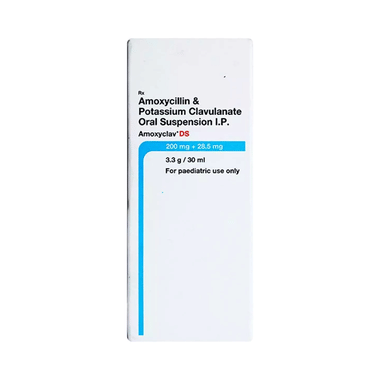
Available alternative from Abbott
Sold out
Clavin Syrup
bottle of 30 ml Syrup
₹59.2

Same composition
Amoxyclav DS Syrup
bottle of 30 ml Syrup
by Abbott
Get by Wed, 16 Sep
₹56.8
₹1.61 per ml
₹48.3
order for
₹1200
Save more with additional offers
10% cashback up to 200 on Min Transaction of Rs.1000, for first time users of Airtel Payments Bank.
10% cashback up to 200 on Min Transaction of Rs.1000, for first time users of Airtel Payments Bank.


Get up to ₹75 cashback on a minimum order value (MOV) of ₹499 and above, valid once per customer.
Get up to ₹75 cashback on a minimum order value (MOV) of ₹499 and above, valid once per customer.
Get up to ₹75 cashback on a minimum order value (MOV) of ₹499 and above, valid once per customer.
Get up to ₹75 cashback on a minimum order value (MOV) of ₹499 and above, valid once per customer.
10% cashback up to 200 on Min Transaction of Rs.1000, for first time users of Airtel Payments Bank.
10% cashback up to 200 on Min Transaction of Rs.1000, for first time users of Airtel Payments Bank.
Get up to ₹75 cashback on a minimum order value (MOV) of ₹499 and above, valid once per customer.
Get up to ₹75 cashback on a minimum order value (MOV) of ₹499 and above, valid once per customer.
Get up to ₹75 cashback on a minimum order value (MOV) of ₹499 and above, valid once per customer.
Get up to ₹75 cashback on a minimum order value (MOV) of ₹499 and above, valid once per customer.

Assured cashback up to ₹300*. T&C Apply*
Assured cashback up to ₹300*. T&C Apply*
General Information
Contains
Amoxycillin (200mg)+ Clavulanic Acid (28.5mg)
Marketer
Paradigm Healthcare
Storage
Store below 30°C
The content is shown in English




All substitutes for Clavin Syrup
For information purposes only. Consult a doctor before taking any medicine.
Lagech Syrup
by Lok Beta Pharmaceuticals Pvt. Ltd.
₹60.94/syrup
10% cheaper
Amoxyclav DS Syrup
by Abbott
₹63/syrup
7% cheaper
CV M Syrup
by Adjener Pharmaceuticals Pvt Ltd
₹55/syrup
19% cheaper
Ricmox CV Syrup
by Aseric Pharma
₹56.15/syrup
17% cheaper
Xylomox CV Syrup
by Lividus Pharmaceuticals Pvt Ltd
₹57/syrup
16% cheaper
Safety advice
Kidney
CAUTION
Clavin Syrup should be used with caution in patients with severe kidney disease. Dose adjustment may be needed.
The dose also needs to be reduced in neonates and infants due to incompletely developed renal function.
The dose also needs to be reduced in neonates and infants due to incompletely developed renal function.
Liver
CAUTION
Clavin Syrup should be used with caution in patients with liver disease. Dose adjustment may be needed.
Regular monitoring of liver function tests is recommended while you are taking this medicine
Regular monitoring of liver function tests is recommended while you are taking this medicine
Related lab tests
References

Related products
Products related to Clavin Syrup



100% genuine products
Safe & secure payments
No contact delivery
Fully sanitized facilities
Want to know more
We provide you with authentic, trustworthy and relevant information
Have issue with the content
Why we need a prescription?

